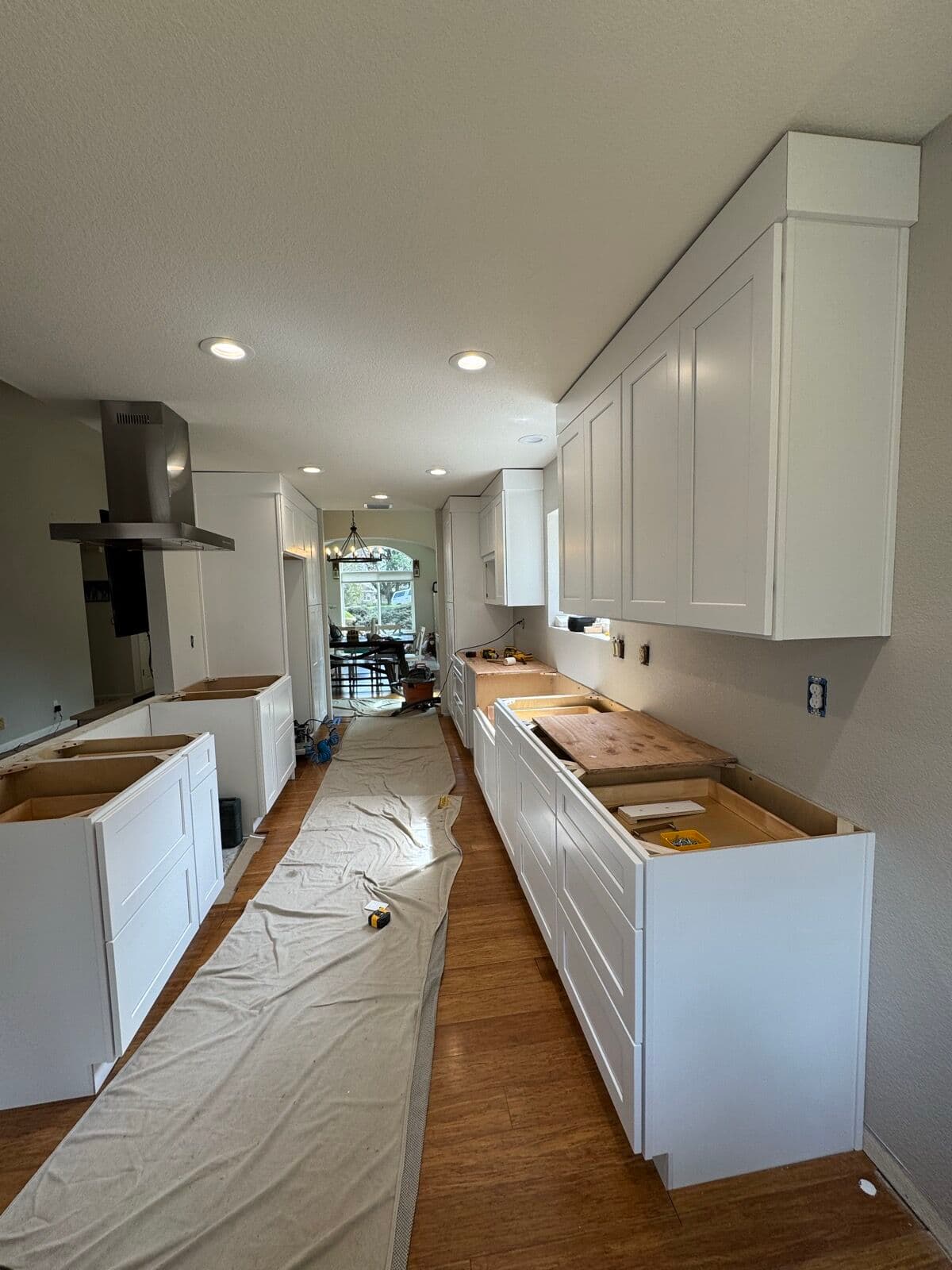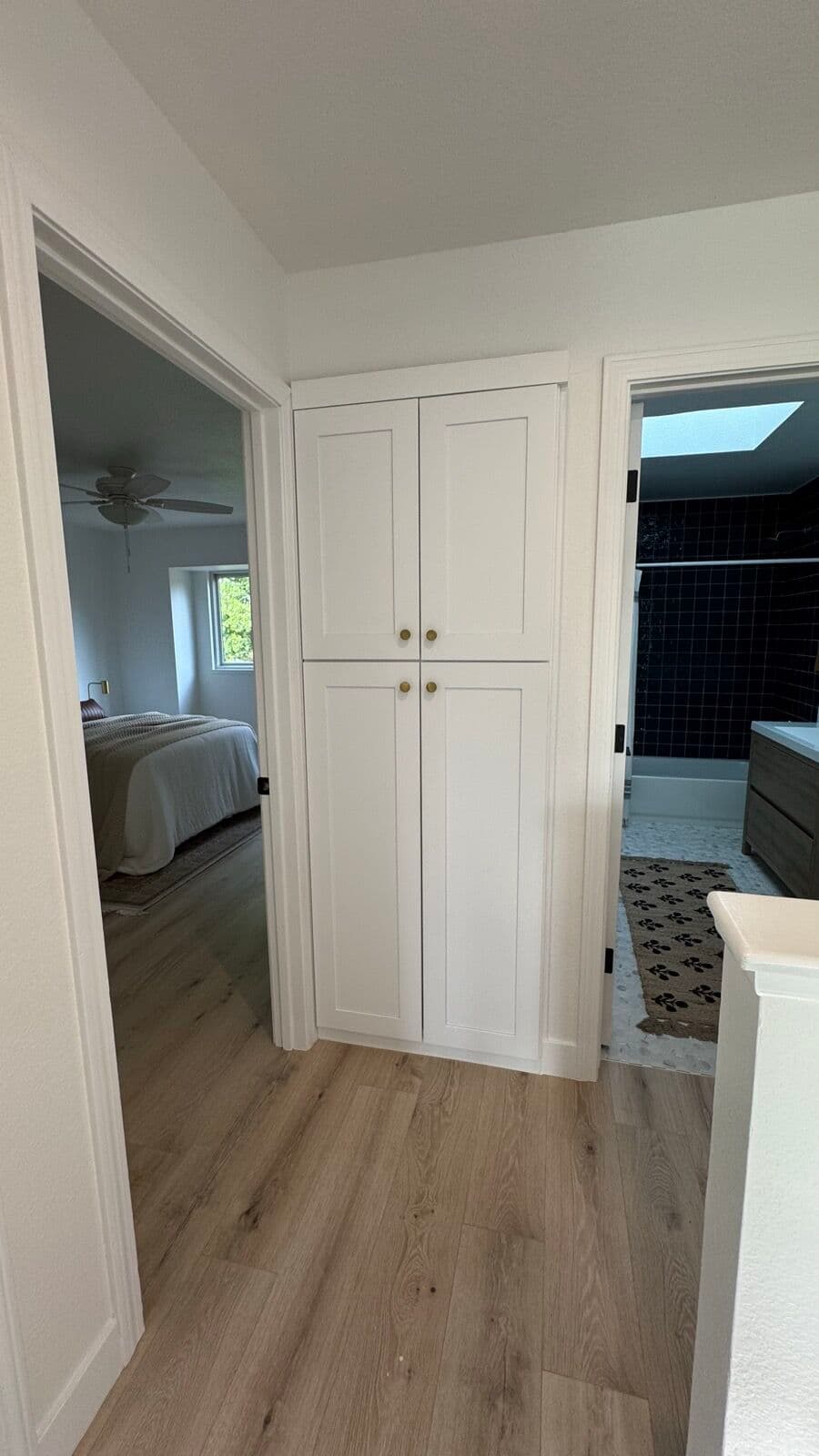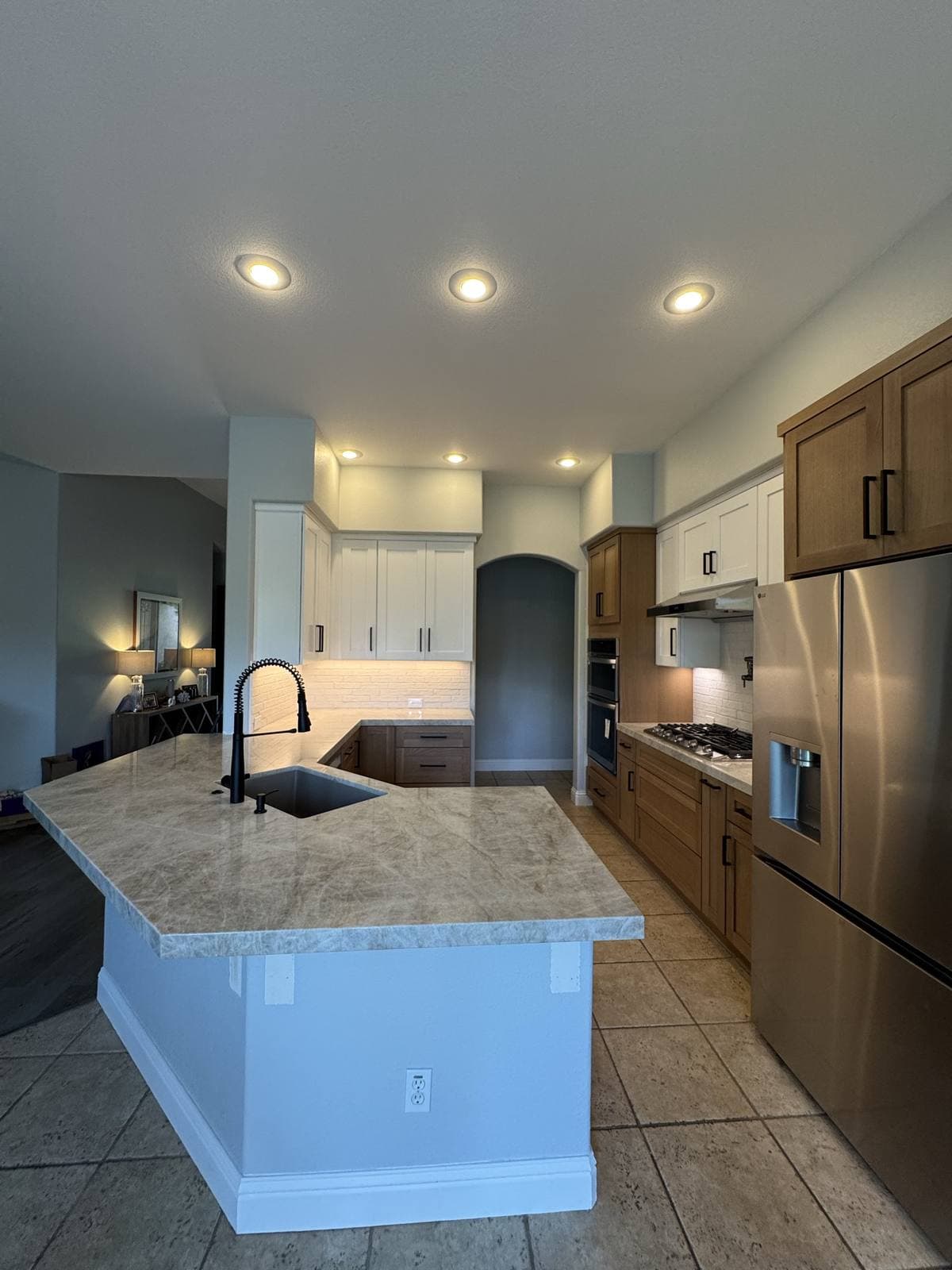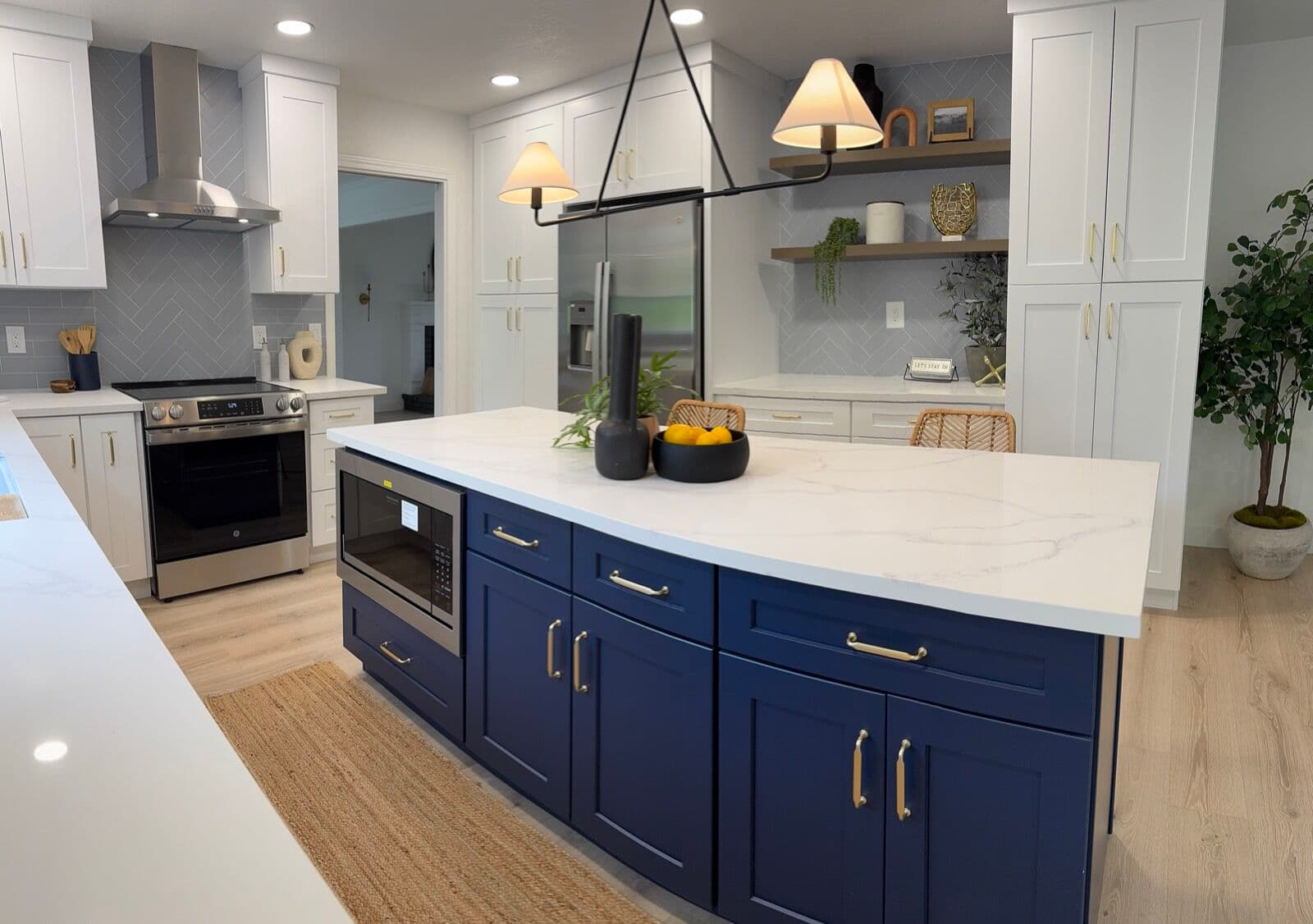
Painted kitchen cabinets fail for one of two reasons: the grease was never properly removed, or the finish was rolled on rather than sprayed. Both are process problems, and both are why a weekend paint job looks tired within a year while a properly refinished kitchen still looks new.
The process, in the order it has to happen
- Degrease. Every surface, twice, especially the run beside the range and the doors either side of it. Nothing sticks to cooking residue.
- Sand and de-gloss. The existing finish is keyed so primer can bite.
- Repair. Chips, dents and blown-out hinge screws are filled and re-drilled before anything is coated.
- Prime. A bonding primer suited to what is underneath — oak, thermofoil, maple, previously painted, each behaves differently.
- Spray. Doors and drawer fronts are sprayed off the cabinets, on both sides, in a controlled space. Frames and end panels are sprayed in place with the kitchen fully masked.
- Cure and rehang. Hardware refitted, hinges adjusted, doors set to even gaps.
Why doors get sprayed off the frames
A door lying flat and sprayed on both faces dries without runs and without a brush mark anywhere on it. Sprayed on the hinge, the back never gets a proper coat and the edge nearest the frame builds up. Taking the doors off adds a day to the schedule and is the difference between a factory-looking finish and an obviously repainted kitchen.
What painting can and cannot fix
It changes colour, and it makes tired cabinets look cared for. It does not make a thermofoil door stop peeling, it does not fix a sagging box, and it does not change a layout. Oak grain still reads through paint — some people want that, and if you do not, refacing with new fronts is the honest answer rather than more coats.
Two-tone, and doing it once
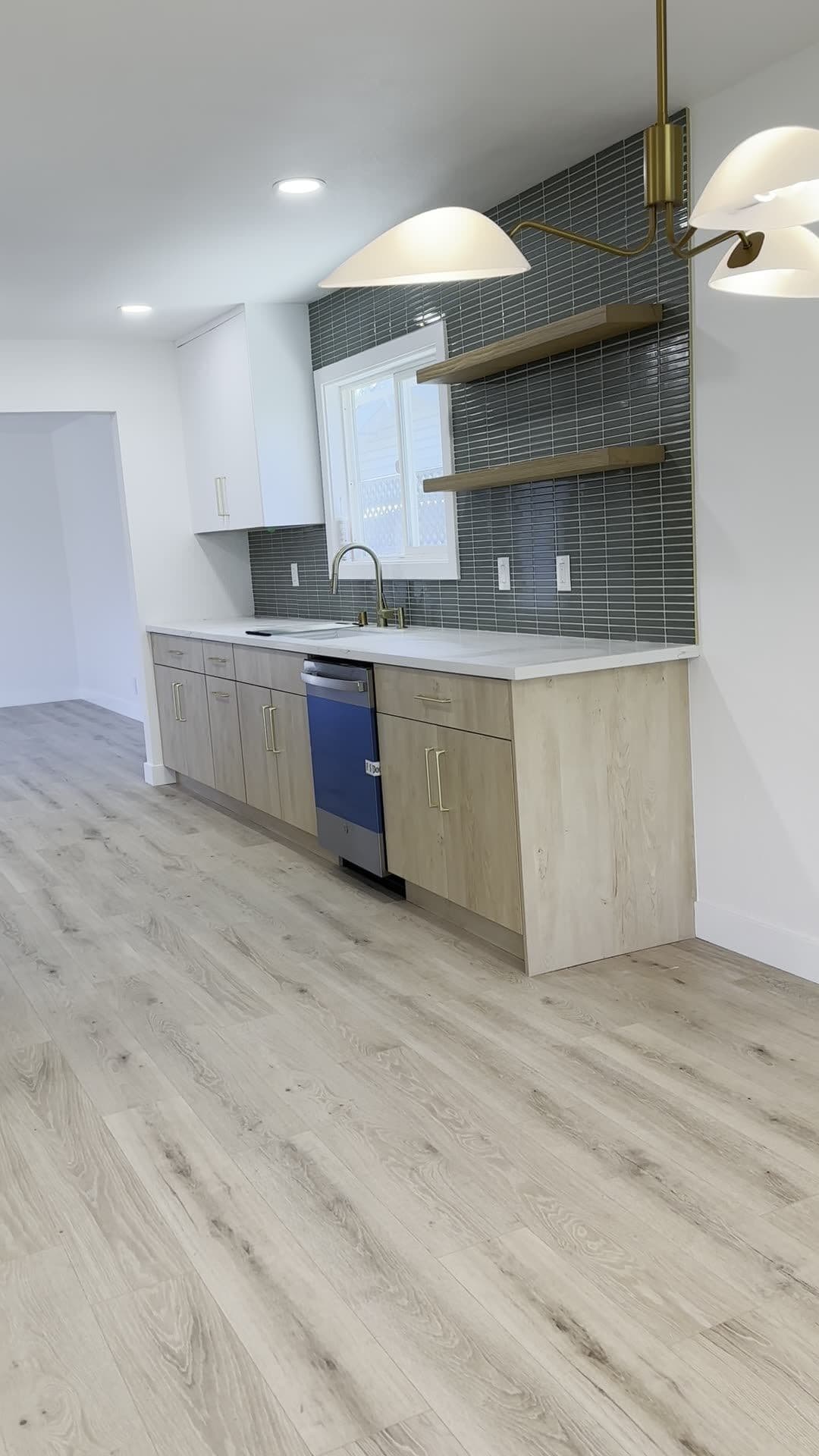
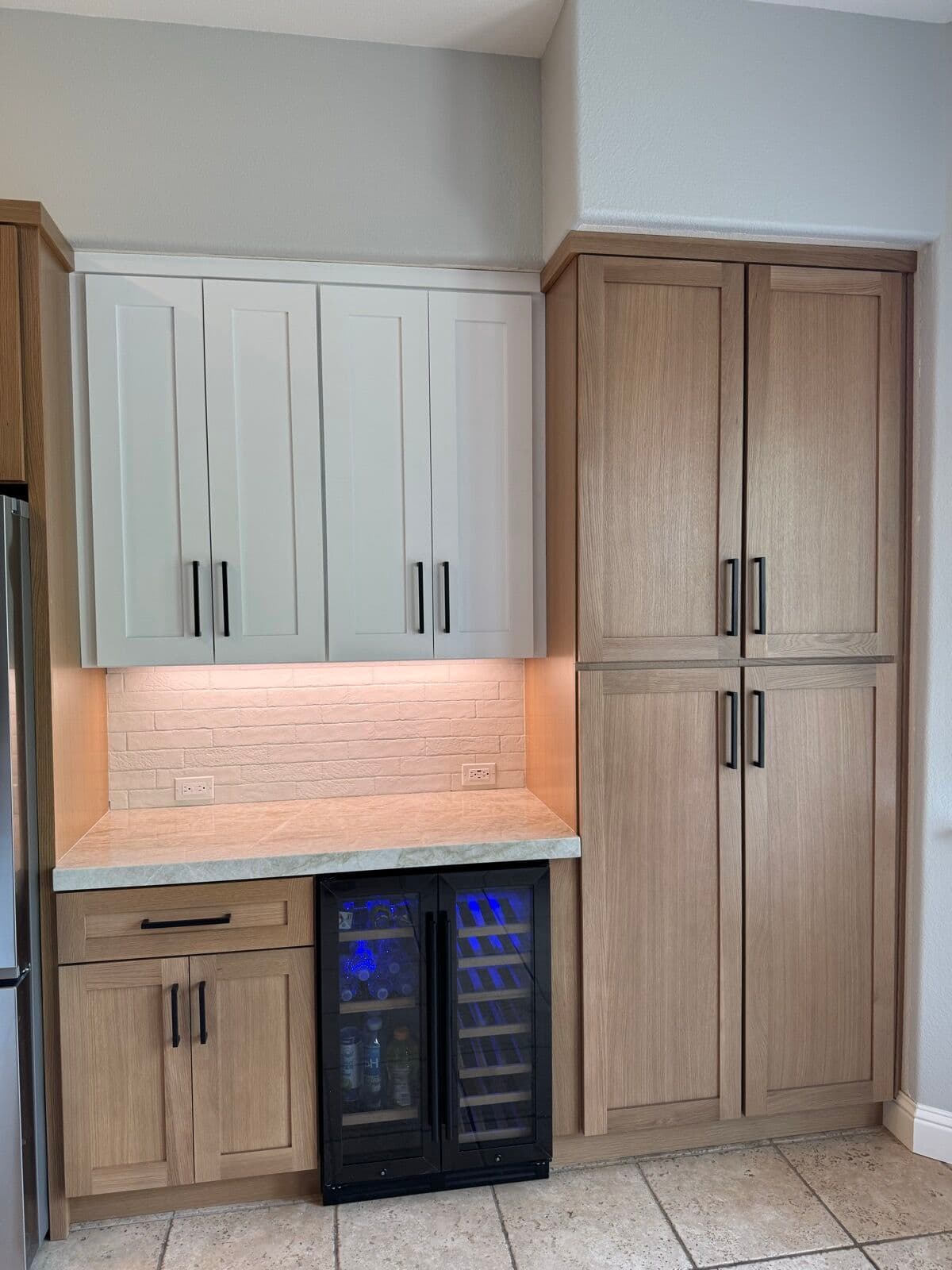
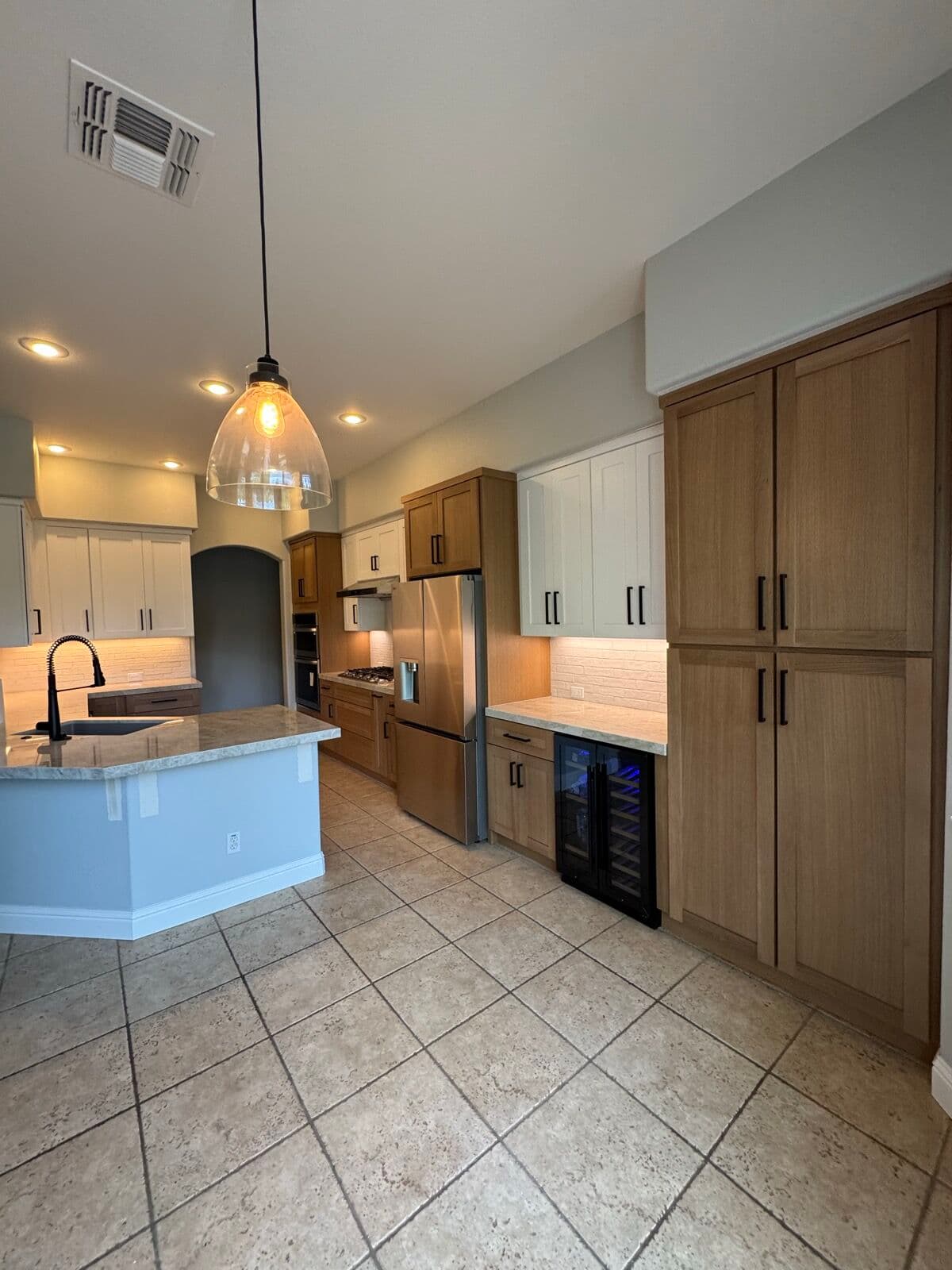
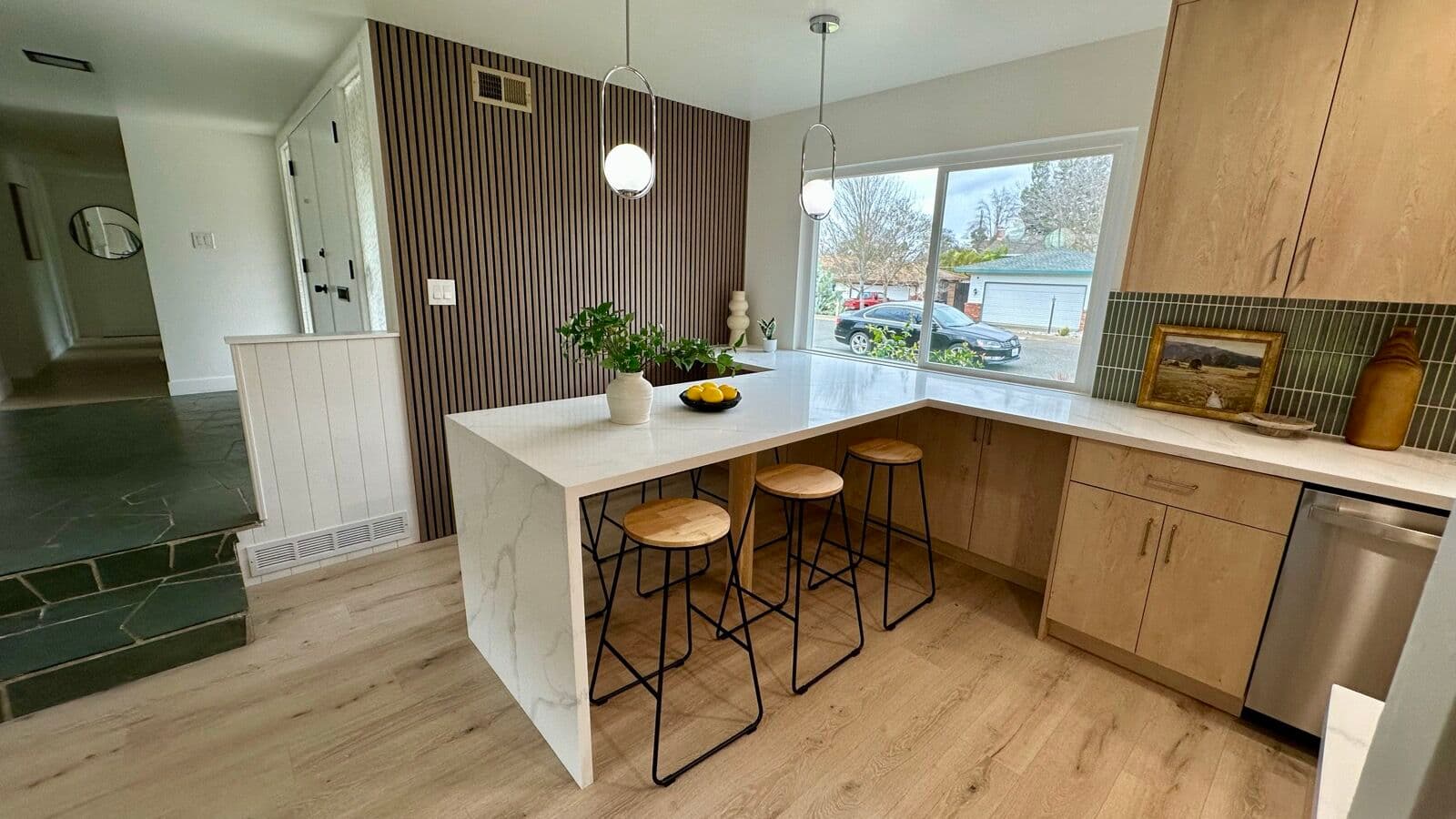
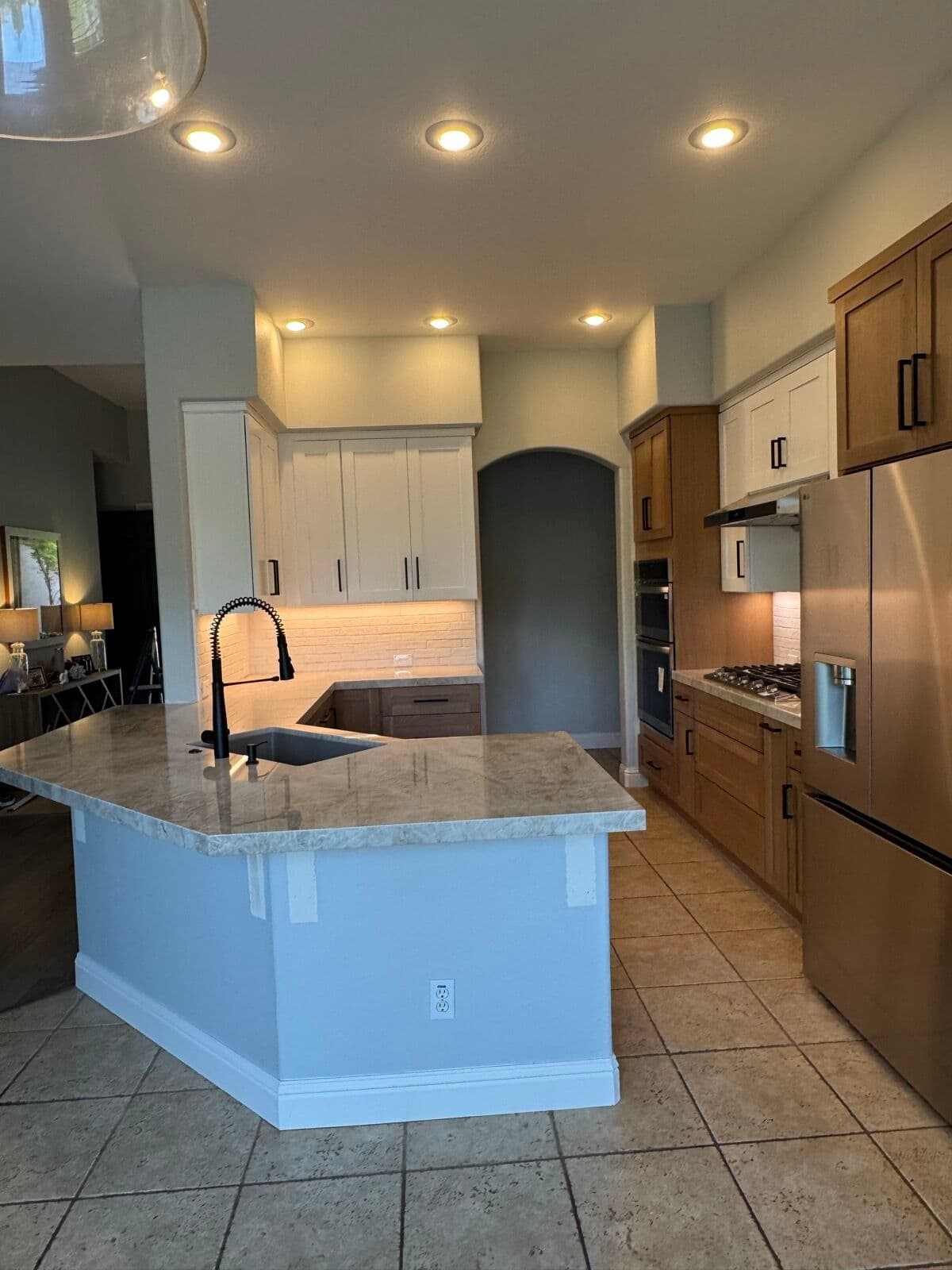
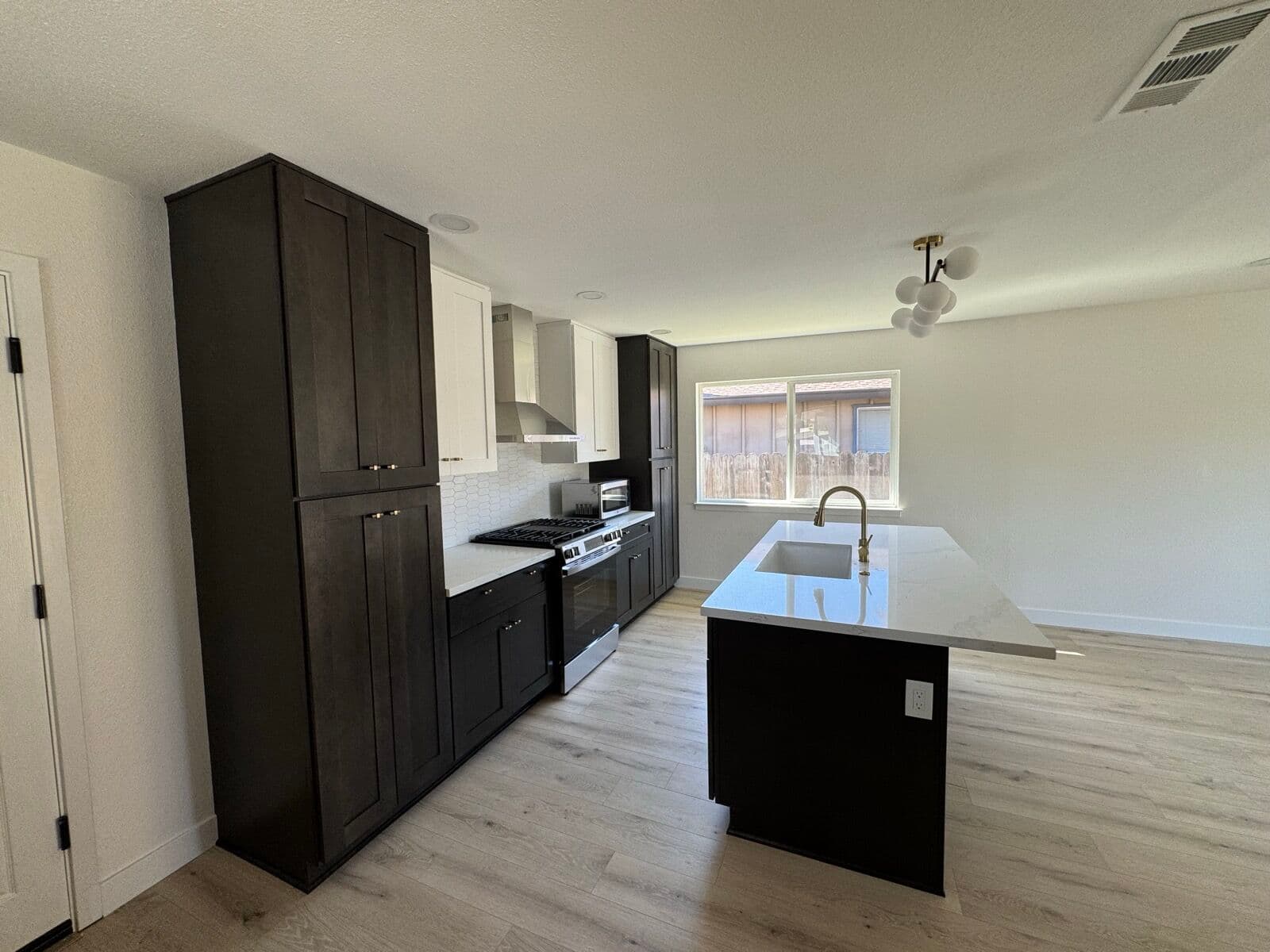
Painting the bases a colour and leaving or restaining the uppers is the cheapest way to get a two-tone kitchen out of cabinets you already own. Done at the same time as new countertops and a backsplash, it reads as a new kitchen for a fraction of a remodel.
We quote it after looking at your actual cabinets — what they are made of decides the primer, and the primer decides whether the finish lasts.