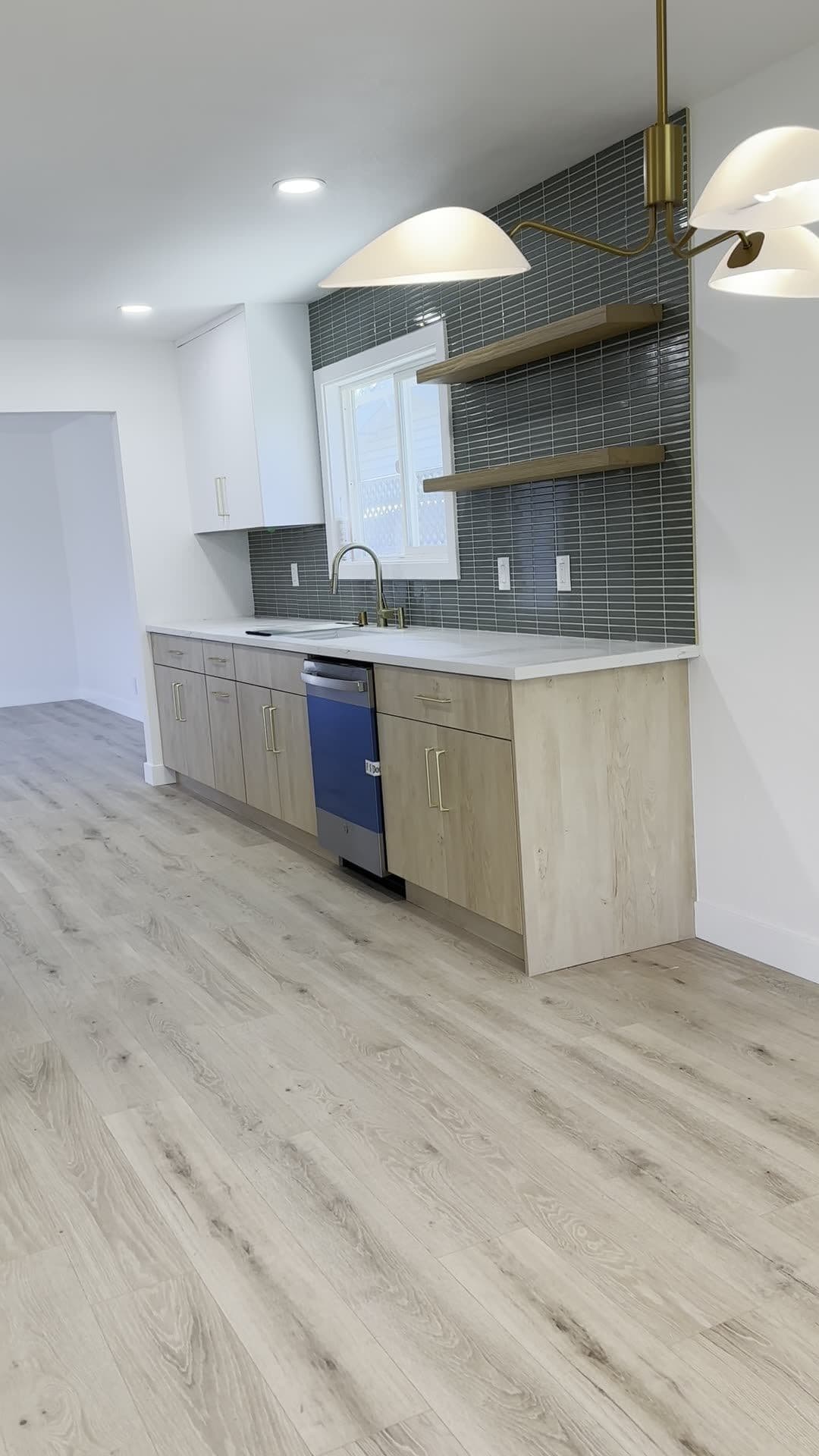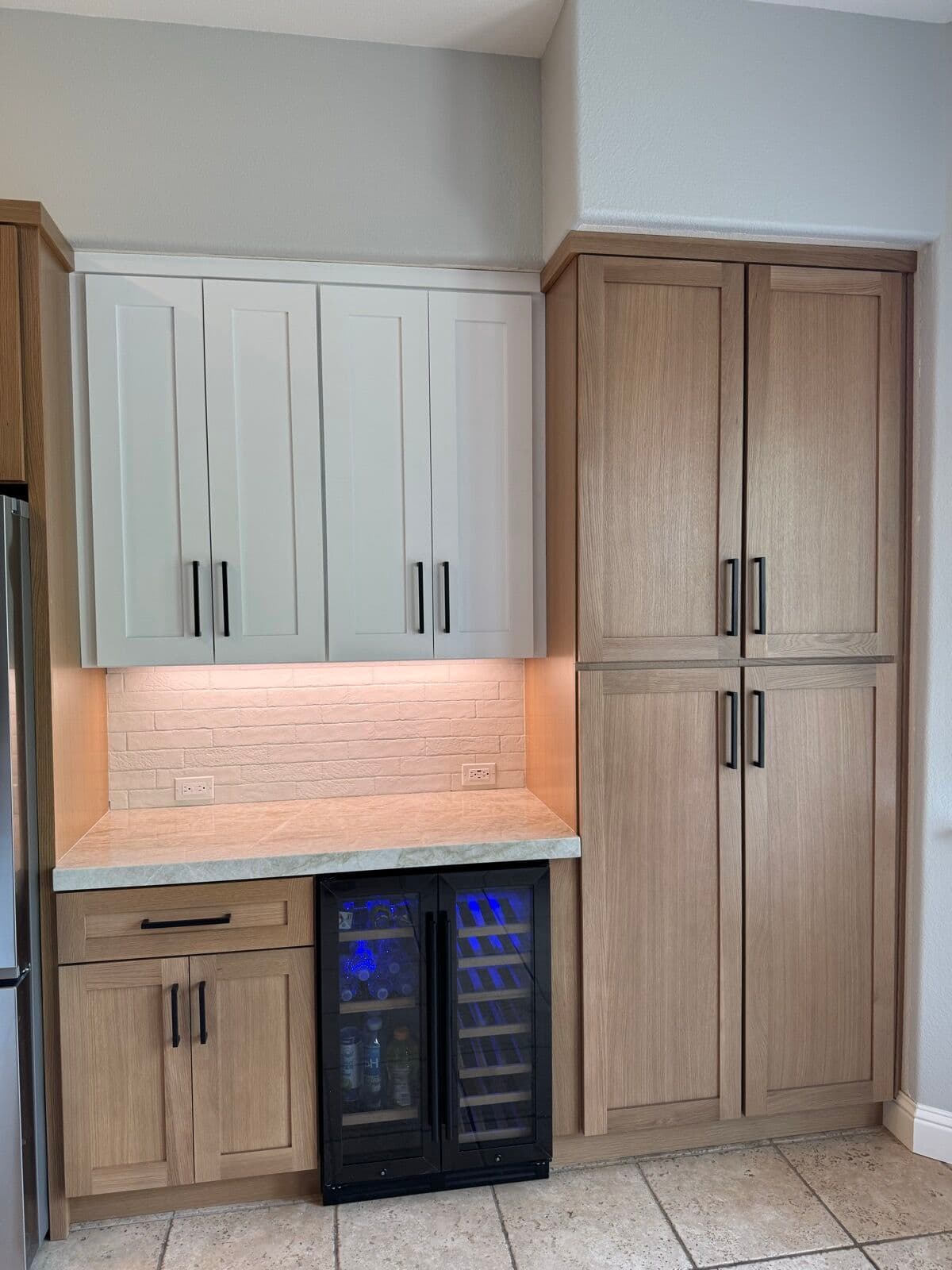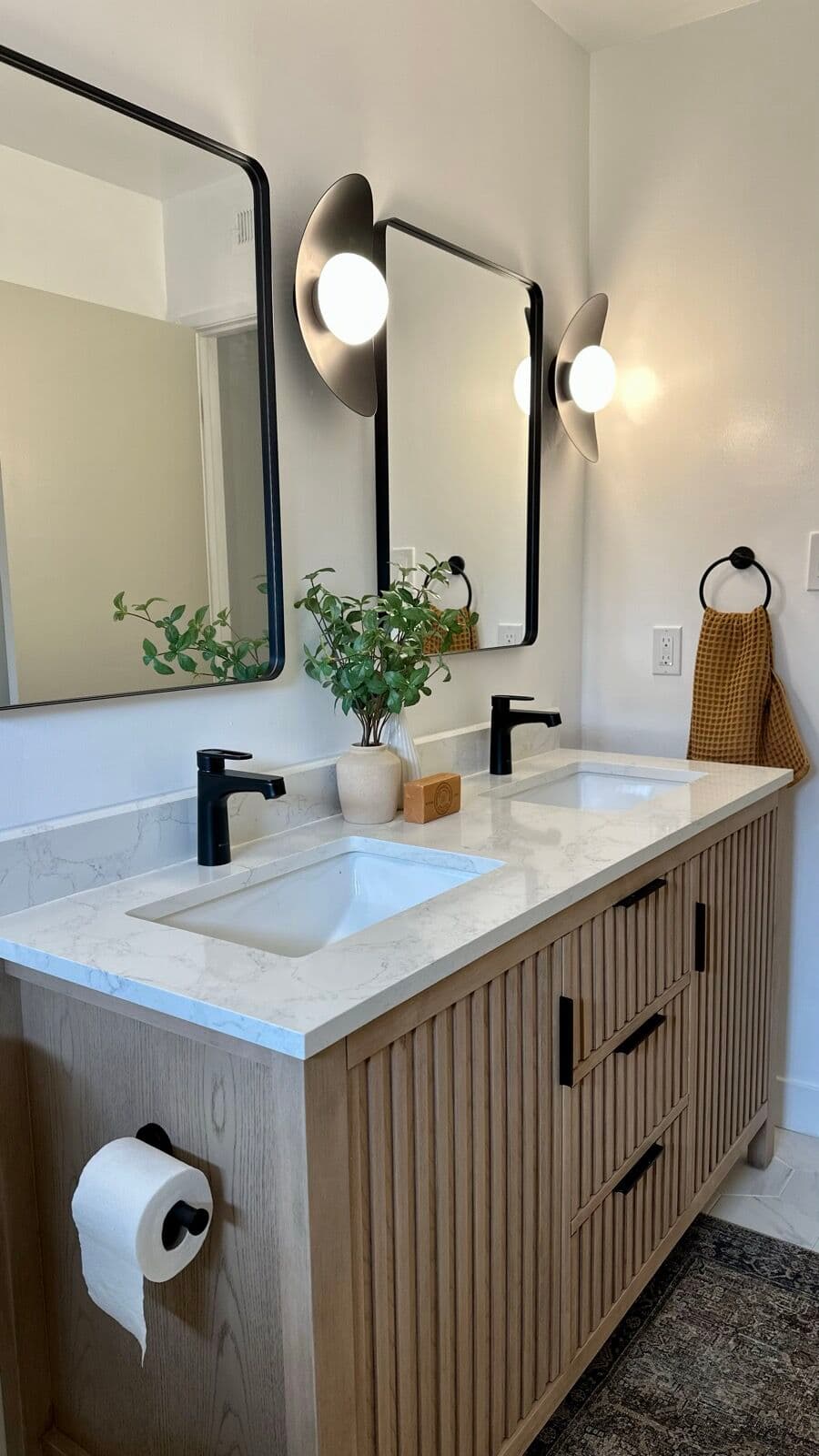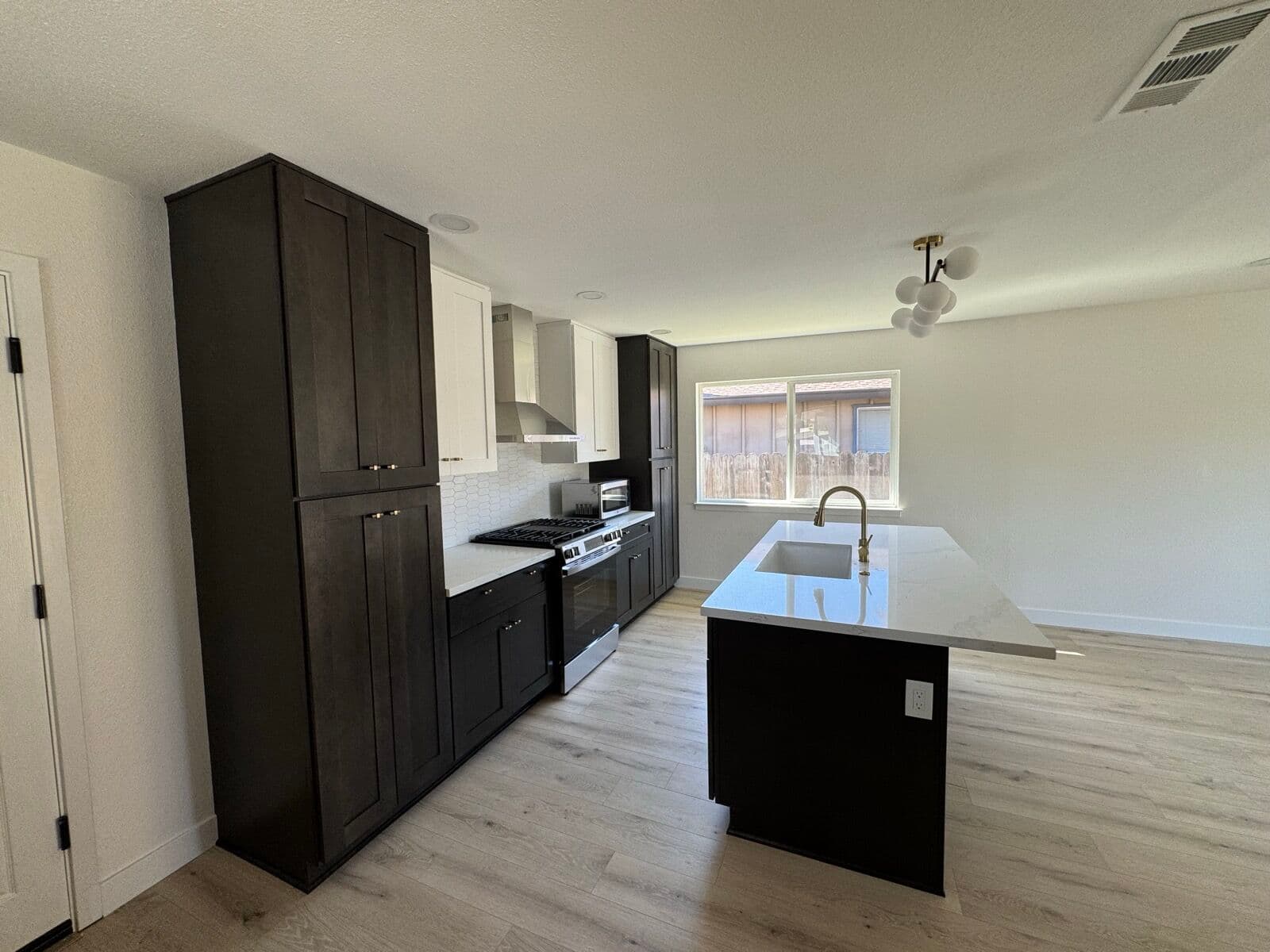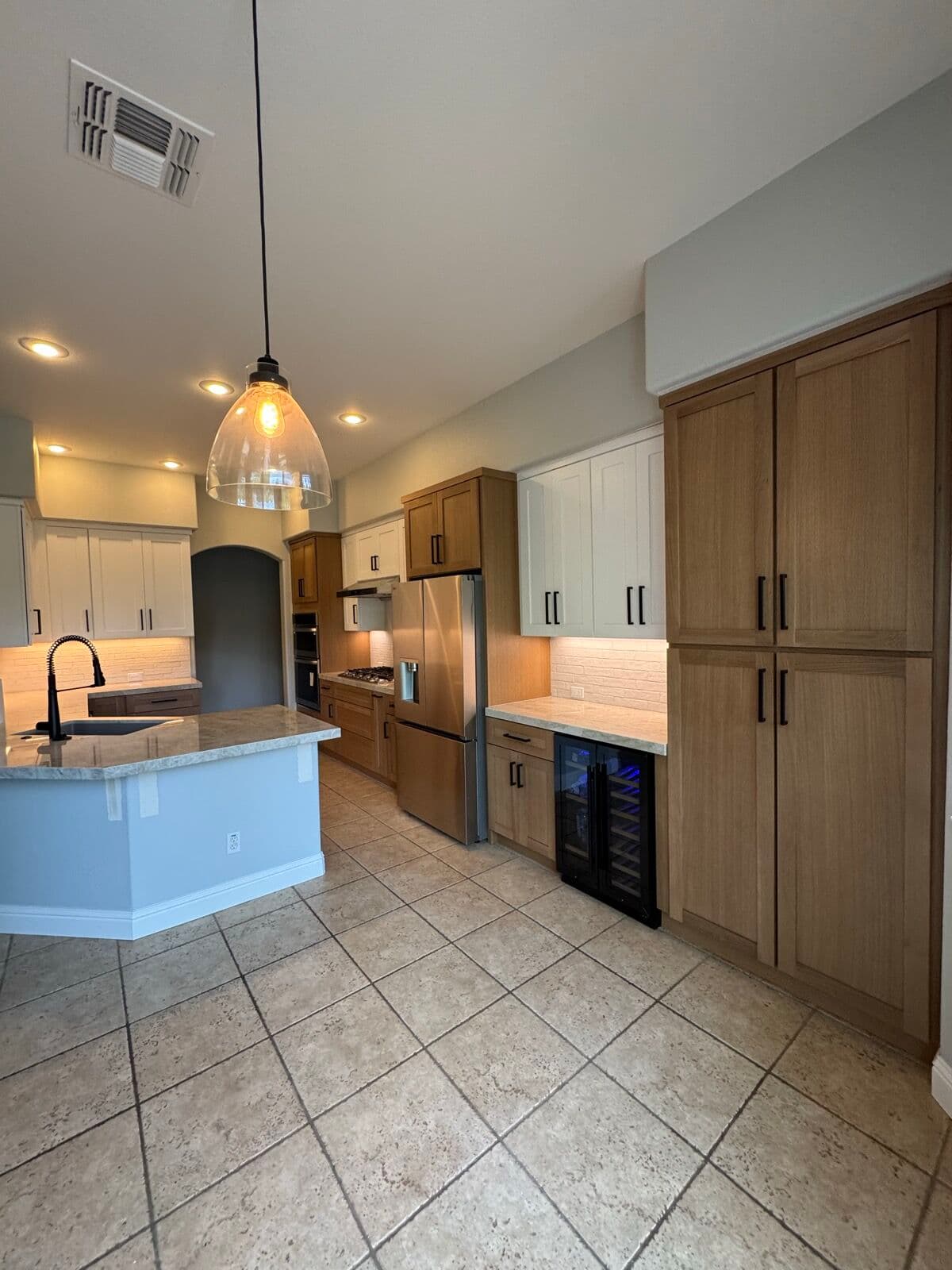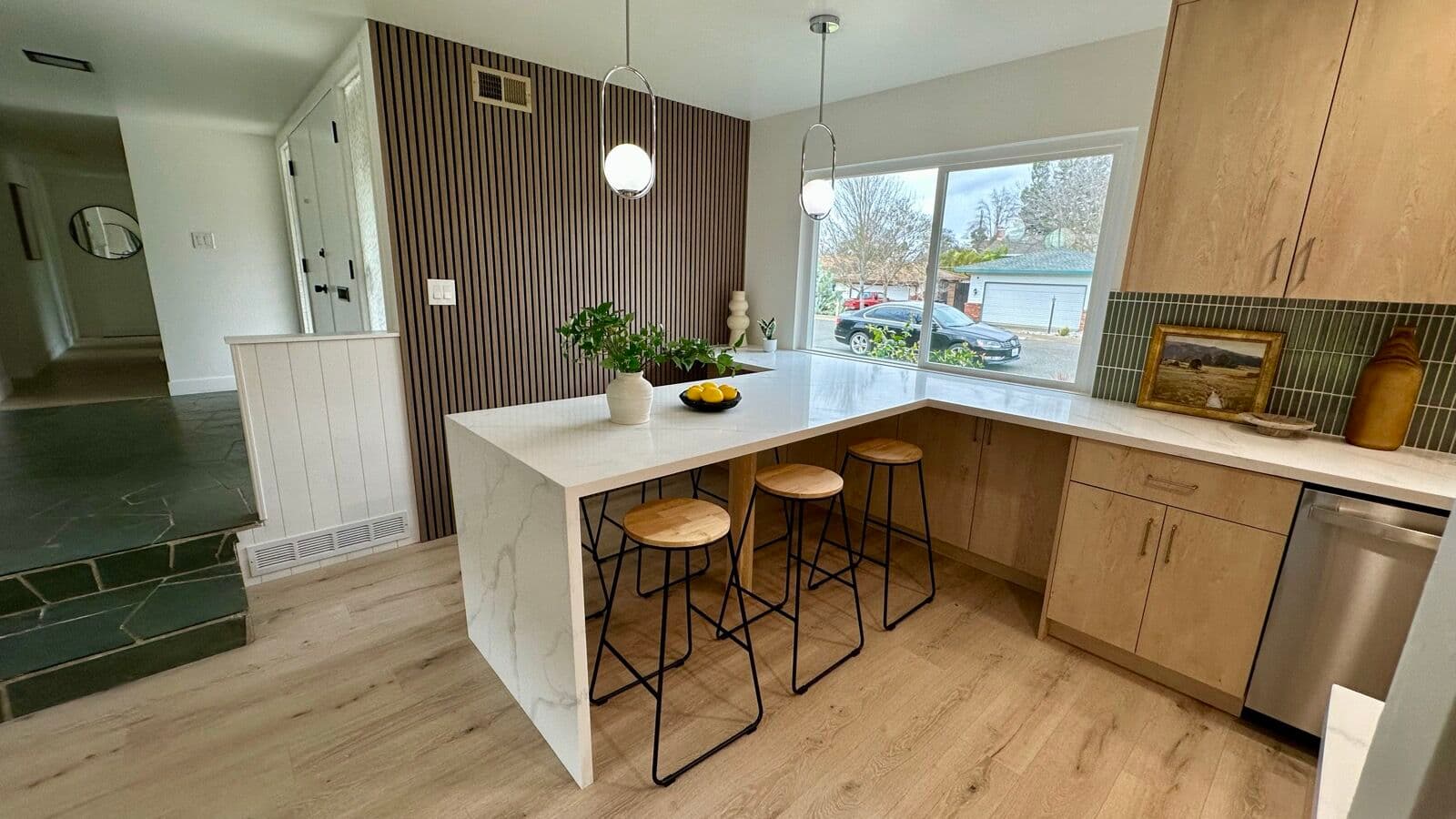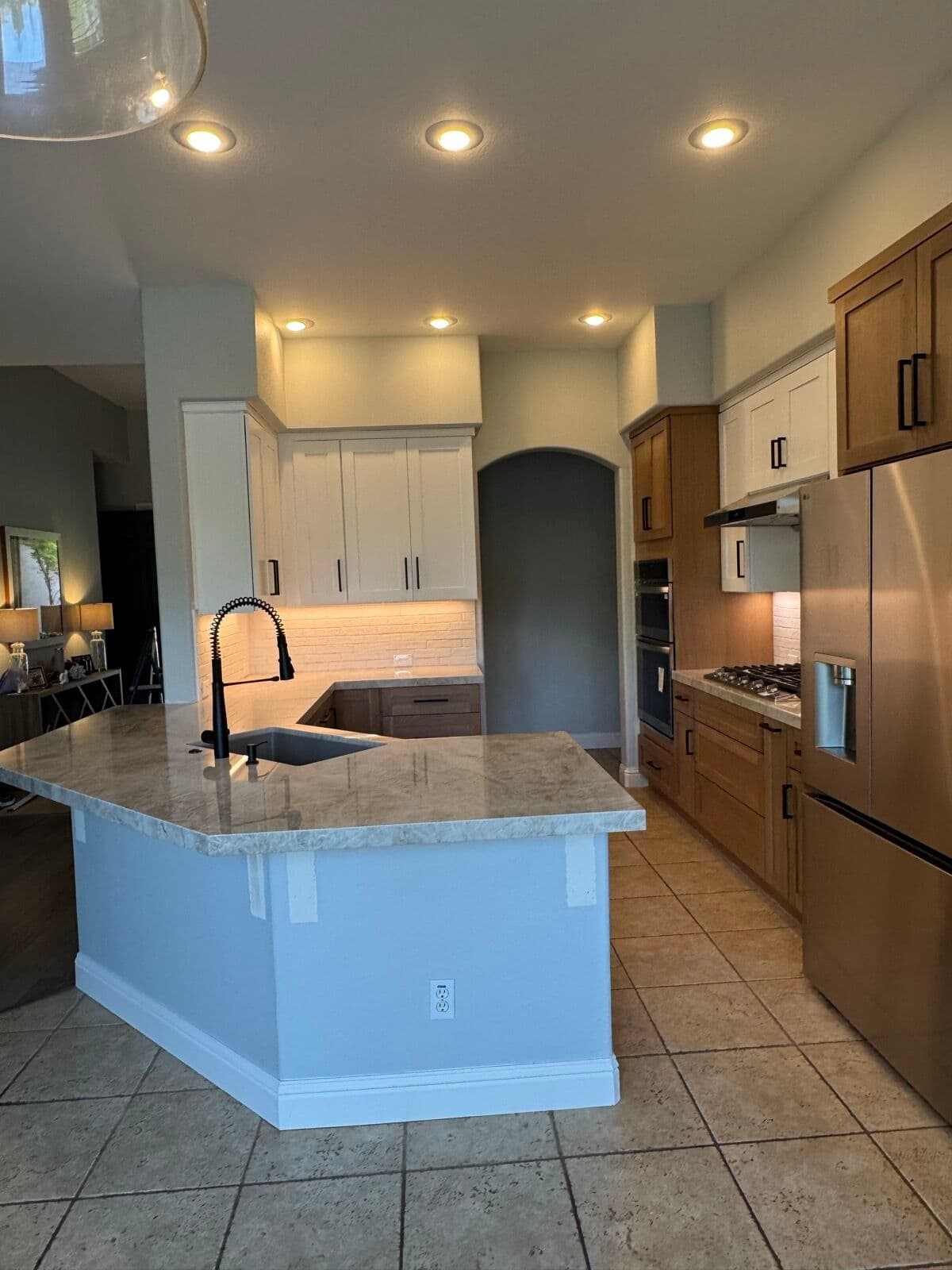
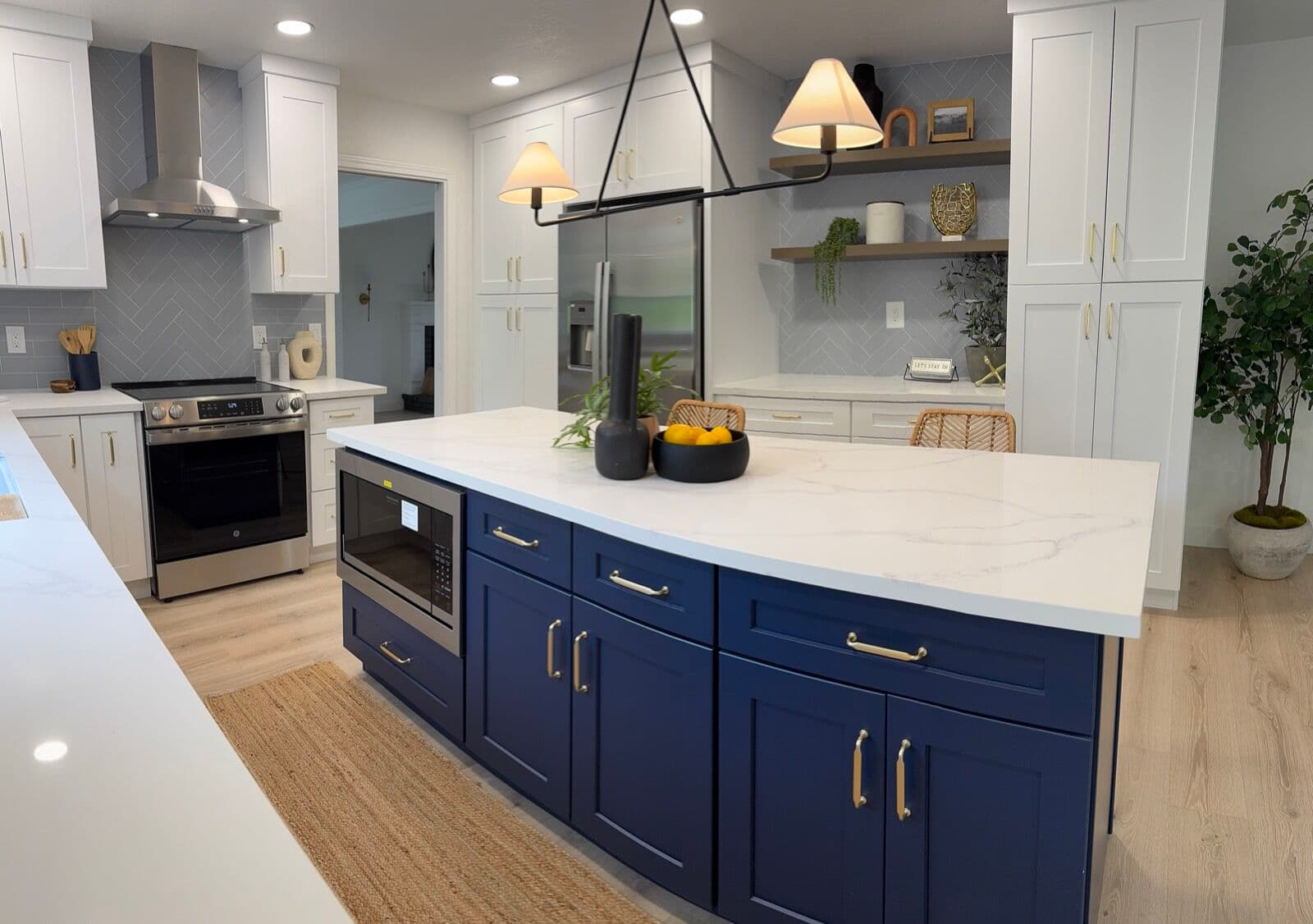
The door is 90 per cent of what you see of a cabinet. Two kitchens with identical boxes and identical stone read as completely different rooms depending on this one choice — and it is the choice people most often make from a photograph and regret in daylight.
The styles
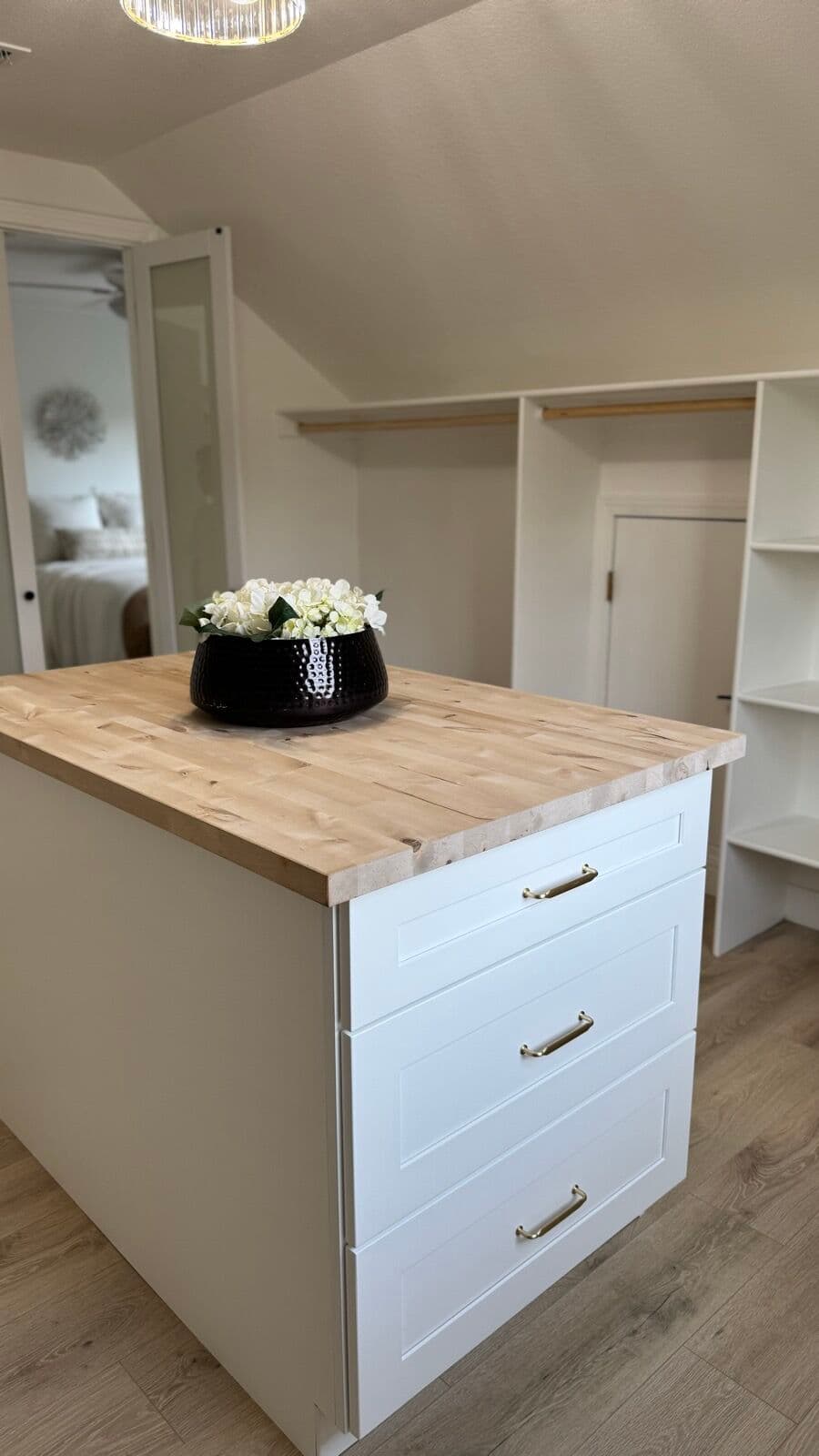
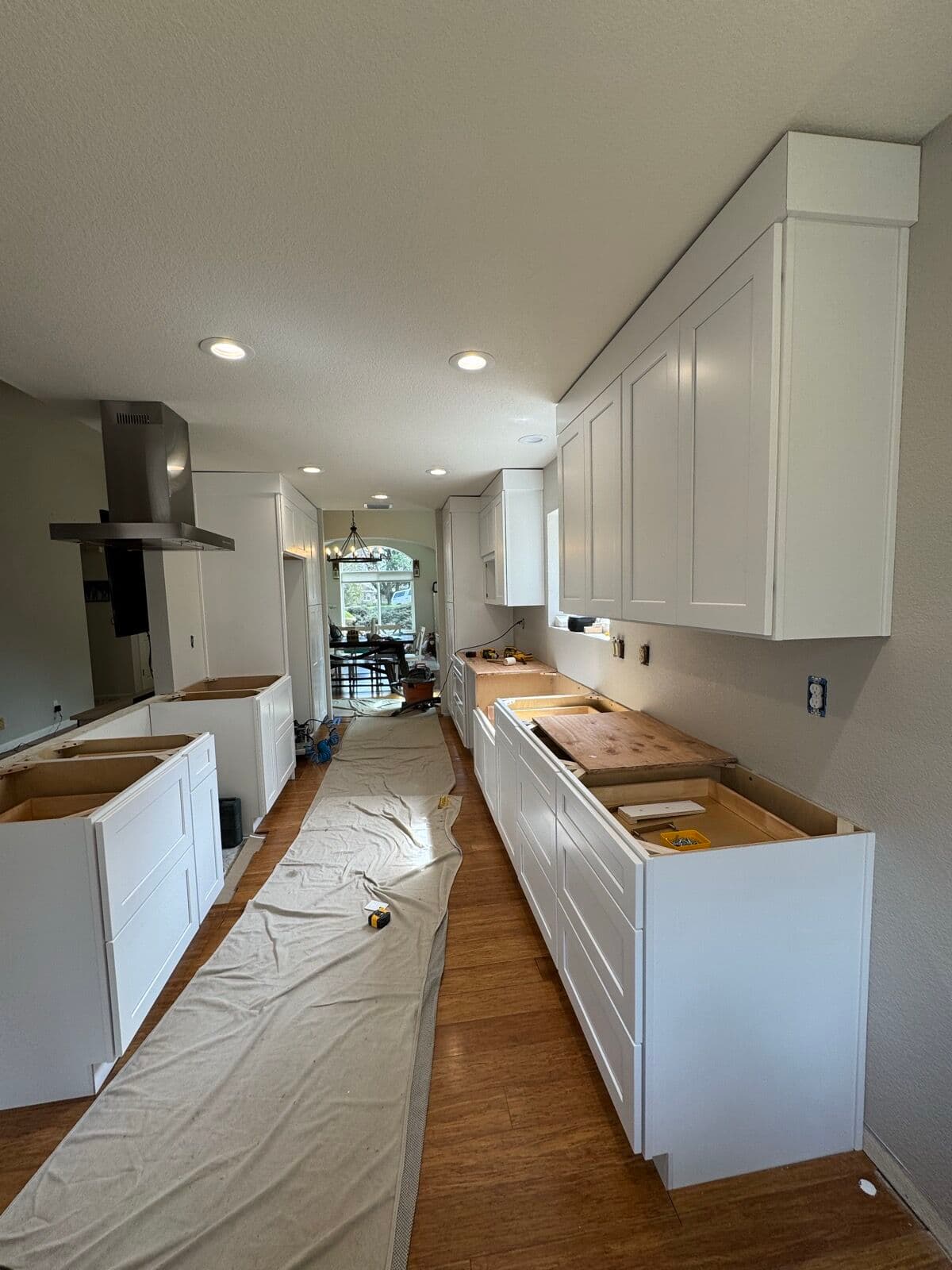
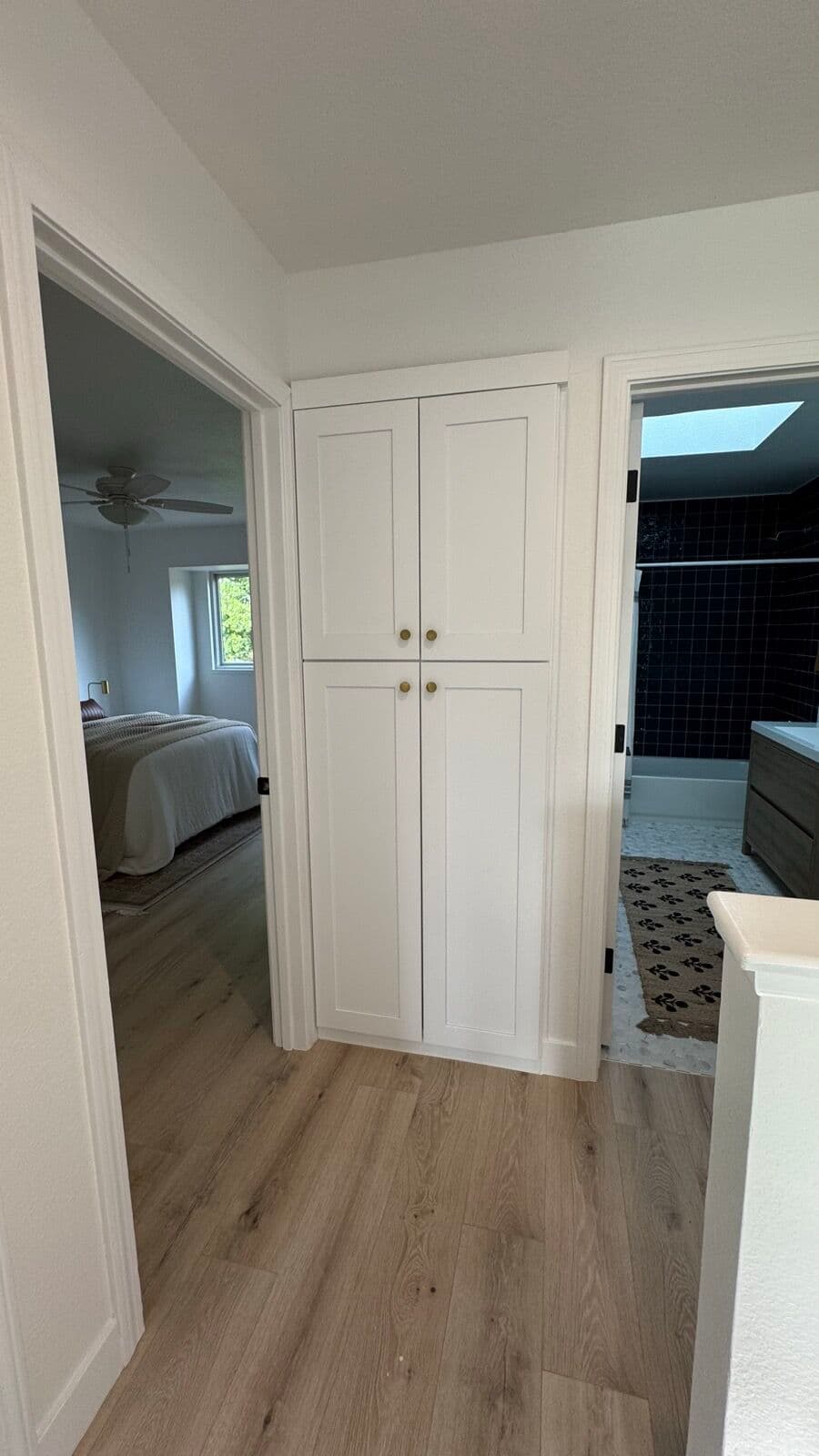
Shaker — a flat centre panel in a square frame. The safe answer, and safe for a reason: it suits almost any house from a 1920s bungalow to a new build.
Flat panel / slab — no frame, no profile. Modern, easy to clean, and unforgiving of a cheap finish because there is nowhere for the eye to rest.
Raised panel — a profiled centre panel. Traditional, and the style most 1990s Sacramento kitchens already have, which is worth knowing if you are trying to move away from that era.
Fluted and reeded — vertical grooves, usually on an island or a bar rather than a whole kitchen. A strong statement in a small dose.
Glass front — for a run of uppers or a butler's pantry. Plan the interior lighting with it.
Paint, stain or wood
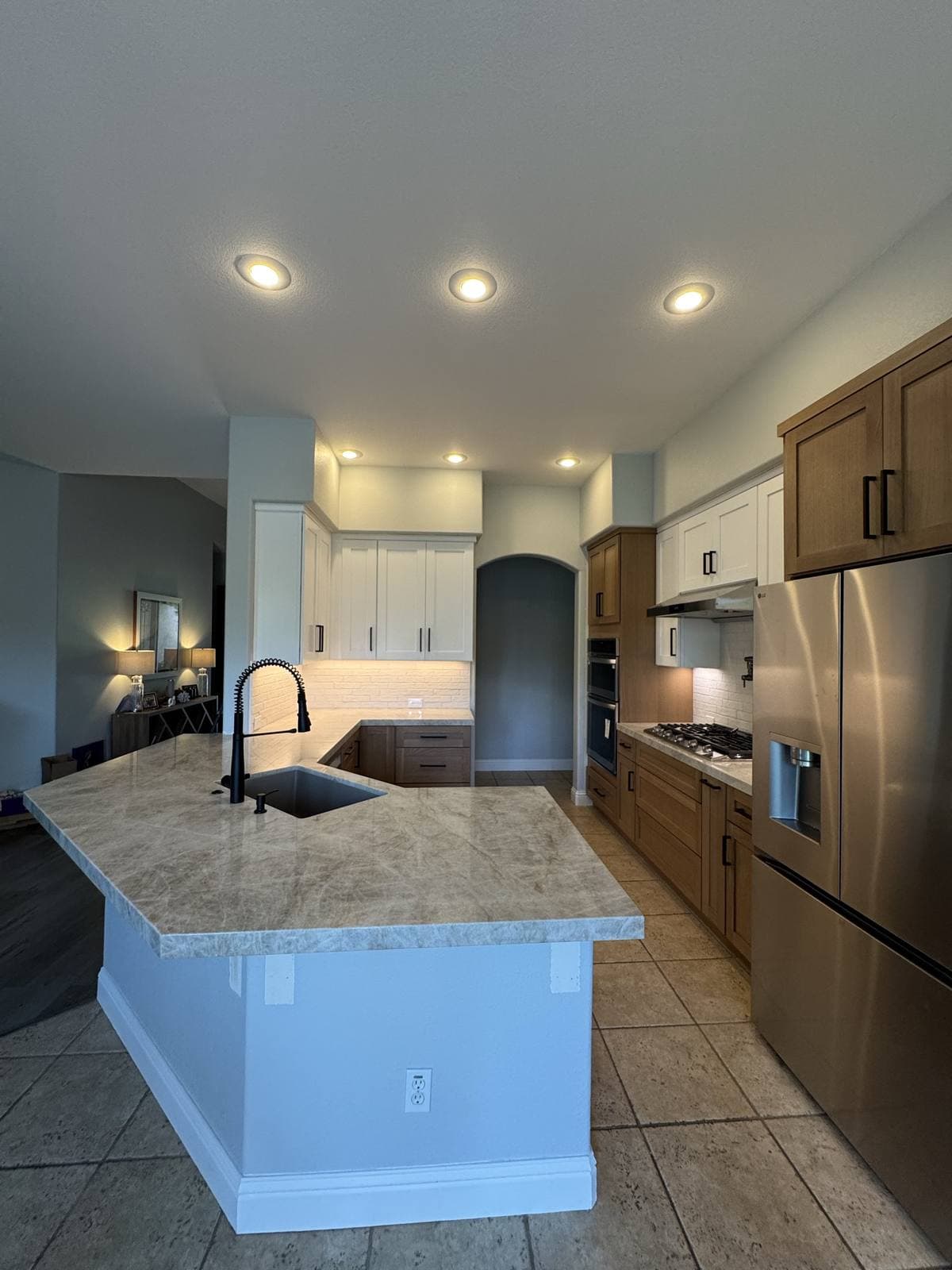
Painted MDF gives the flattest, most consistent colour and hides grain completely. Stained wood shows the grain, which is the point of white oak or walnut but not always the point of oak from 1994. Rift-cut white oak is the current favourite in two-tone kitchens: wood uppers, painted bases.
How we choose it with you
Samples in the actual room, against the actual floor and the actual slab, in daylight and again under the lights you will use at night. A white that looks warm beside oak reads cold beside grey quartz, and a door that looks crisp in a showroom can look busy across sixteen feet of run.
Once chosen, the line, style, finish and hardware are named in the written scope before the order goes in — no "or equivalent". The same choices apply whether you buy stock, semi-custom or custom, and carry through to vanities, the laundry and any built-ins.
Hardware is chosen at the same time, not afterwards — see cabinet hardware.