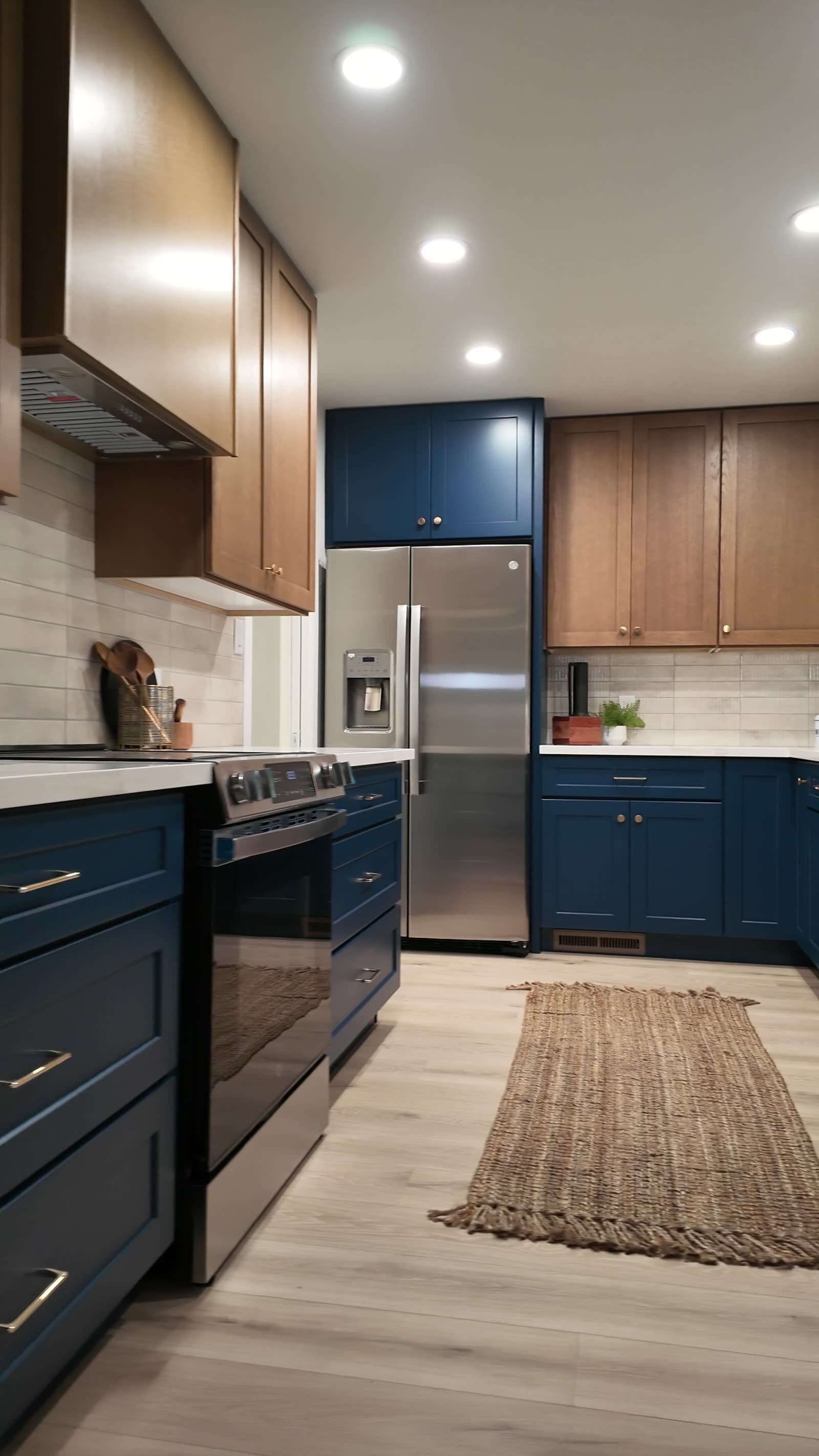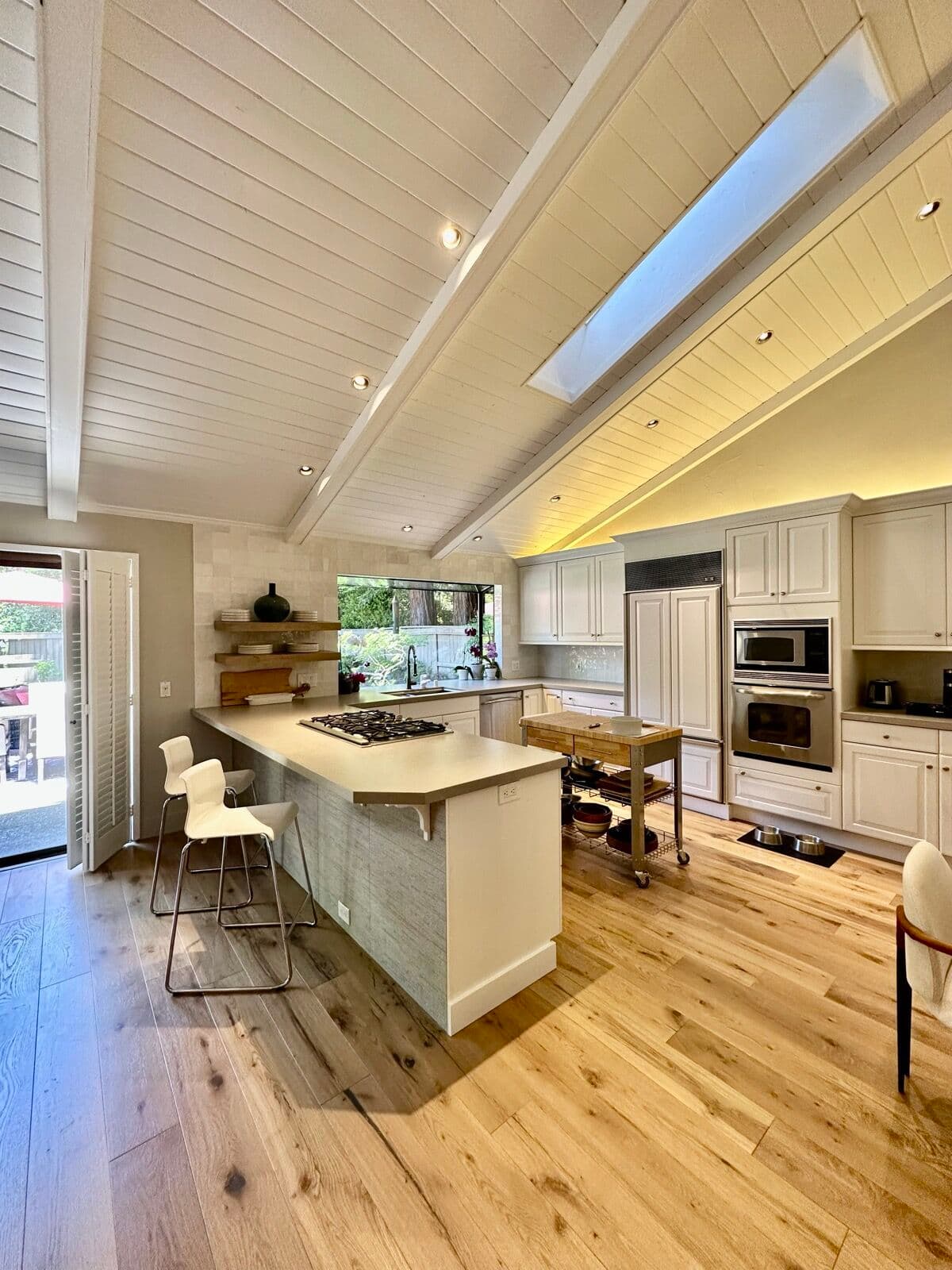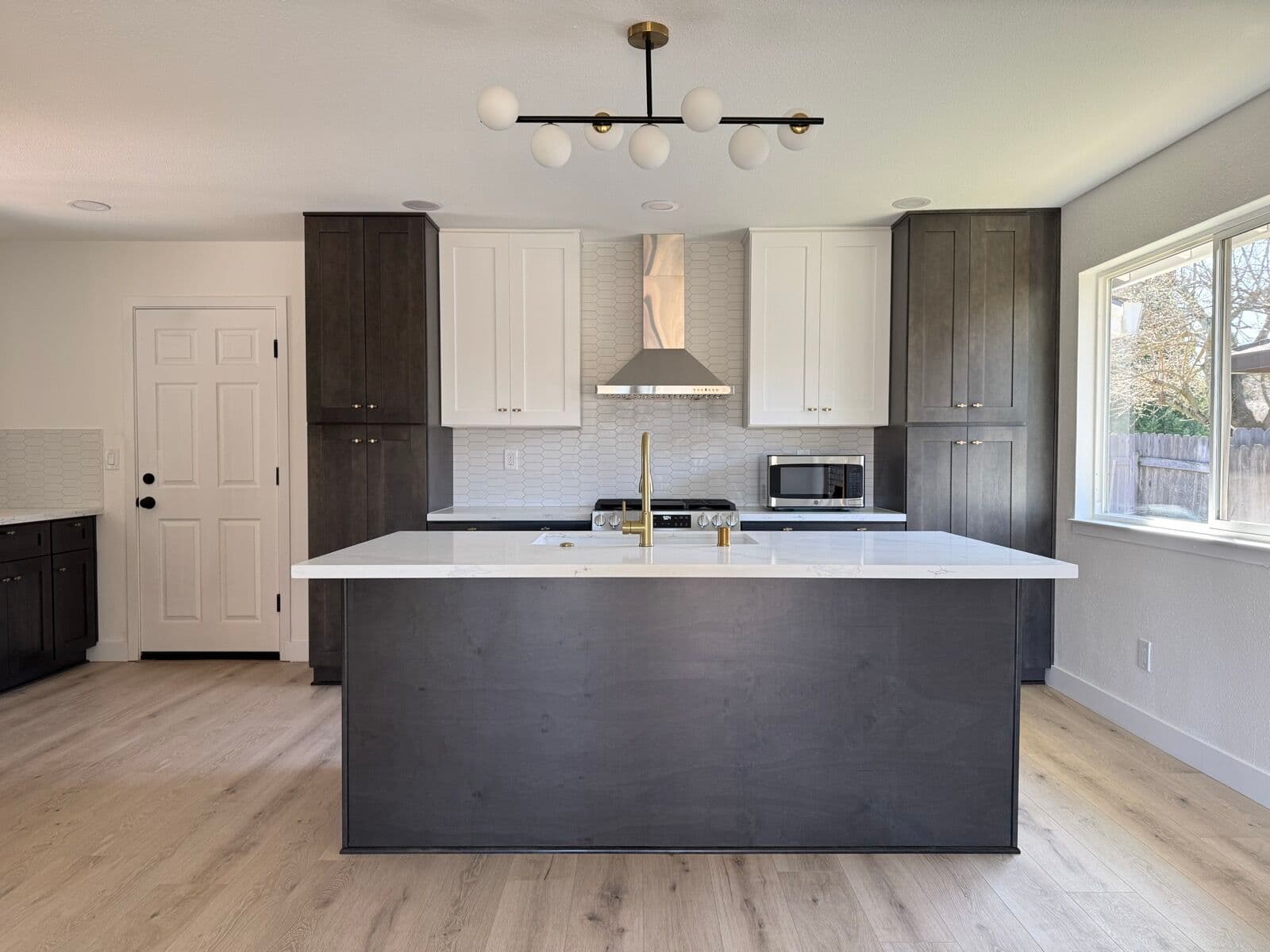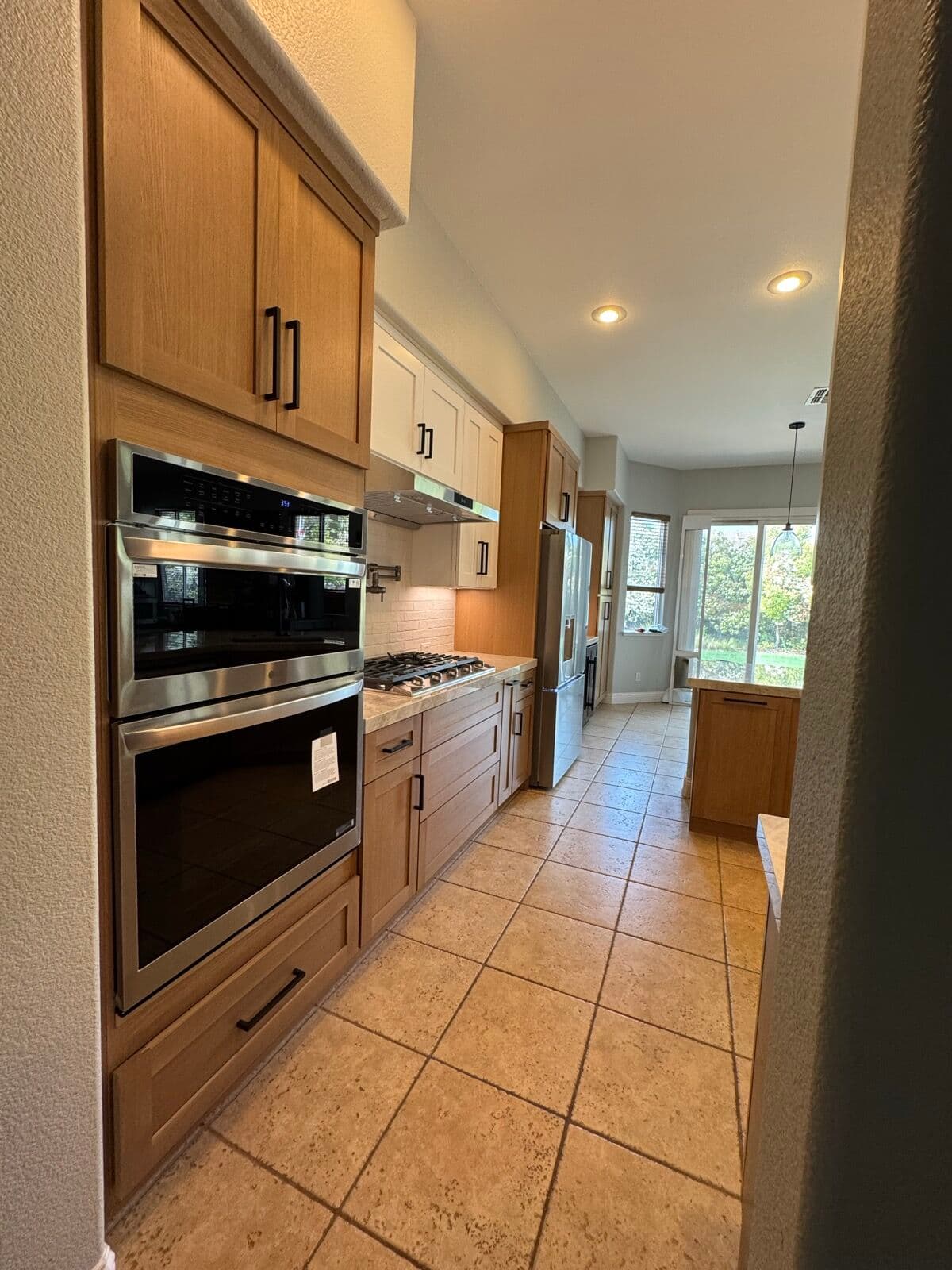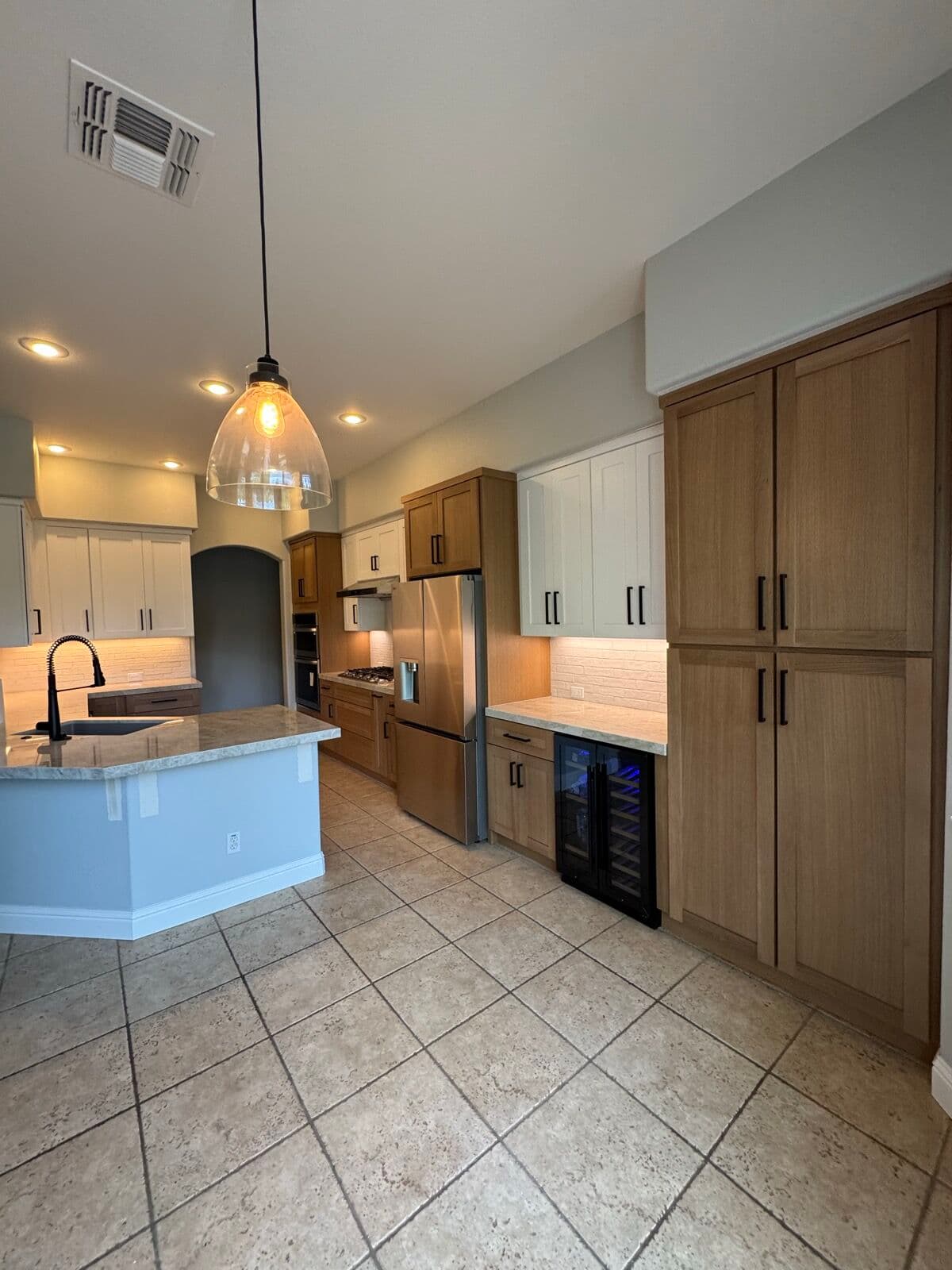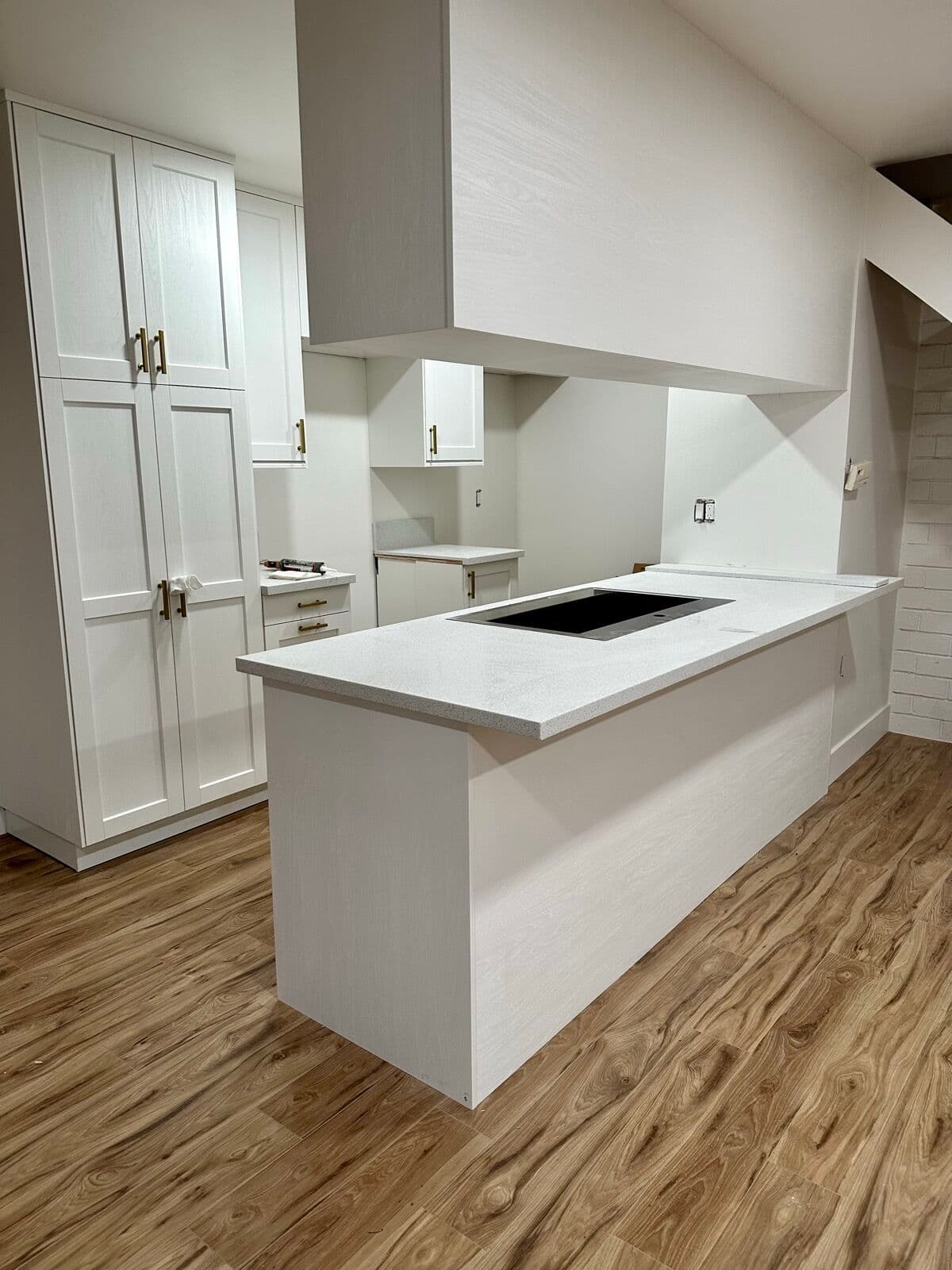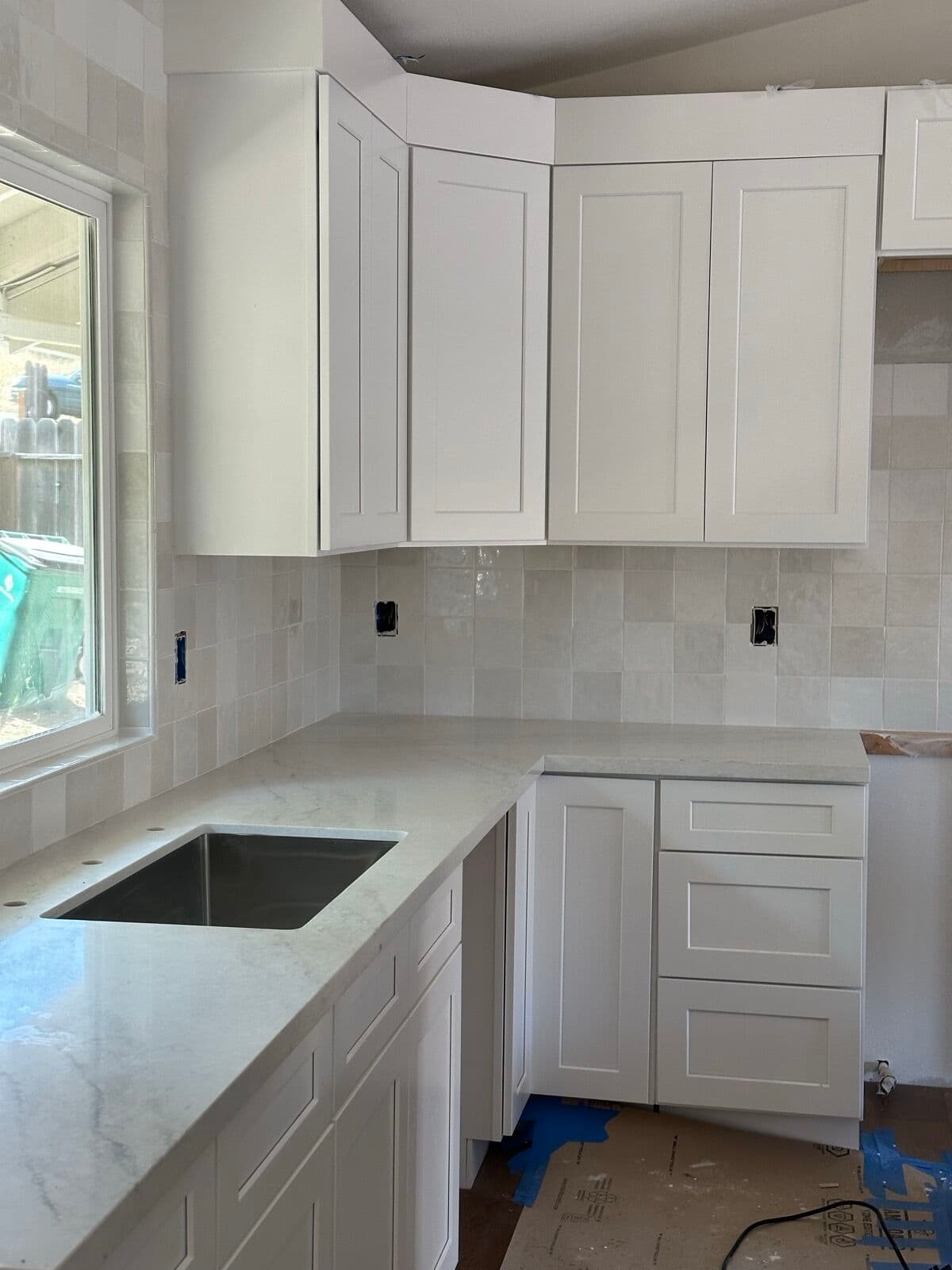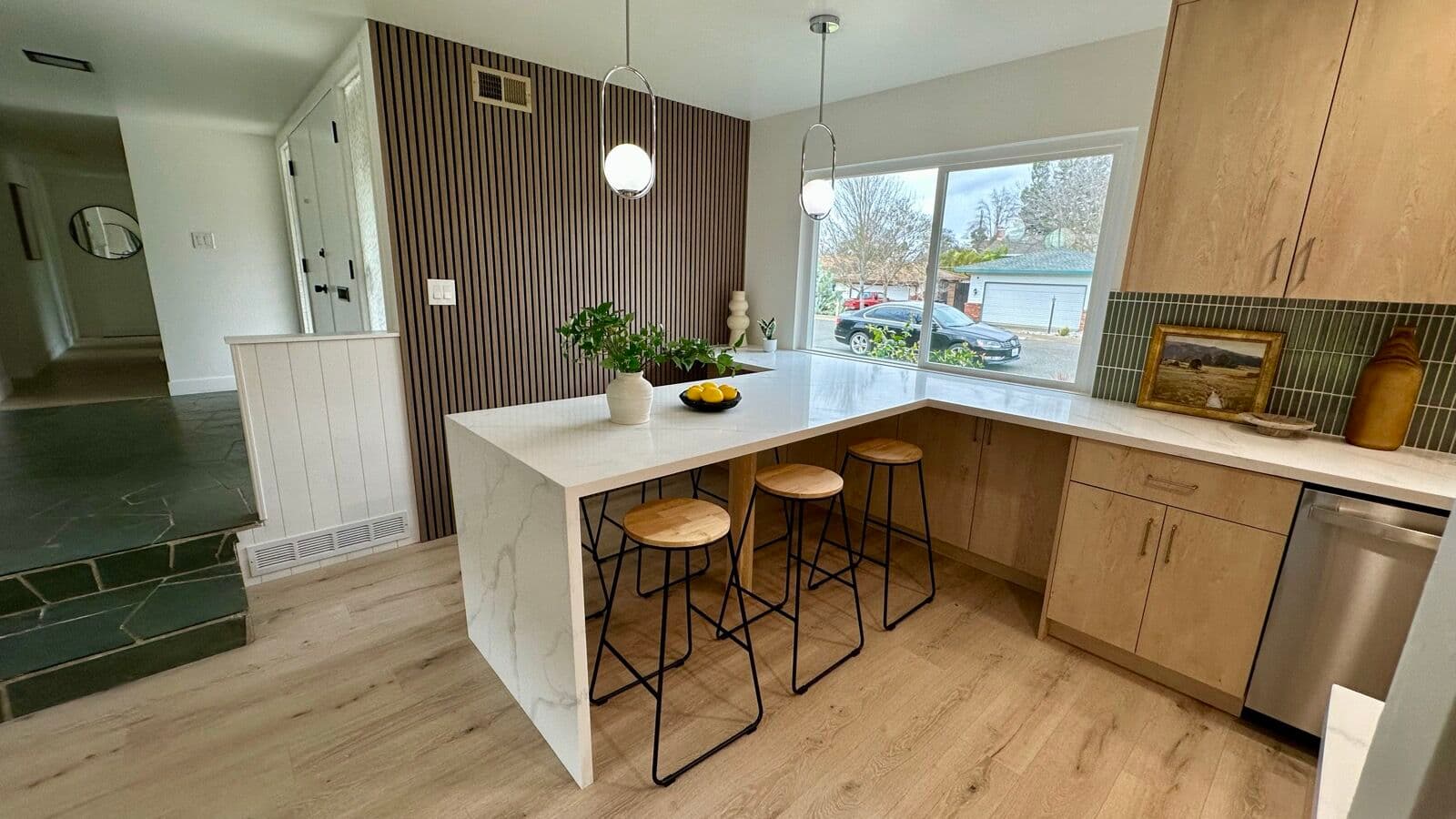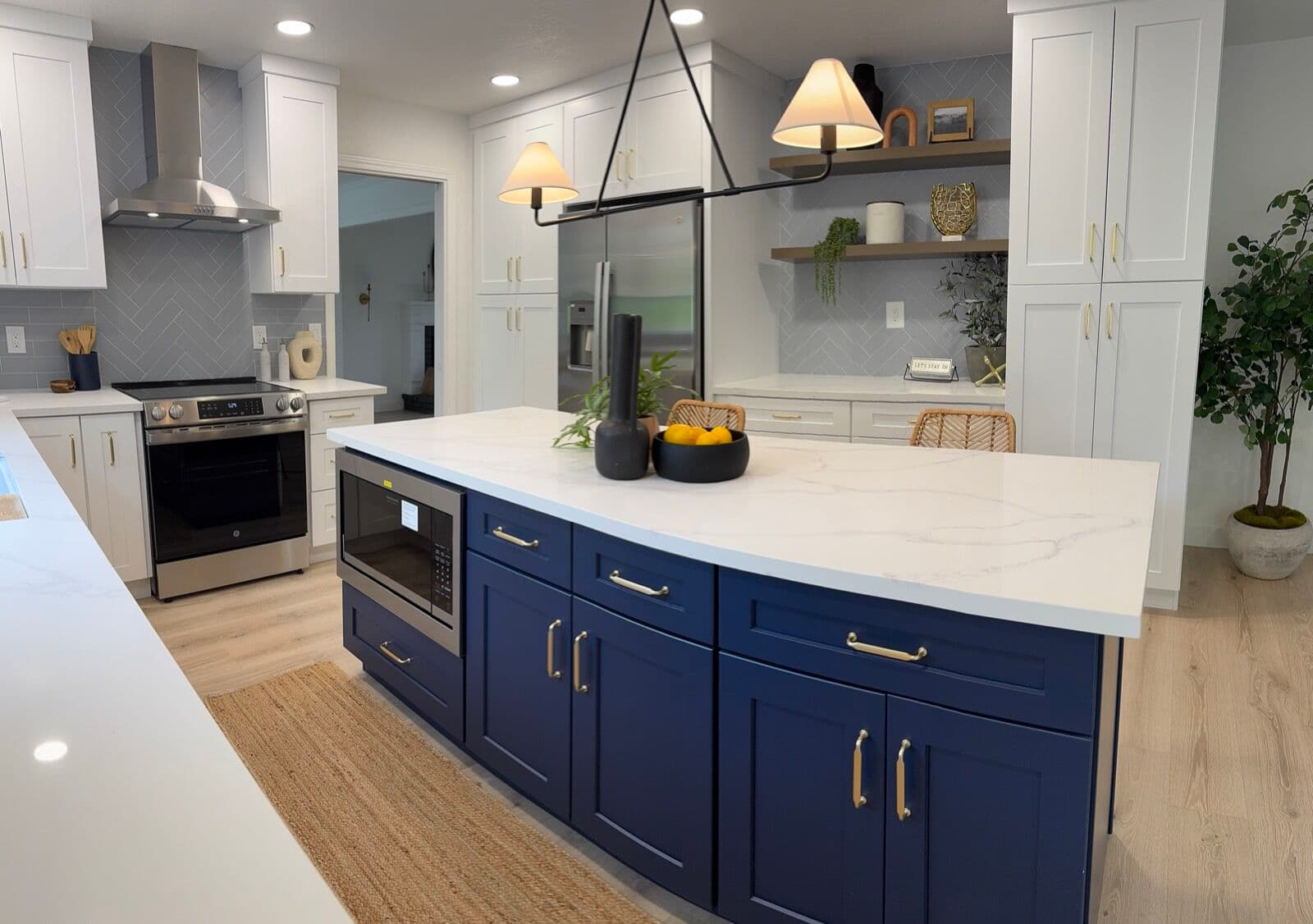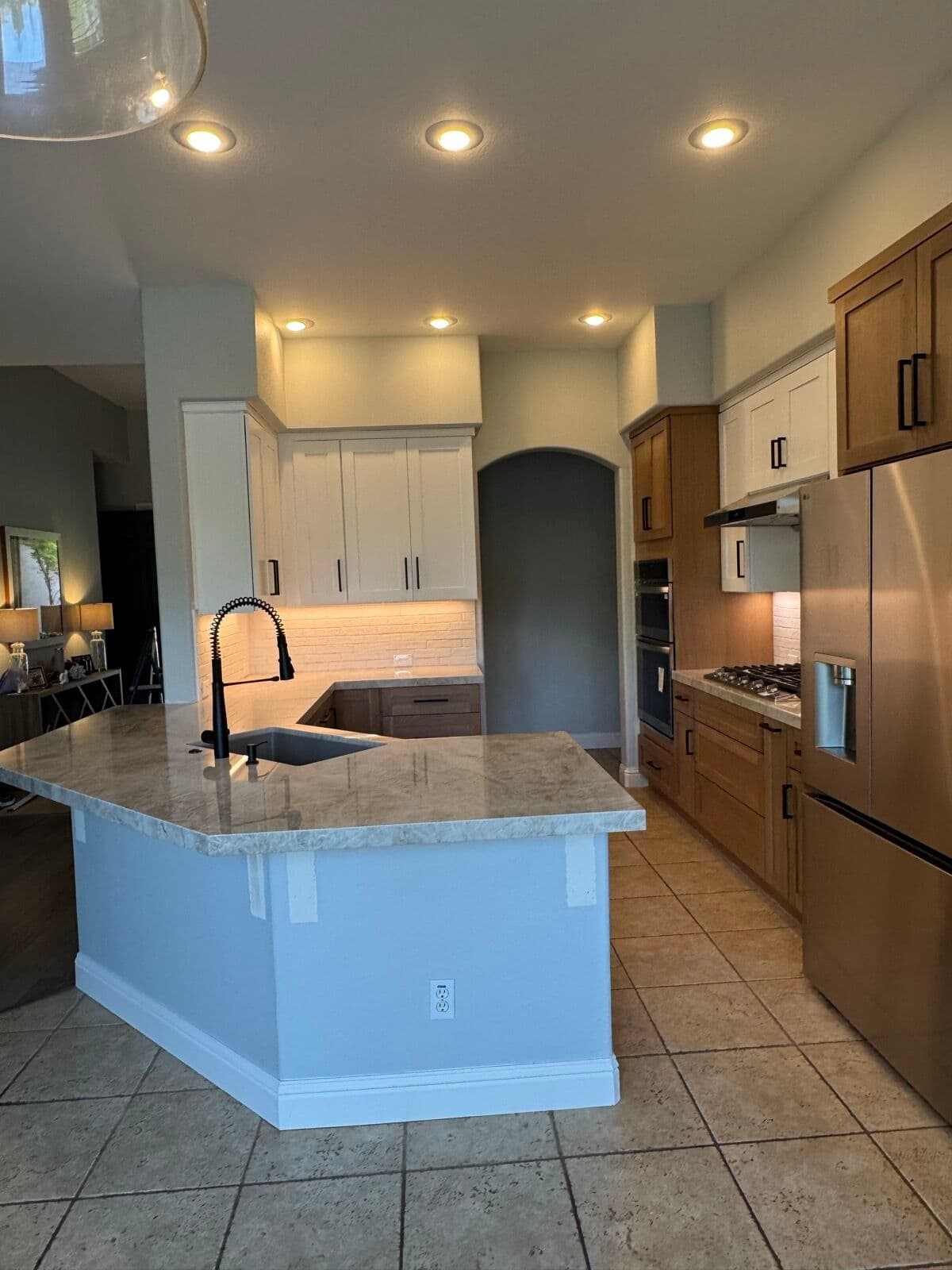
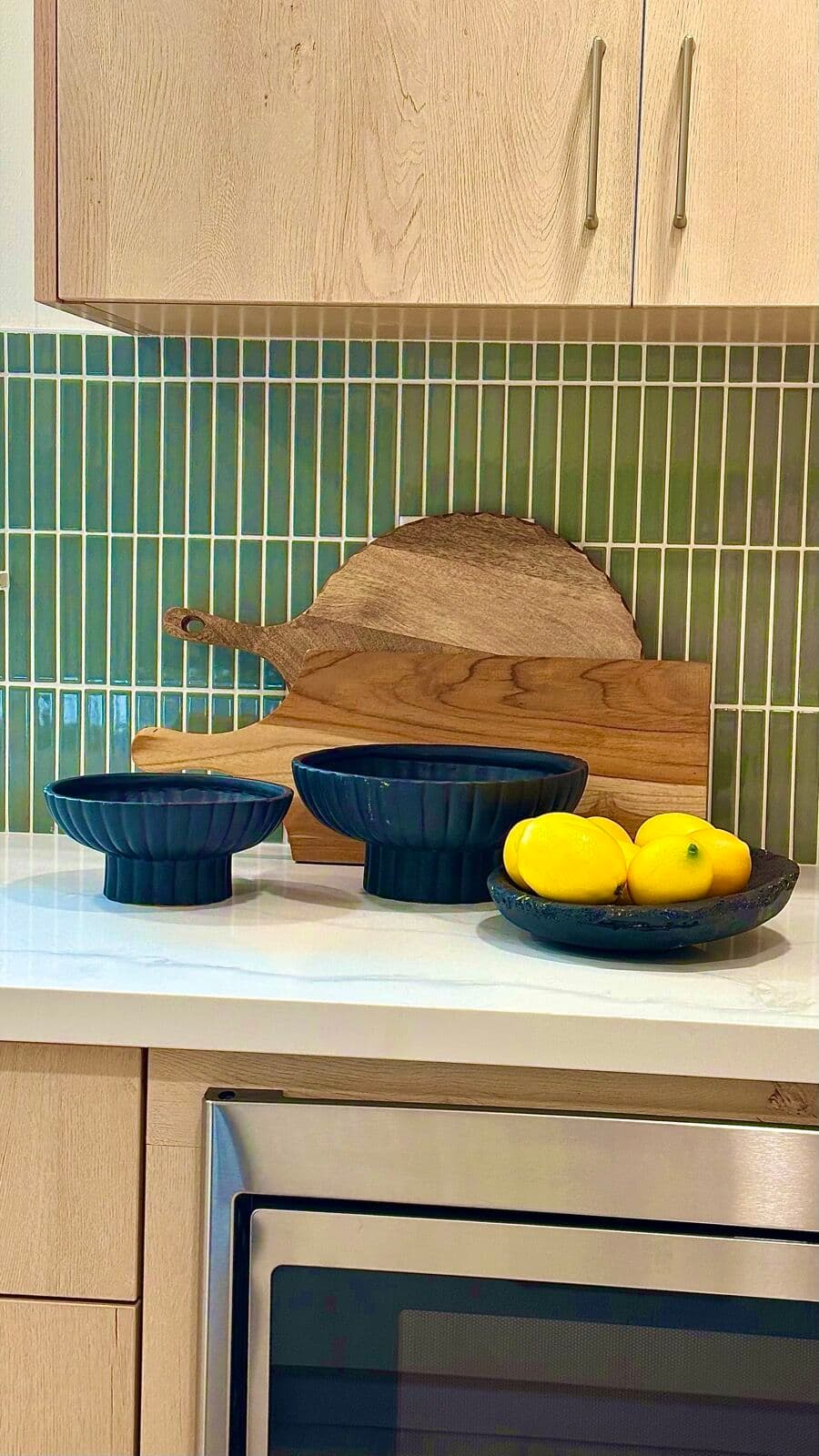
A backsplash is the one surface at eye level for anyone standing in your kitchen, and the one where sloppy work is impossible to hide. Outlets land in the middle of it. The wall behind the range is rarely flat. Cabinets are not always level with each other. Tile is easy; the cuts and the layout are the job.
Where the layout gets decided
Before the first tile goes on we agree three things: where the pattern starts, where it stops, and what happens at the edges. Starting from a centred line at the range and working out keeps the cuts even on both ends. Ending under the uppers is standard; taking it to the ceiling above the range or across a whole wall is a decision worth making on purpose, because it changes how much tile you buy and how the room reads.
Outlets get planned into that layout. Where the tile is expensive or the pattern is directional, we would rather move a cover plate a half inch than cut a mosaic sheet through the middle of a switch.
Tile we set
- Subway and stacked tile, running bond, vertical stack or herringbone
- Zellige and other handmade tile, where the colour and edge variation is the point
- Mosaic and penny sheets, including the ones that need a full-sheet layout plan
- Large-format porcelain, which needs a flat substrate and back-buttering
- Full-height slab backsplash in the same stone as your counters — see Countertops
The order it happens in
Backsplash comes after the countertops, never before. The tile sits on the finished stone and follows the real height between counter and uppers, which is not always the height on the drawing. We template and set the counters first, let the sink and faucet get connected, then tile, then grout, then caulk the joint where tile meets stone — a flexible joint there, not grout, because that is the one that moves.
Most kitchens are a two- or three-day tile job: set one day, grout the next, plus the cure time between them.
Working around a kitchen in use
We mask the counters and the cabinet fronts, cut wet outside where we can, and clean up at the end of each day rather than at the end of the job. Power at the counter goes off while the plates are off the wall, and back on before we leave.
A backsplash on its own is a common way people start with us. It also finishes a cosmetic kitchen refresh or a full kitchen remodel, where the tile is priced as part of the same written scope.