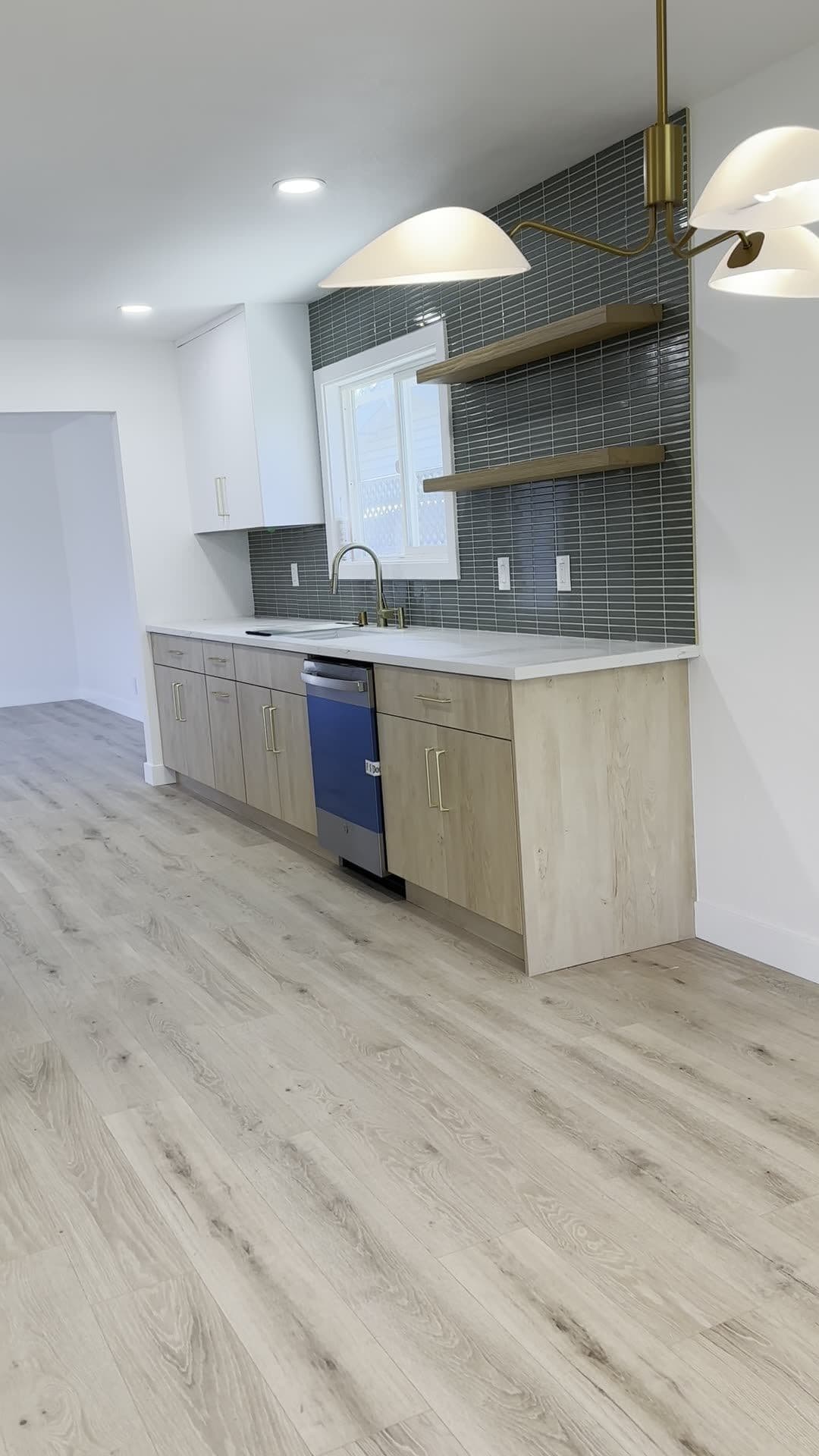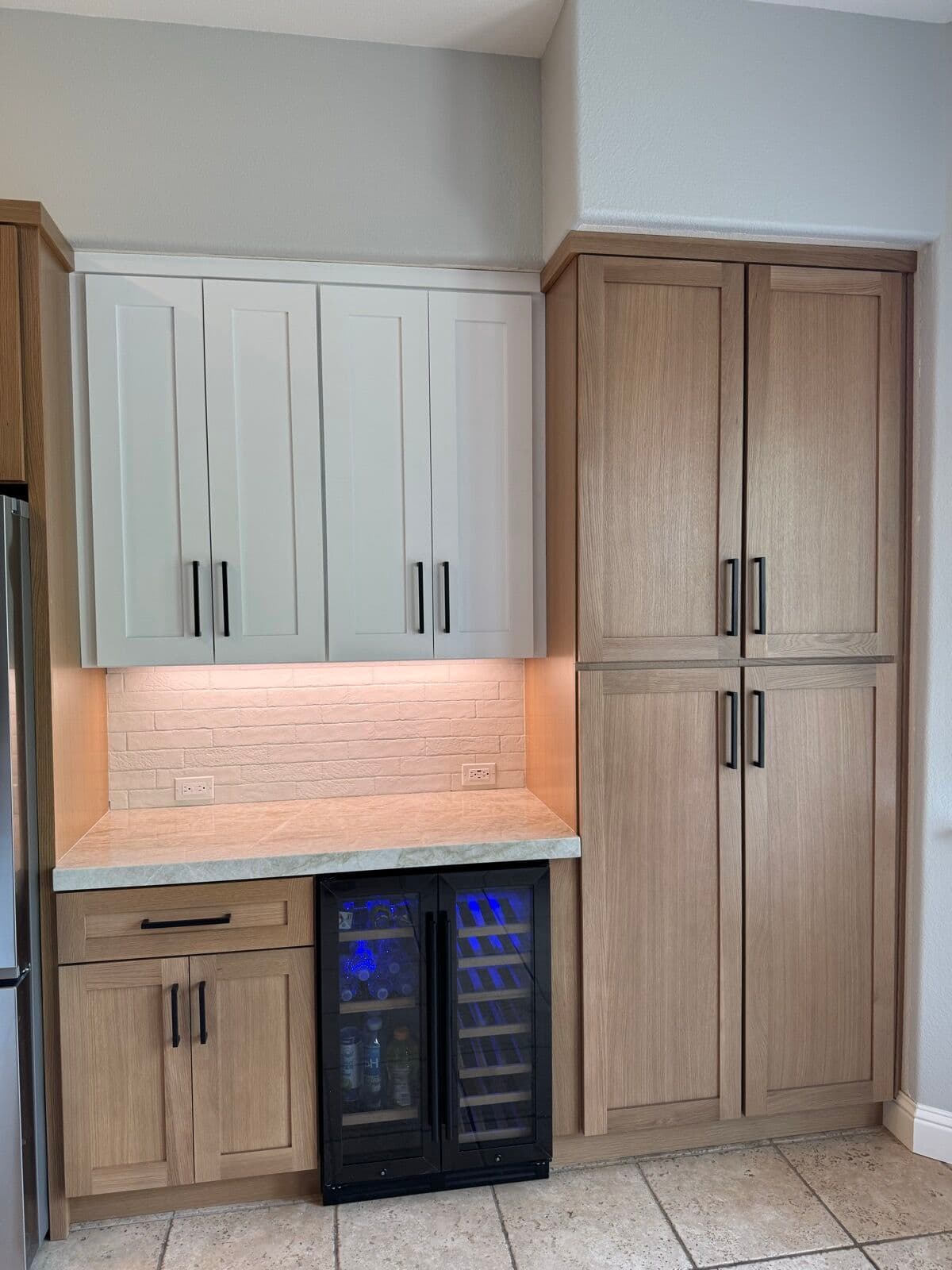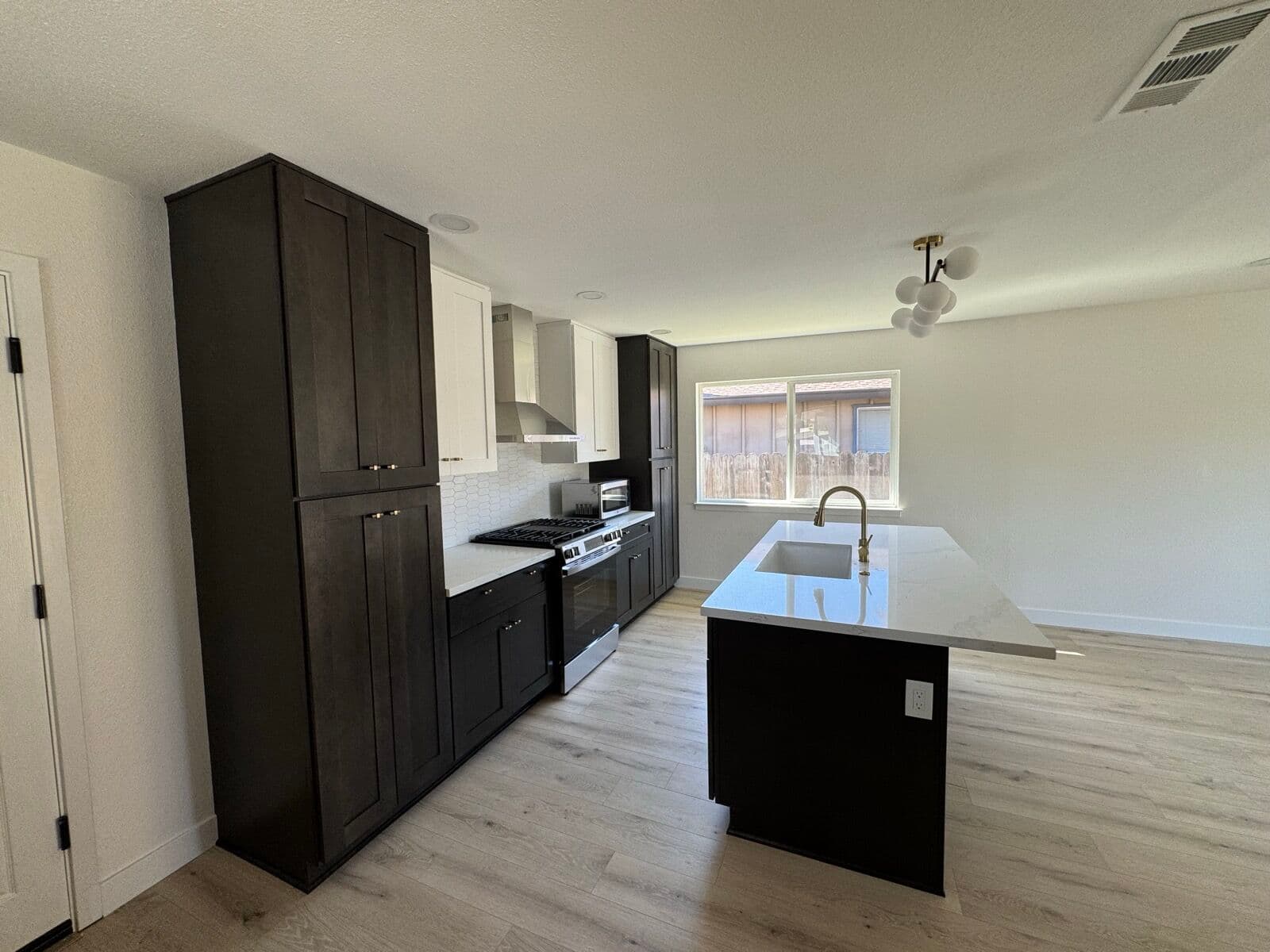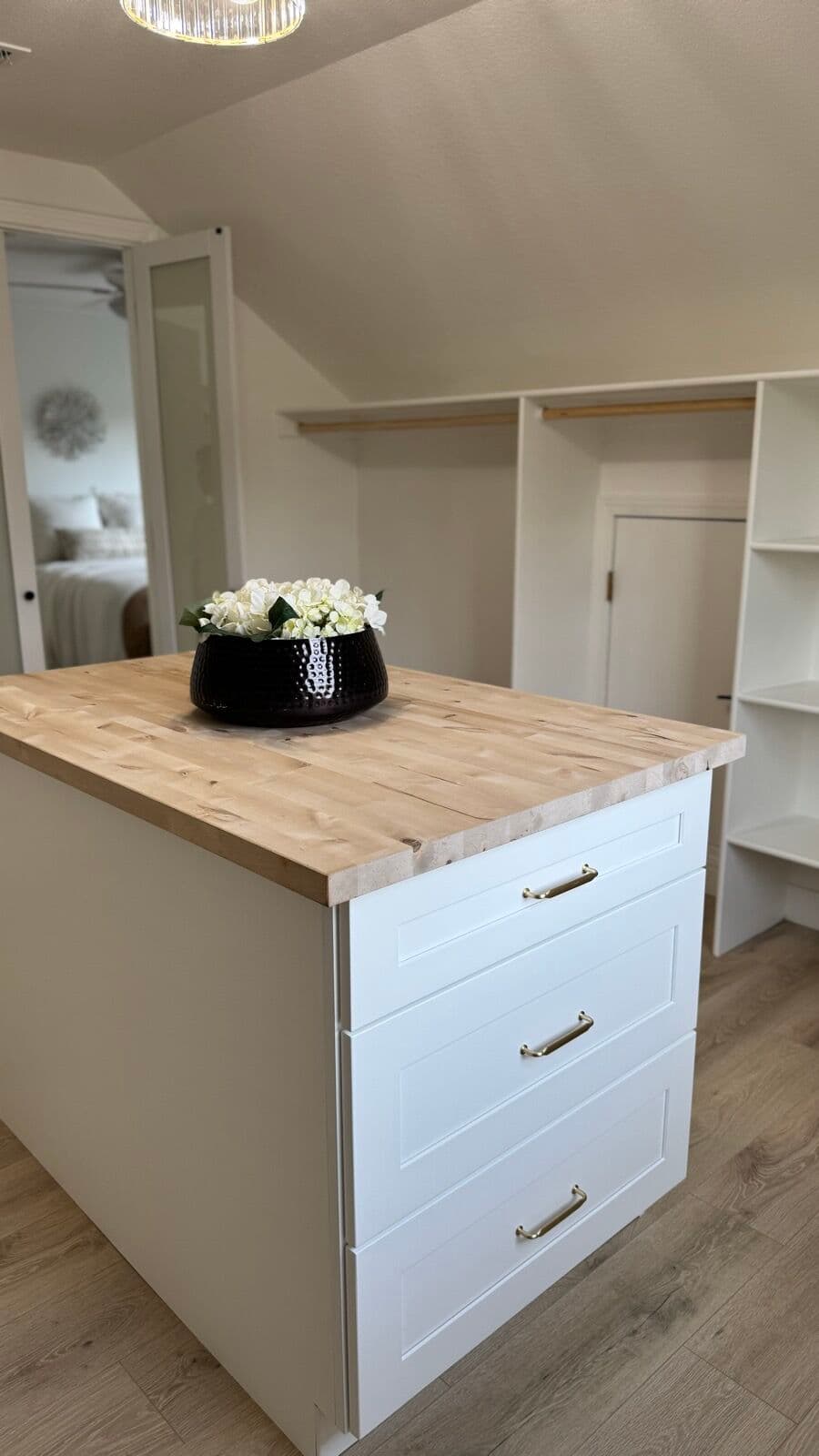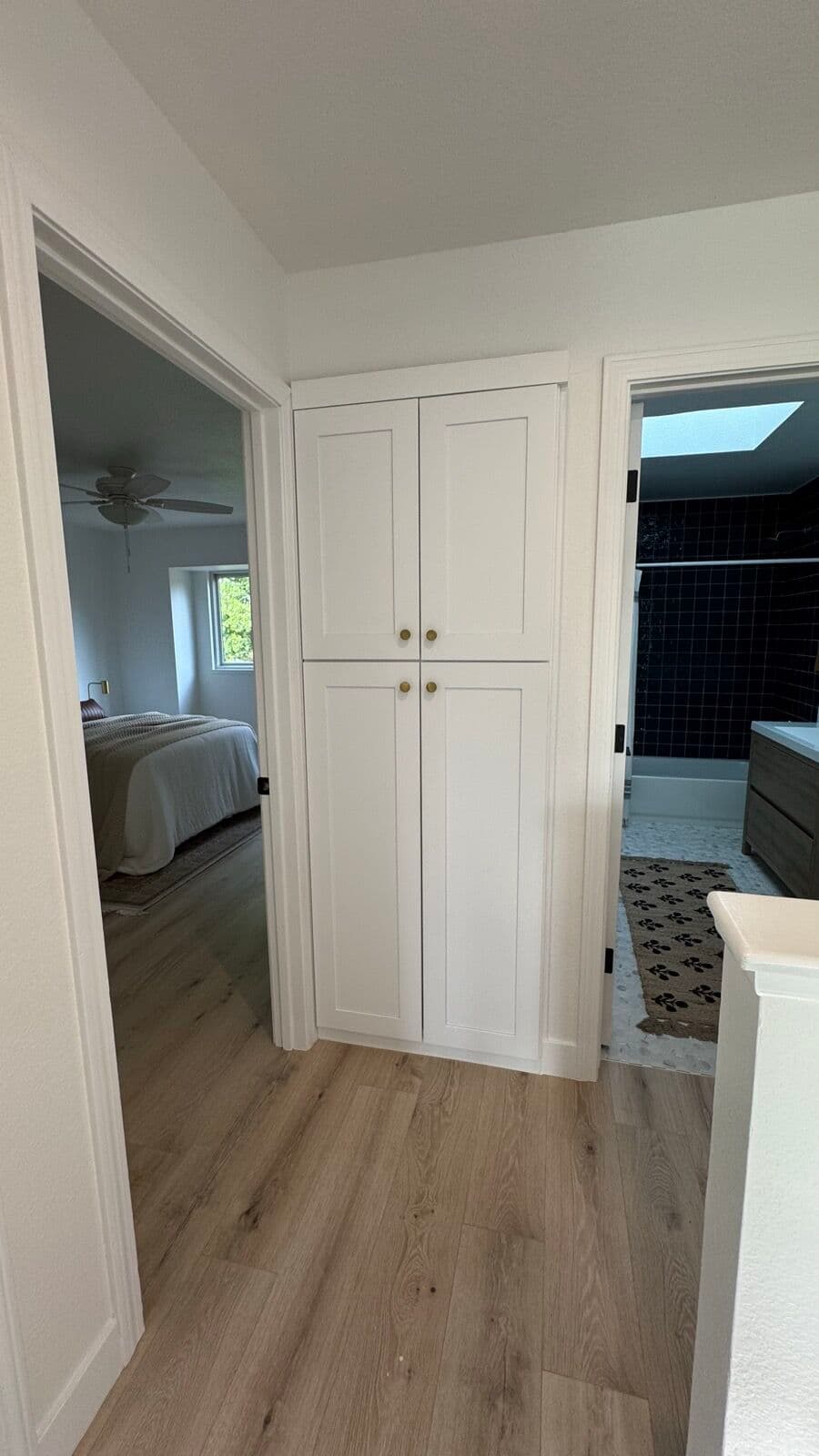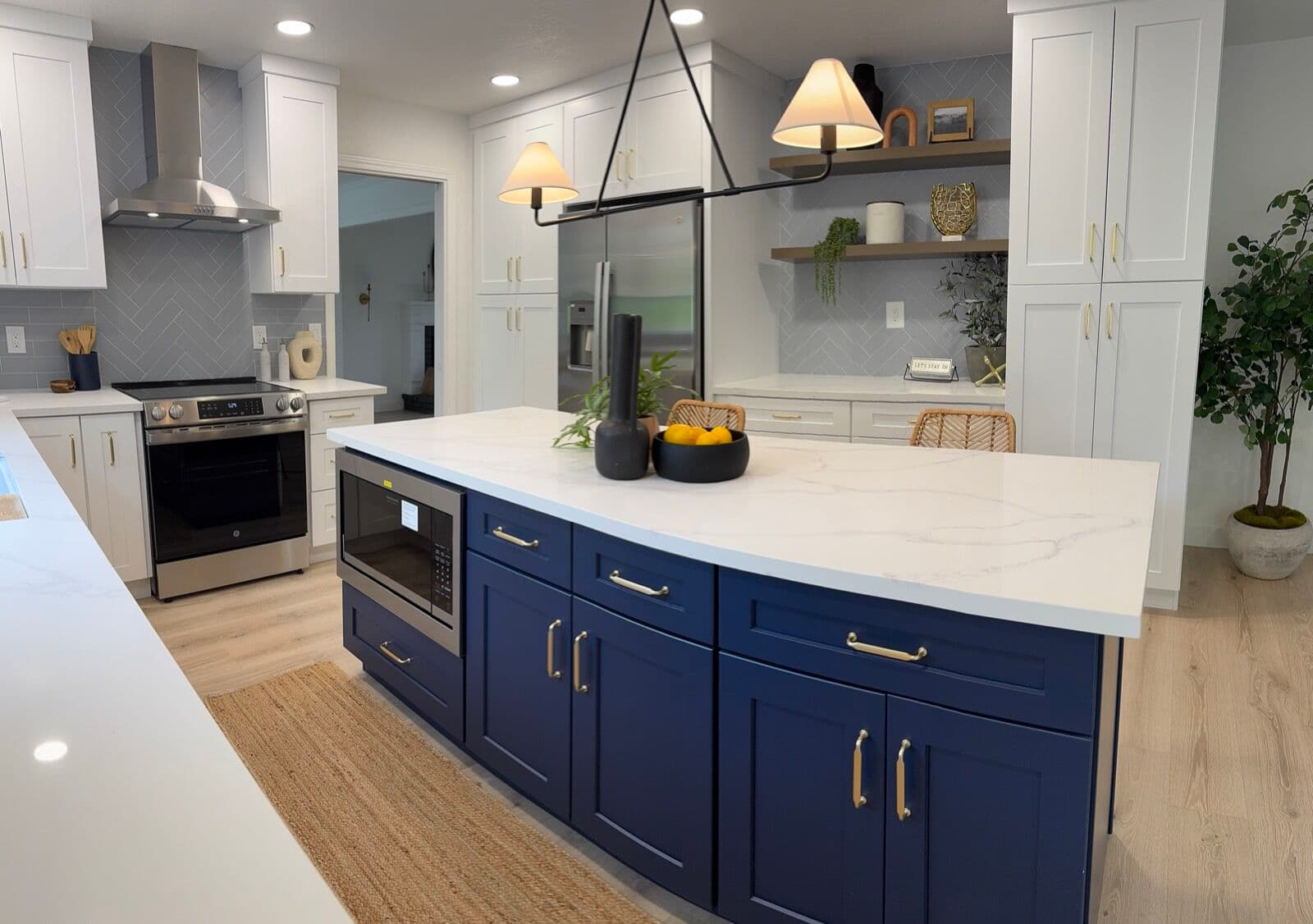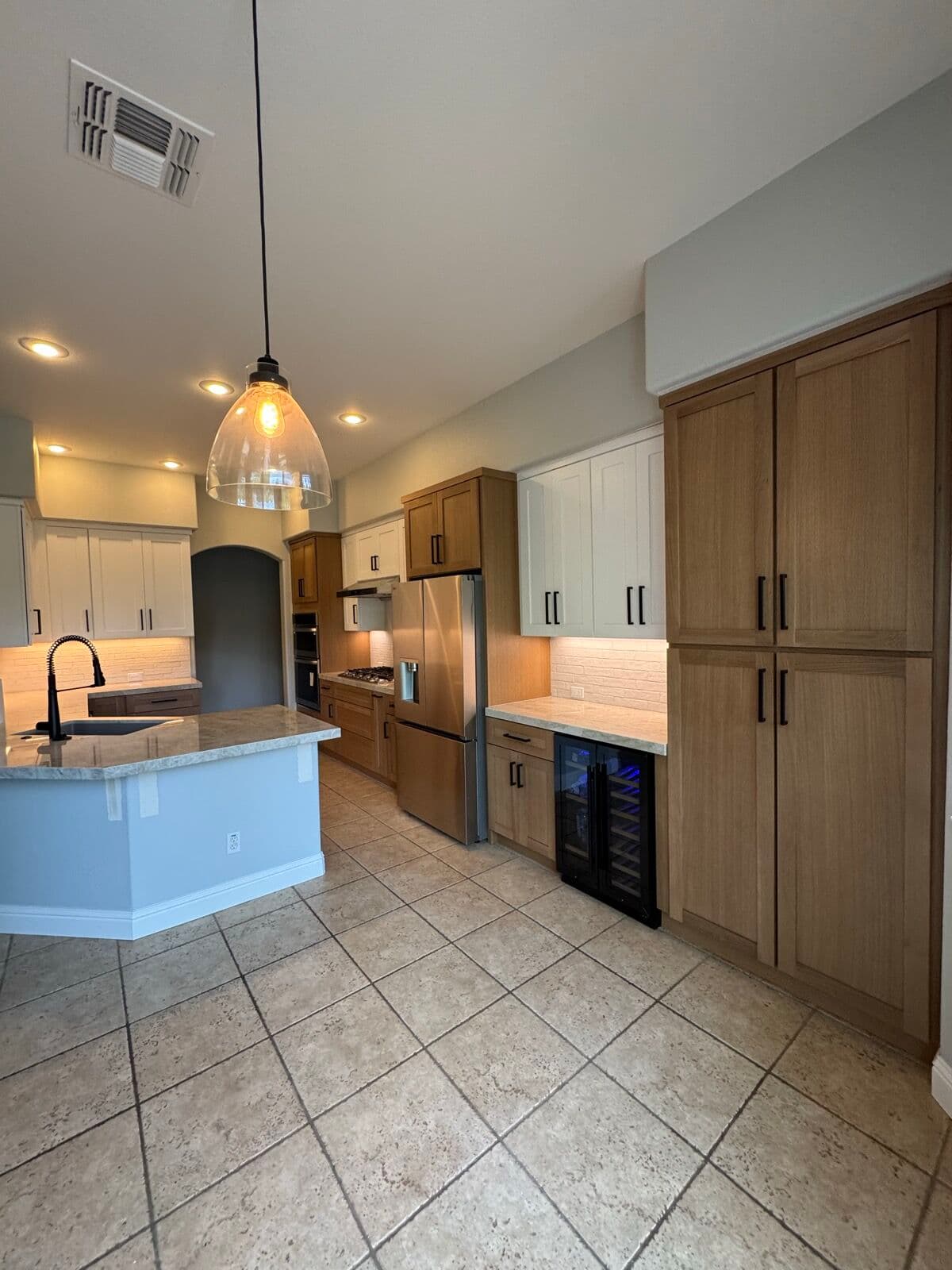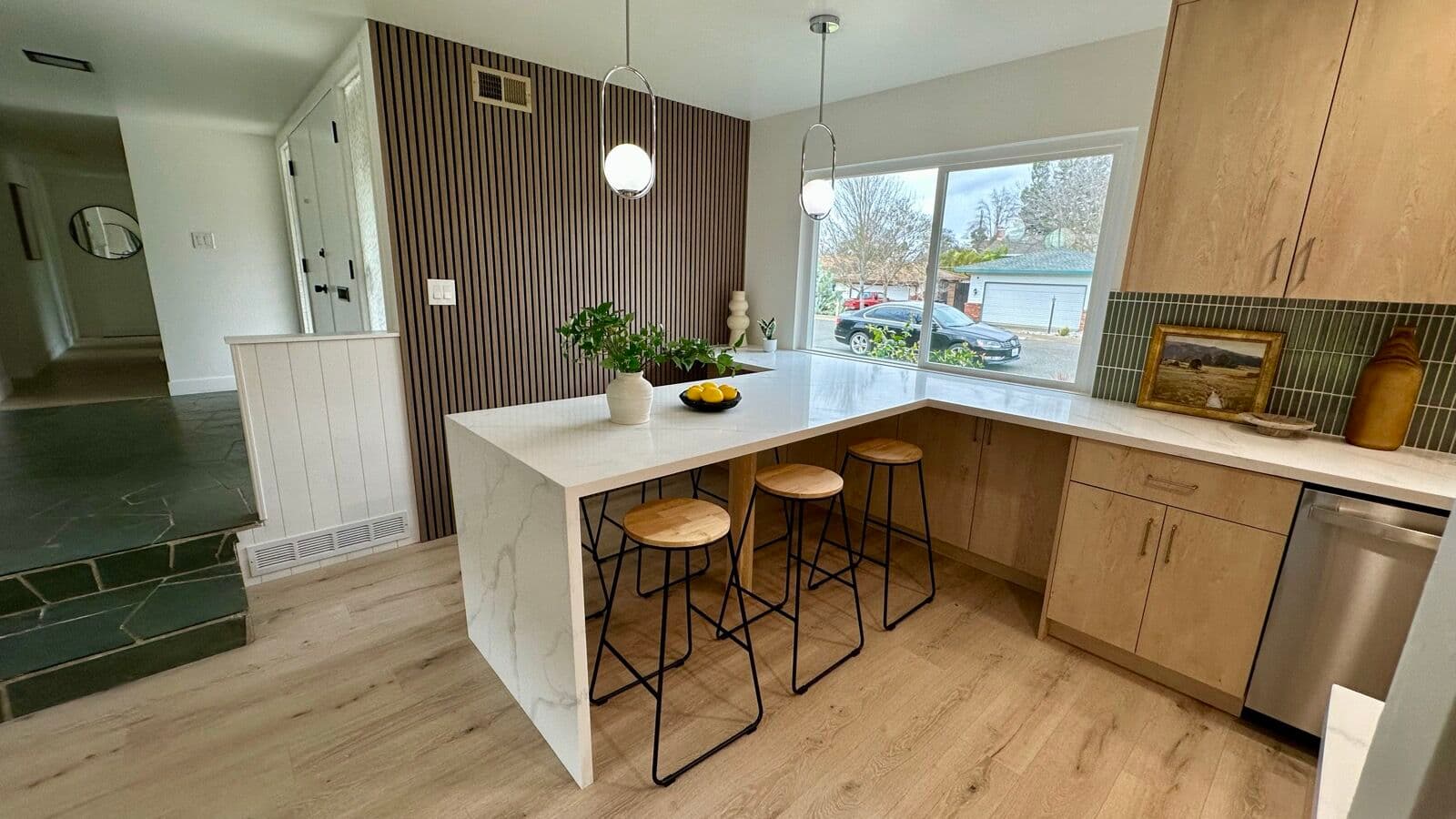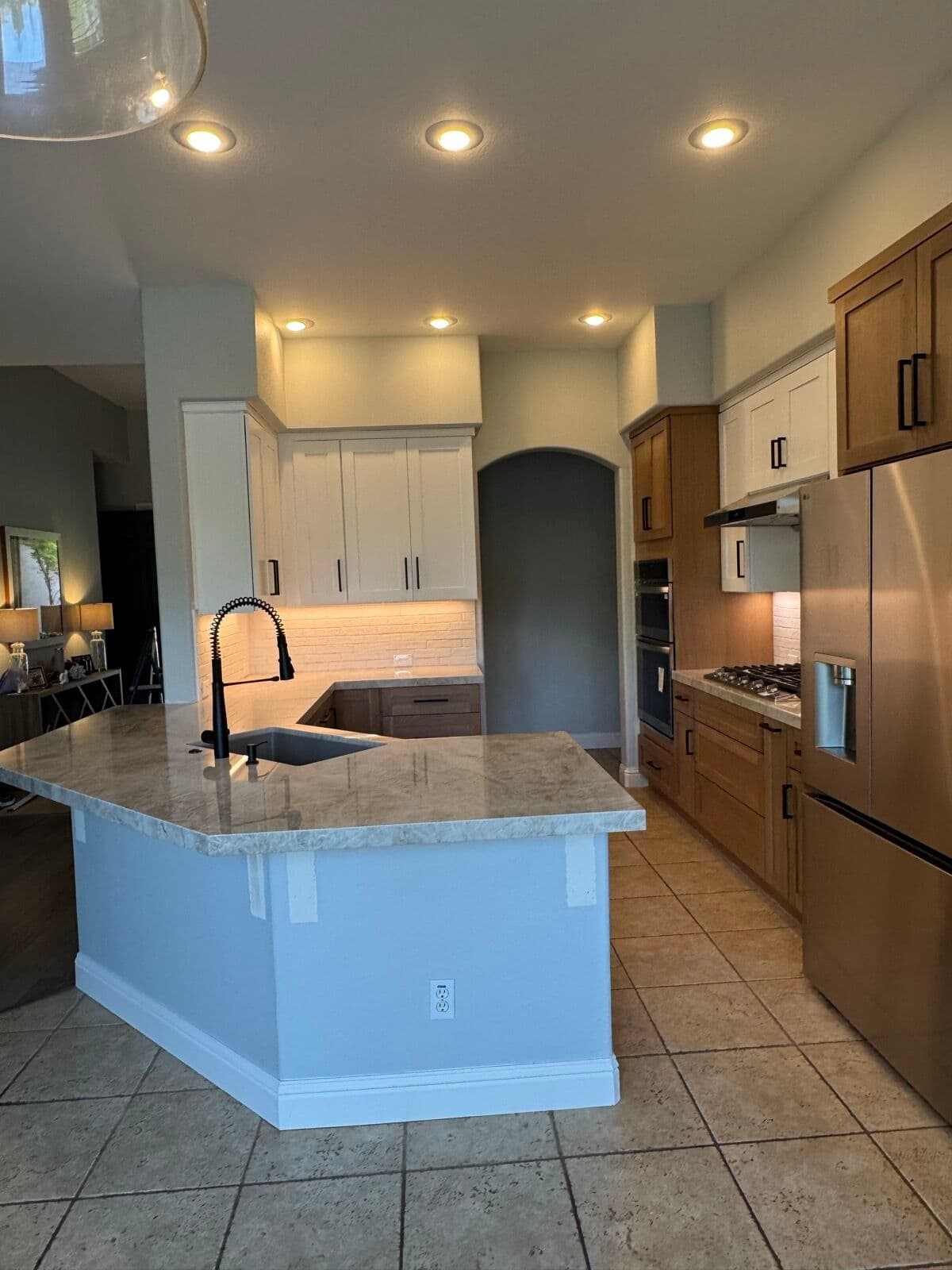
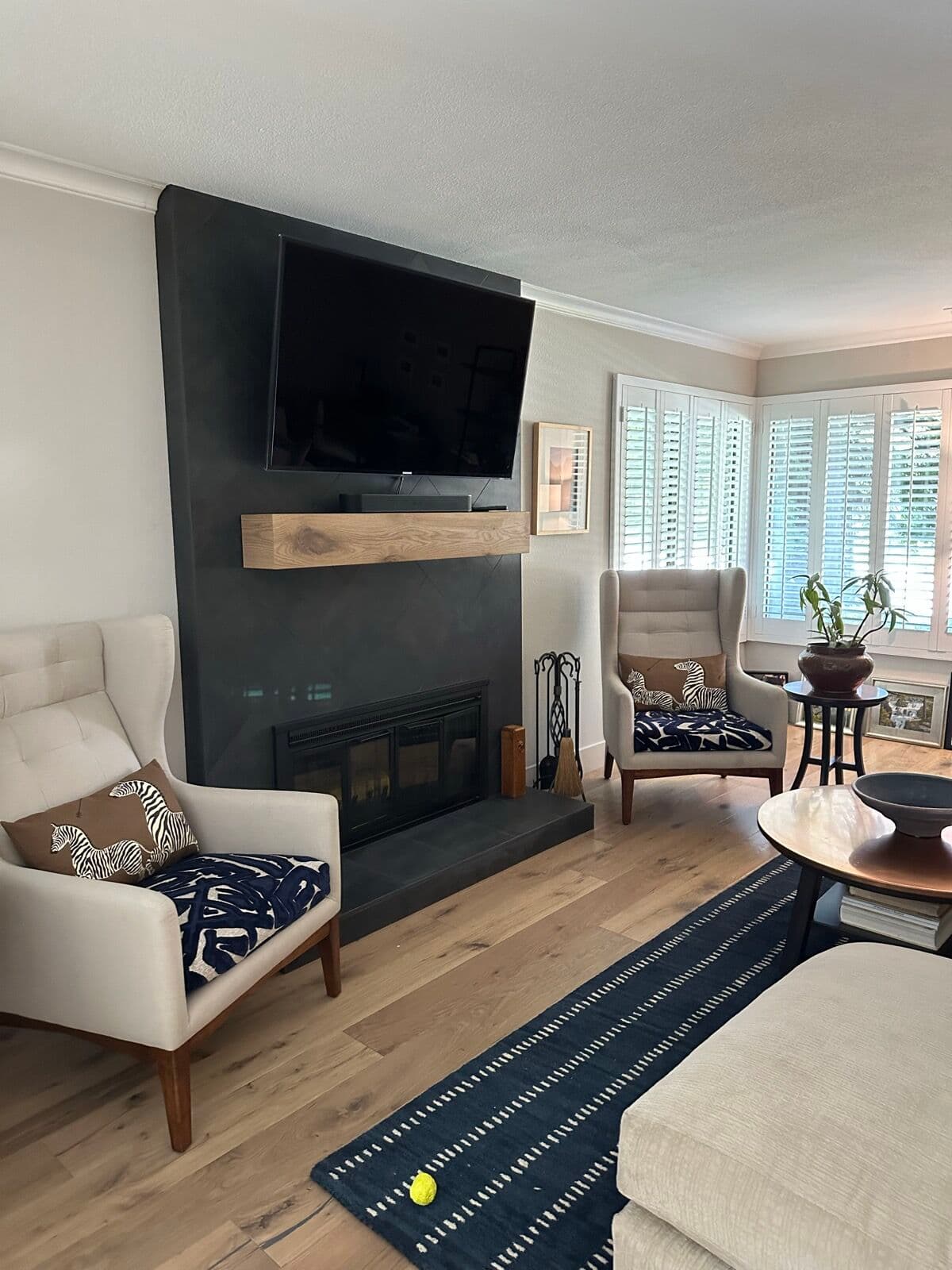
Freestanding shelving never uses the whole wall, never meets the ceiling, and always leaves a gap that collects dust. Built-in cabinetry fills the wall properly, and — because it comes from the same lines as the kitchen — looks like part of the house rather than furniture pushed against it.
Bookcases
Scribed to the wall and the ceiling, with adjustable shelves through most of the run and a fixed shelf where the heavy books sit. Shelf depth of 11 to 12 inches suits books; deeper than that and paperbacks disappear behind each other. A base cabinet run underneath keeps the clutter closed.
Flanking a fireplace is the classic arrangement, and the one that most changes a living room.
Media walls
The television is the hard part, and the details are unglamorous:
- Ventilation for the equipment cupboard, so a receiver is not cooking itself behind a closed door
- Cable routing — a chase behind the cabinetry and grommets where the cables land, decided before anything is built
- Power in the right place, brought by a licensed electrician on our schedule where a new outlet is needed
- A soundbar shelf at the right height, and space for a centre speaker
- Adjustable shelving either side, so the wall does not date when the equipment changes
How it runs
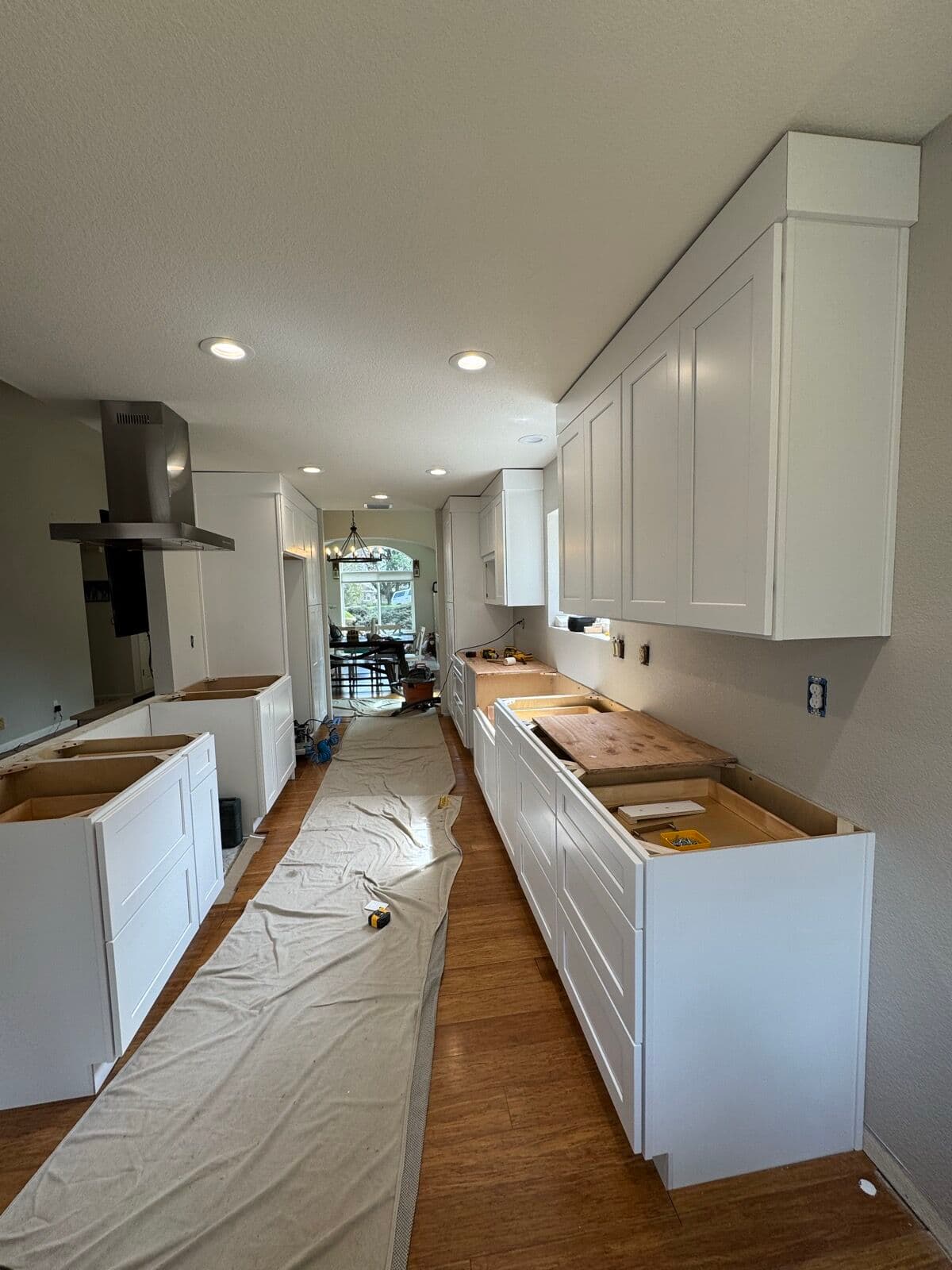
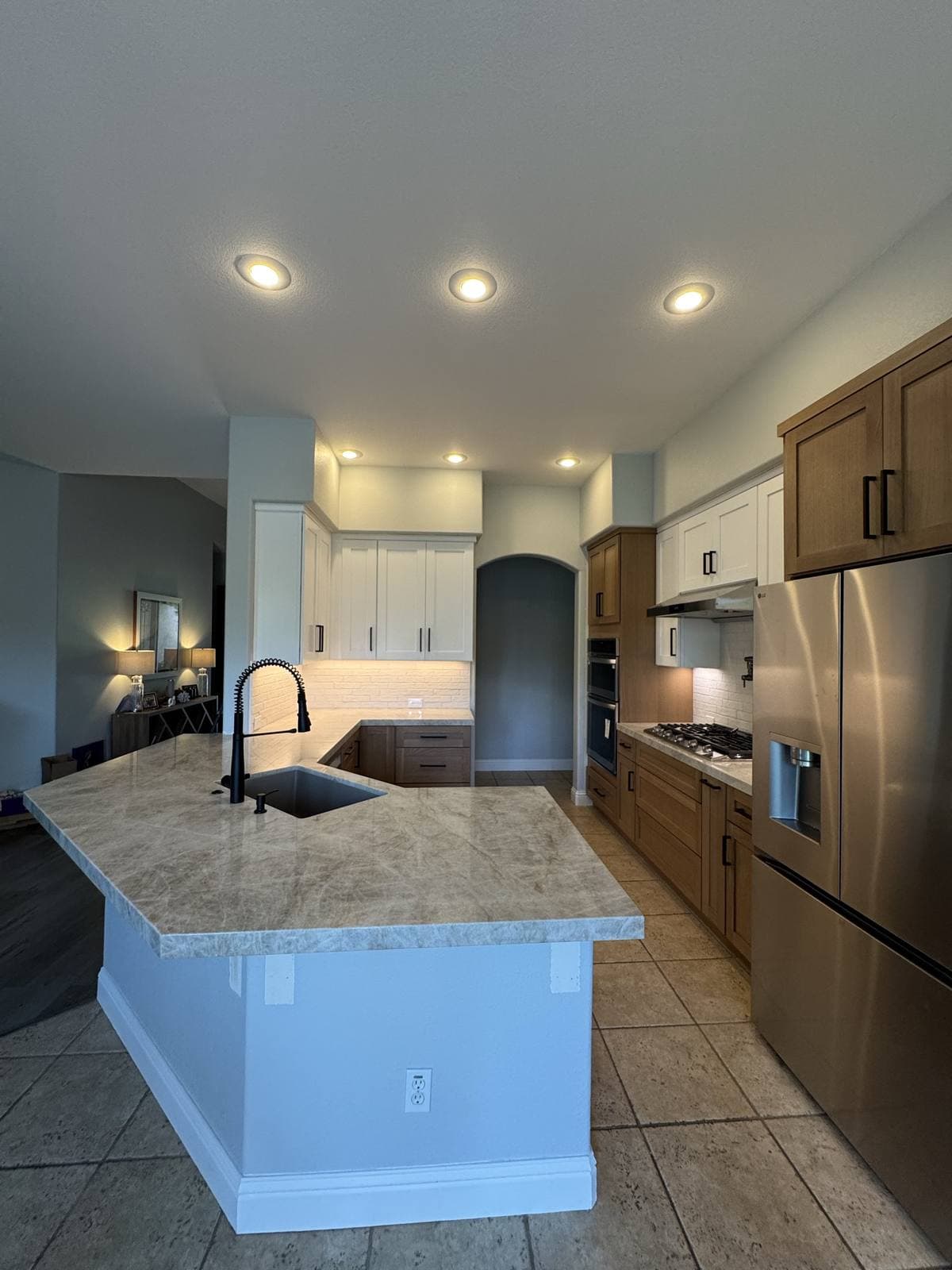
Measured in the room, drawn, built by our manufacturing partners and installed by our own crew — scribed, levelled, and finished with trim where the run meets the wall. Same door styles and finishes as your kitchen cabinets, or a deliberate contrast if the room wants one.
Pairs with home office built-ins and closets and home storage when more than one room is getting cabinetry.