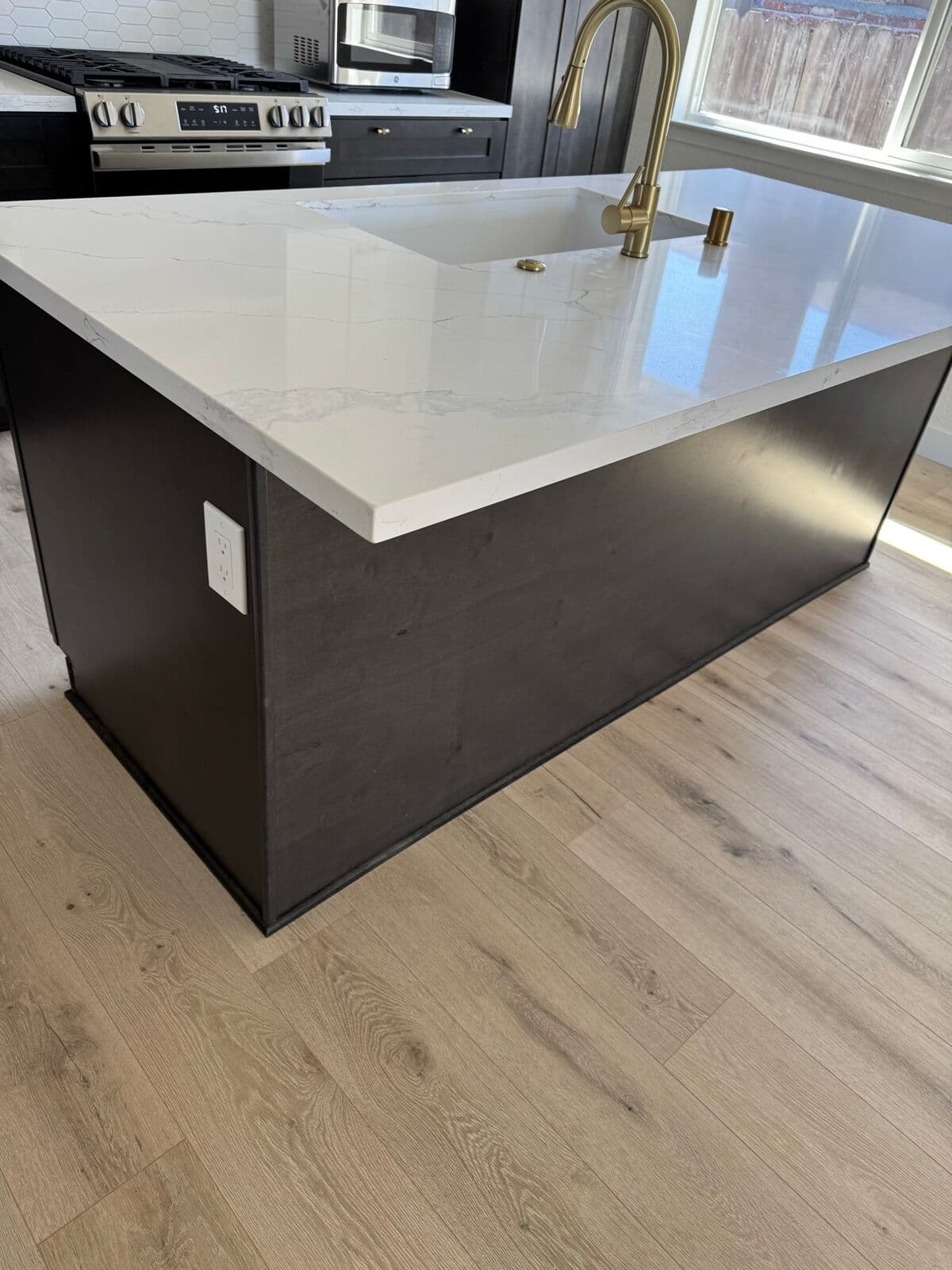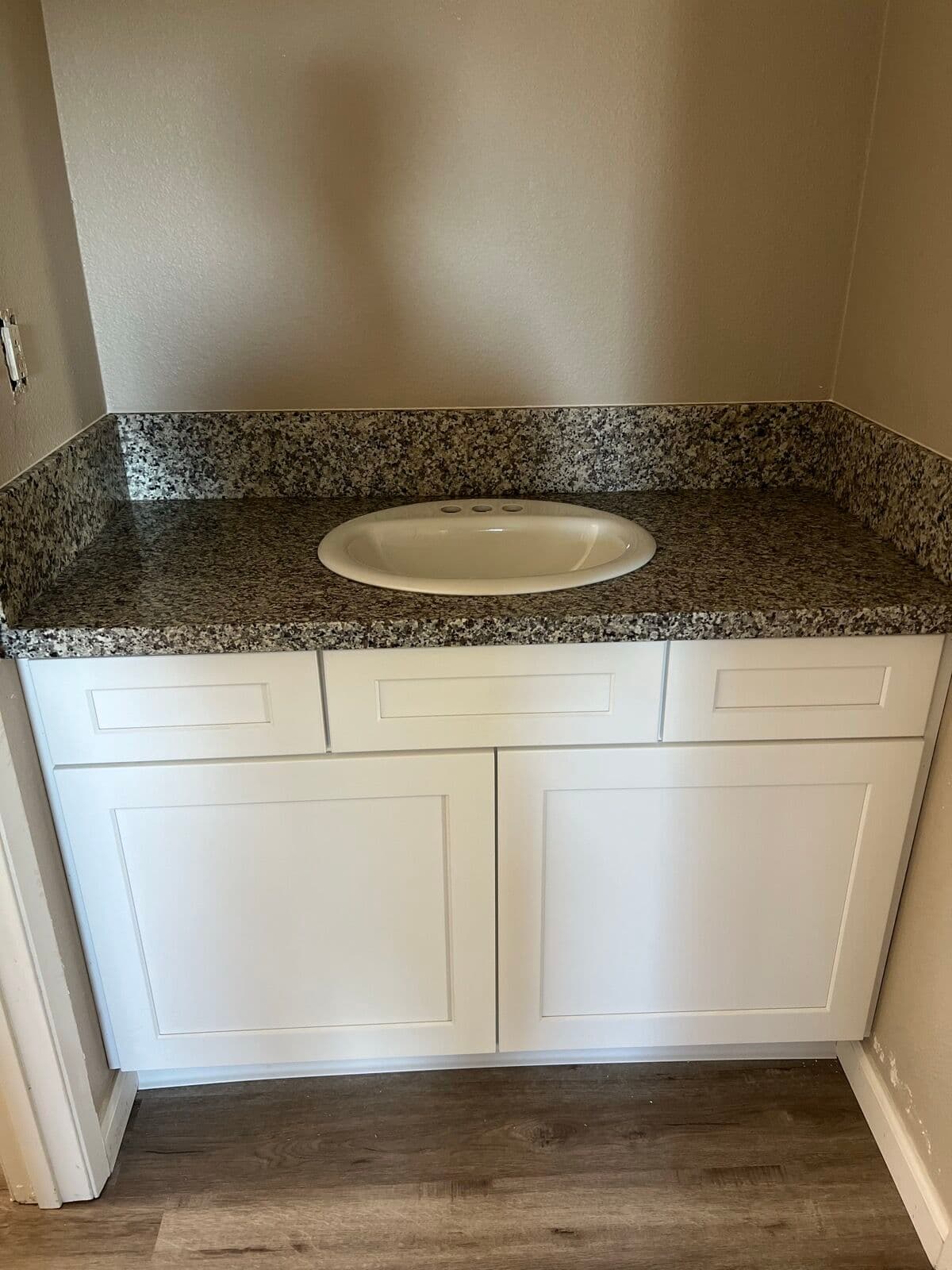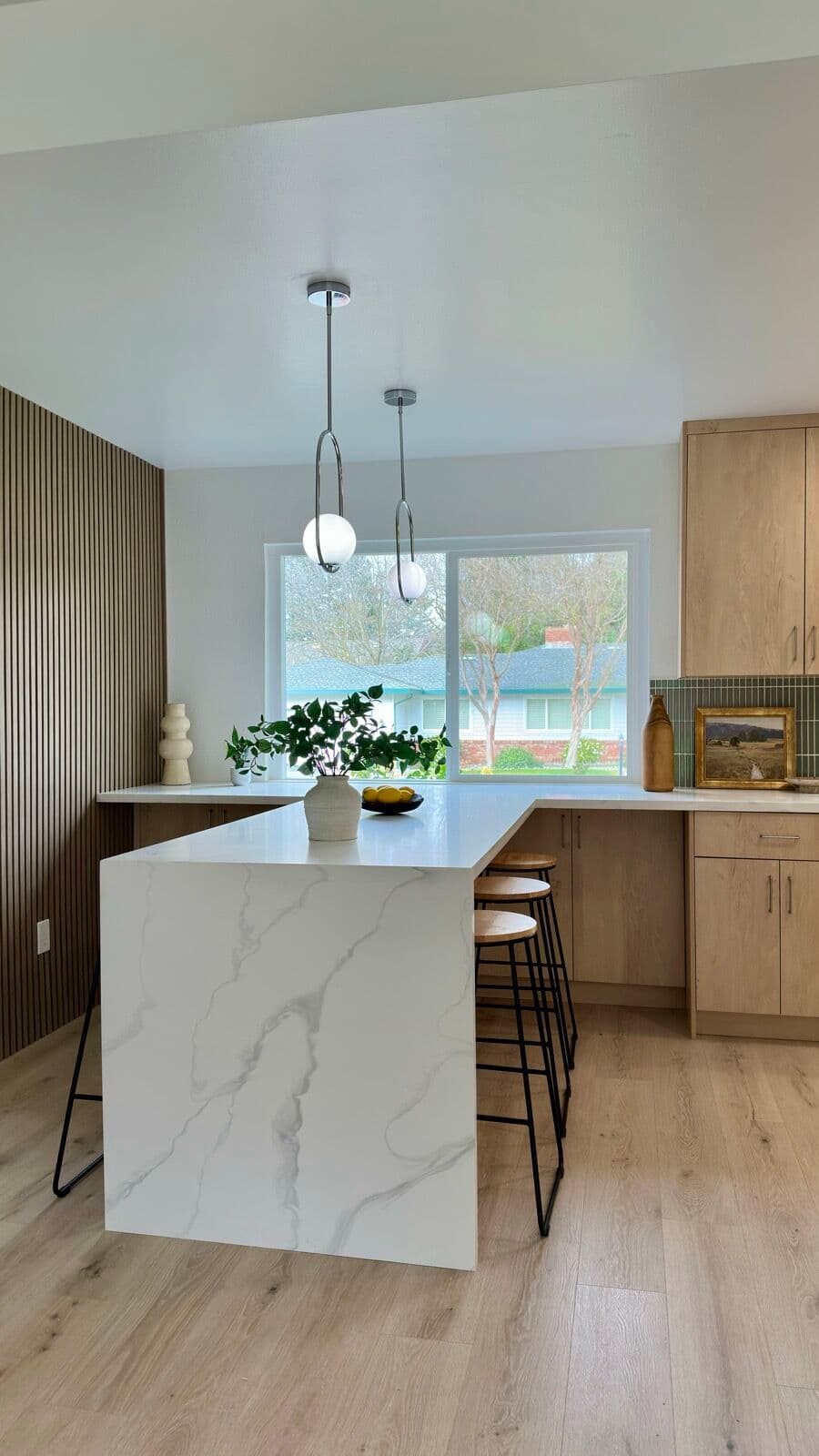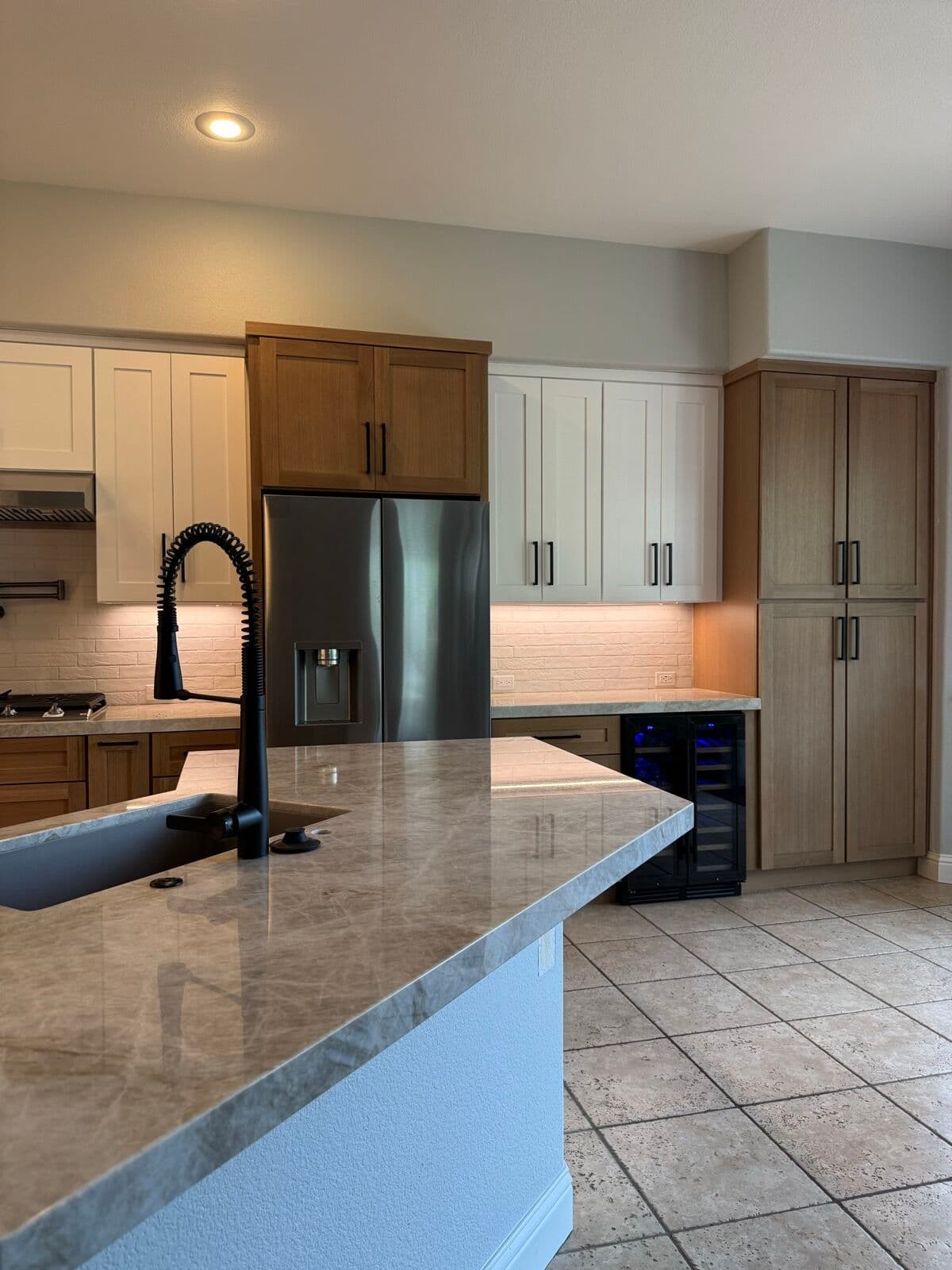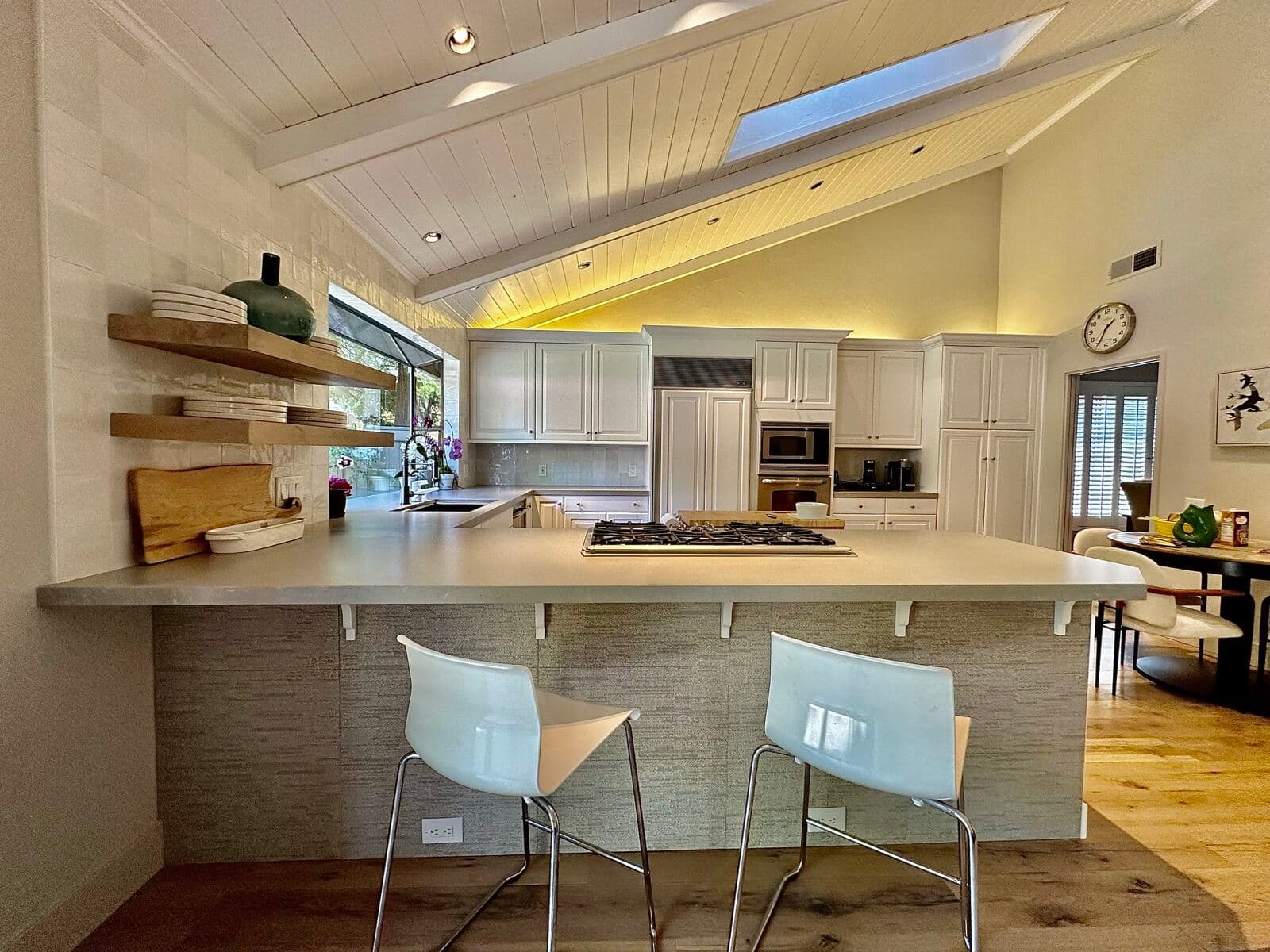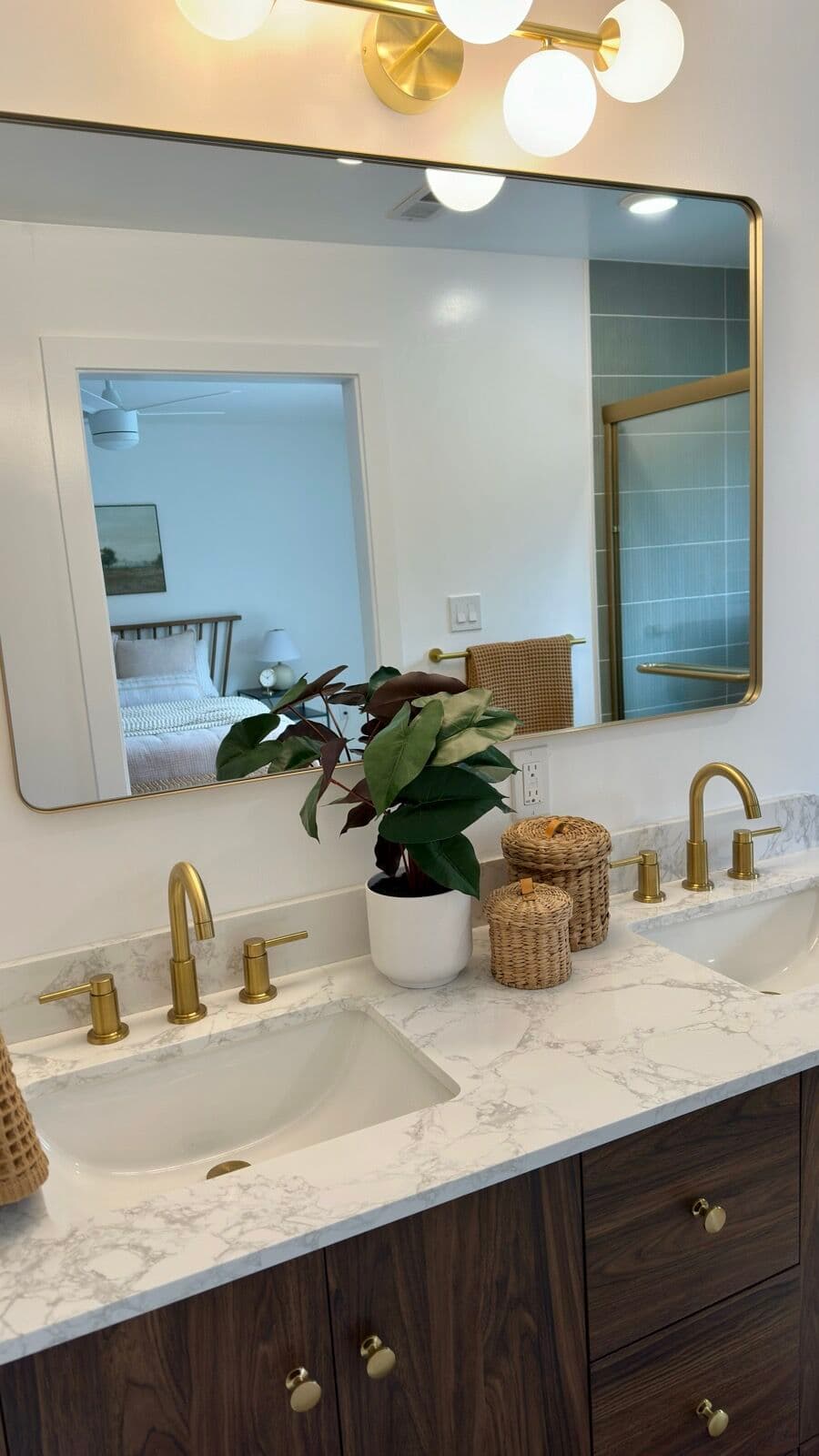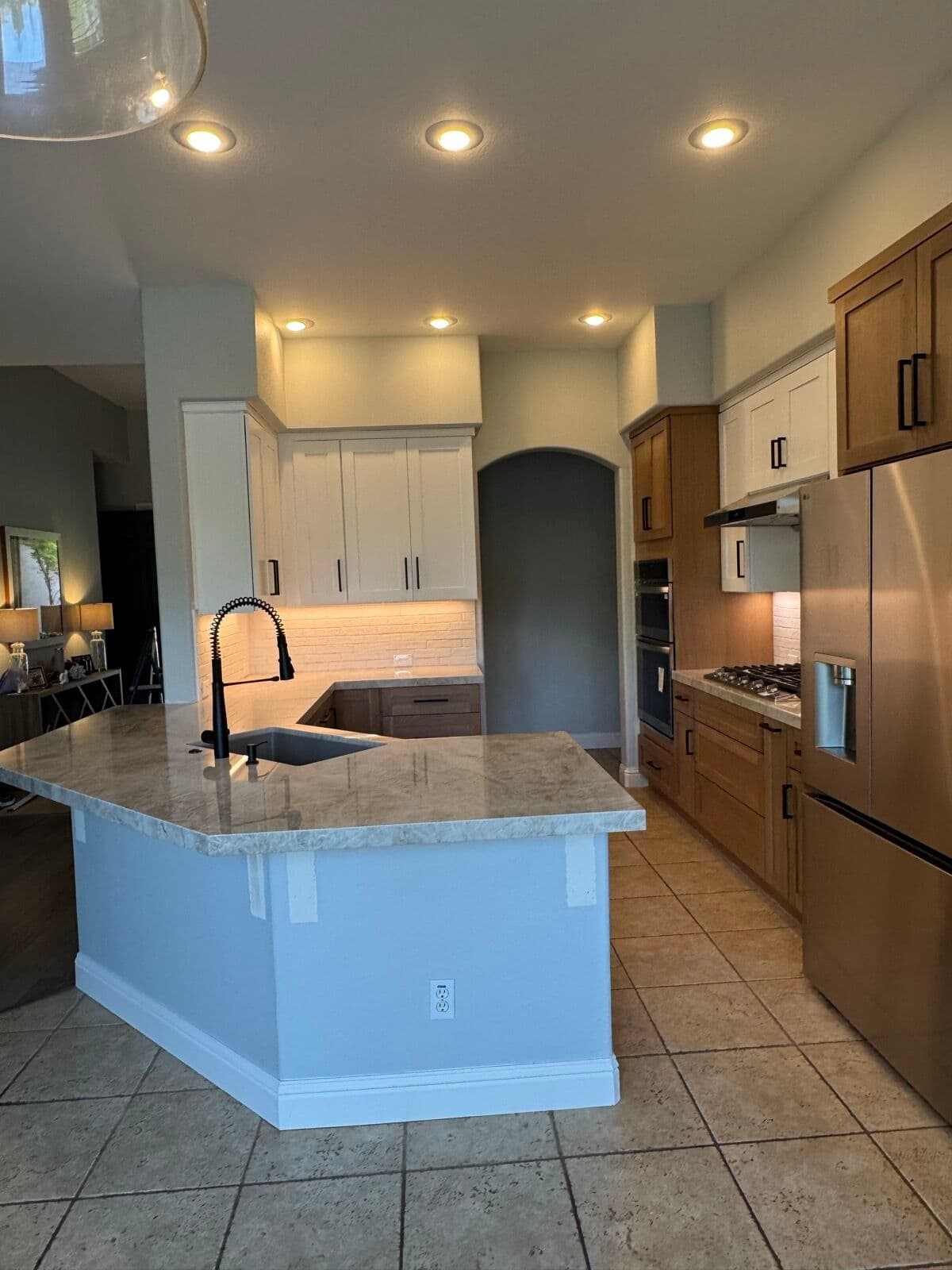
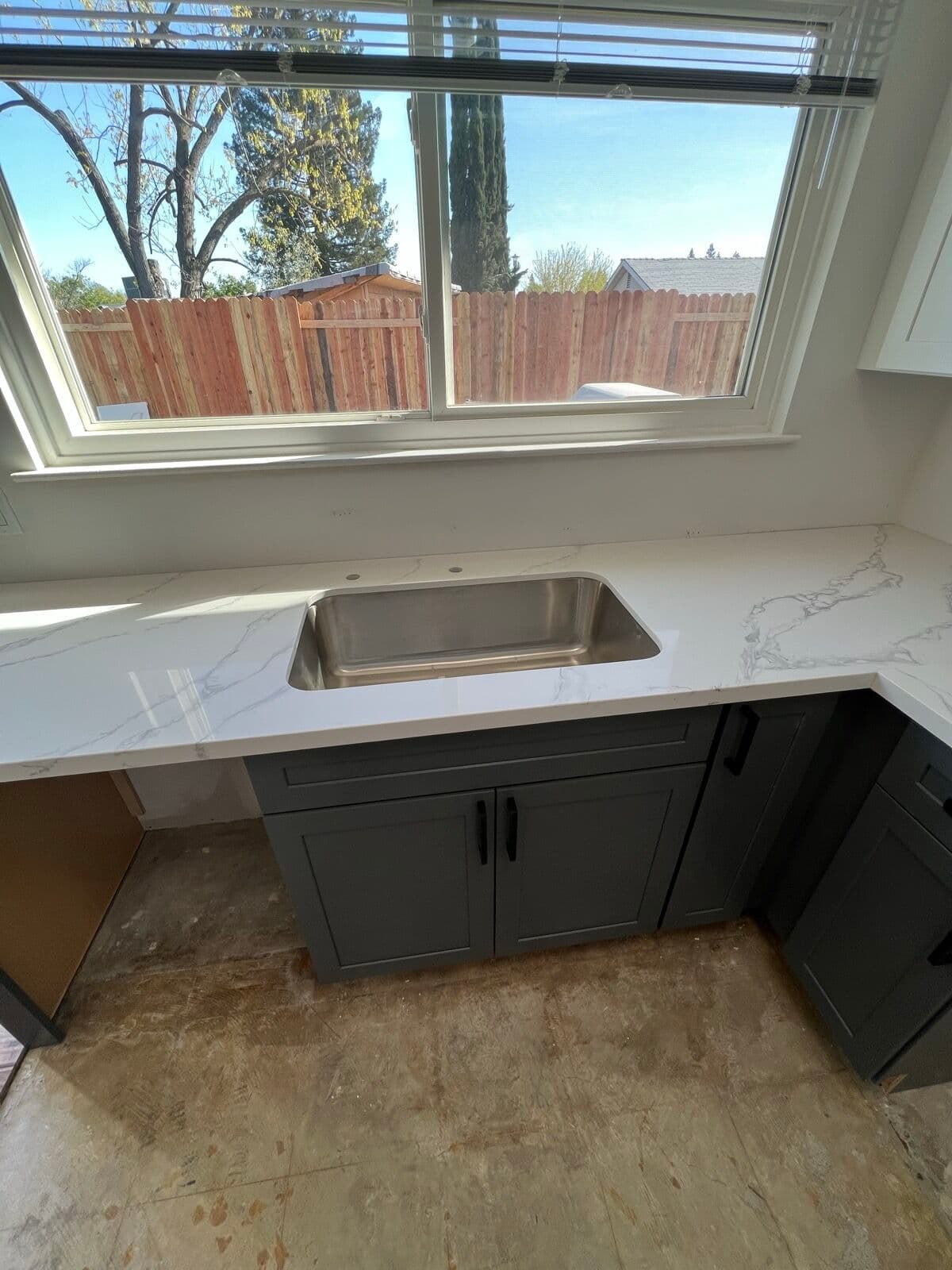
An undermount sink hangs beneath the stone, so the counter sweeps straight into the basin with no rim to catch crumbs. It is the standard on any stone countertop — and it depends entirely on an opening cut to that specific sink, which is why the sink has to exist before the slab is cut.
Cut at the shop, not on site
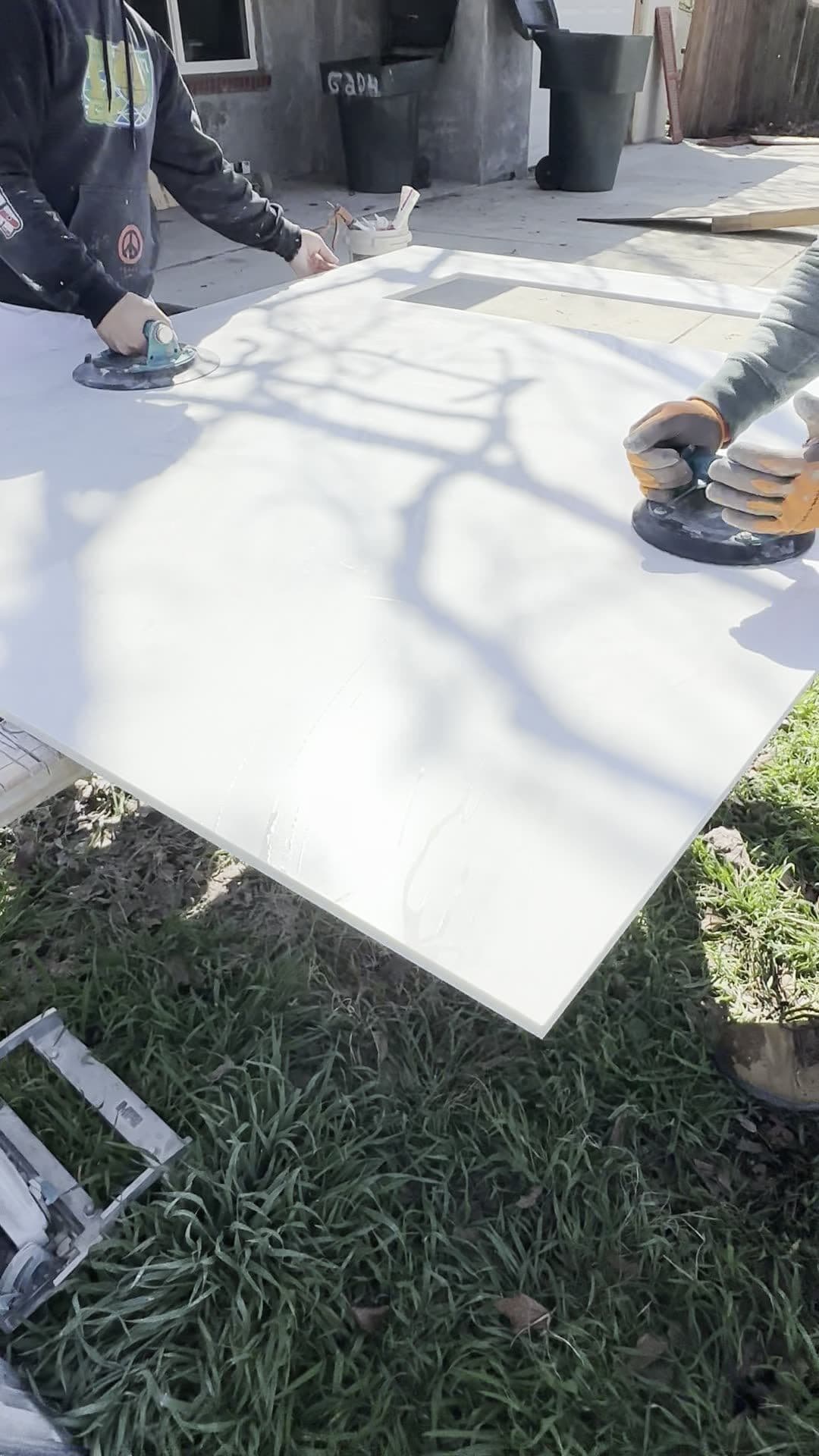
The opening is cut and the exposed edge polished at the fabricator, using the sink's own template. Cutting stone on site is how chips and unpolished edges happen. That means:
- The sink is chosen before templating
- The reveal is agreed — positive (a sliver of sink visible), zero, or negative (stone slightly overhanging the basin). Zero looks cleanest and demands the most accuracy
- Faucet, soap, air-gap and filtered-water holes are drilled at the same time
Supported properly
An undermount is carried by brackets or a support frame fixed into the cabinet, not by the adhesive alone — especially a heavy fireclay or cast basin. We set it, support it, seal the joint, then reconnect the faucet, drain and disposal, and run water to check before leaving.
Corroded shutoff valves are the usual reason a sink swap turns into two visits; we replace them rather than force them.
Sink types we set
Undermount single and double basins, workstation sinks with integrated ledges, apron-front and farmhouse sinks (which need the cabinet built to carry them), bar and prep sinks in an island, and vanity basins including vessel and integrated.
Choosing the sink itself is on sinks and faucets. The cutout is priced inside your countertop scope, not billed separately.