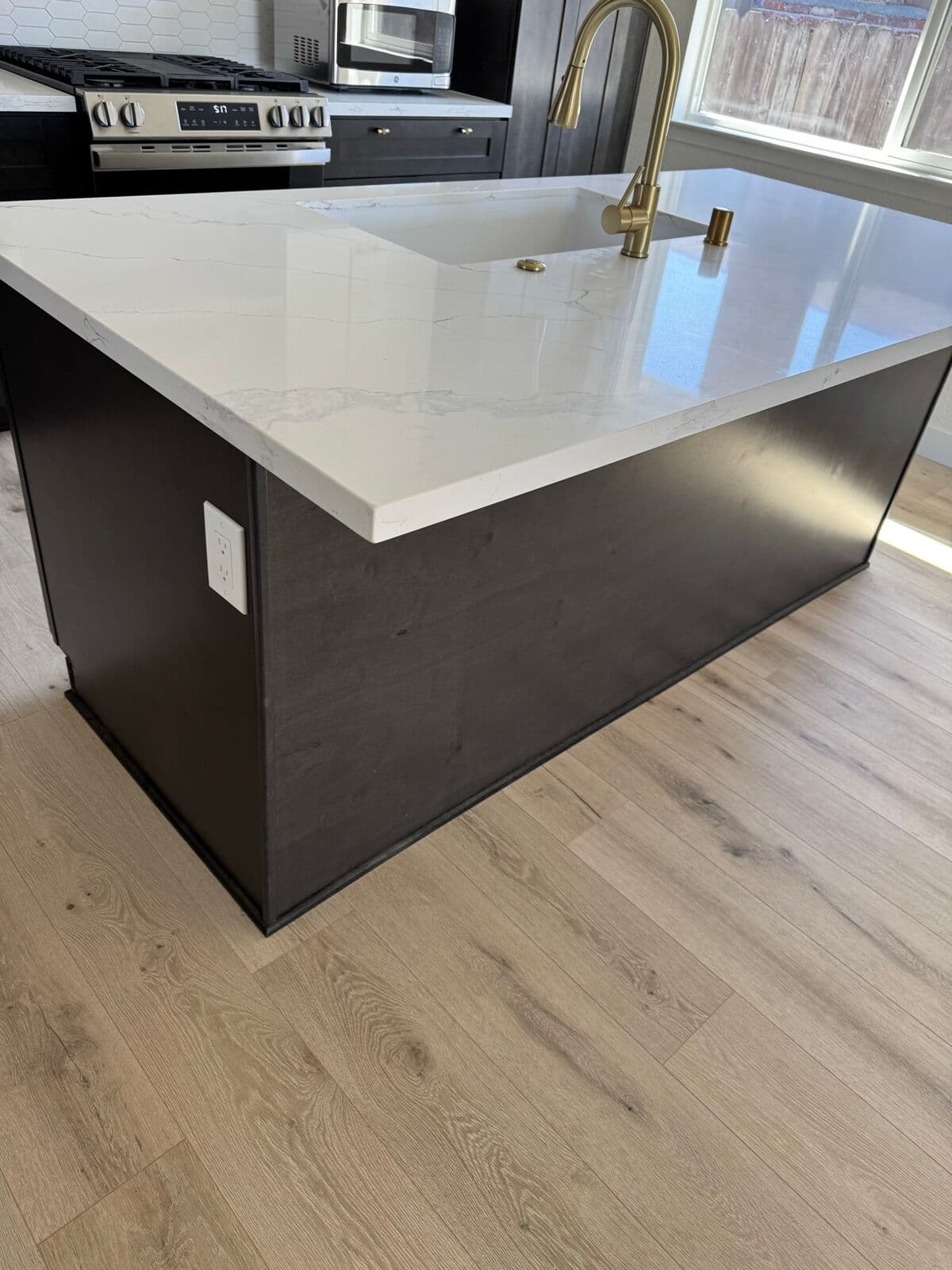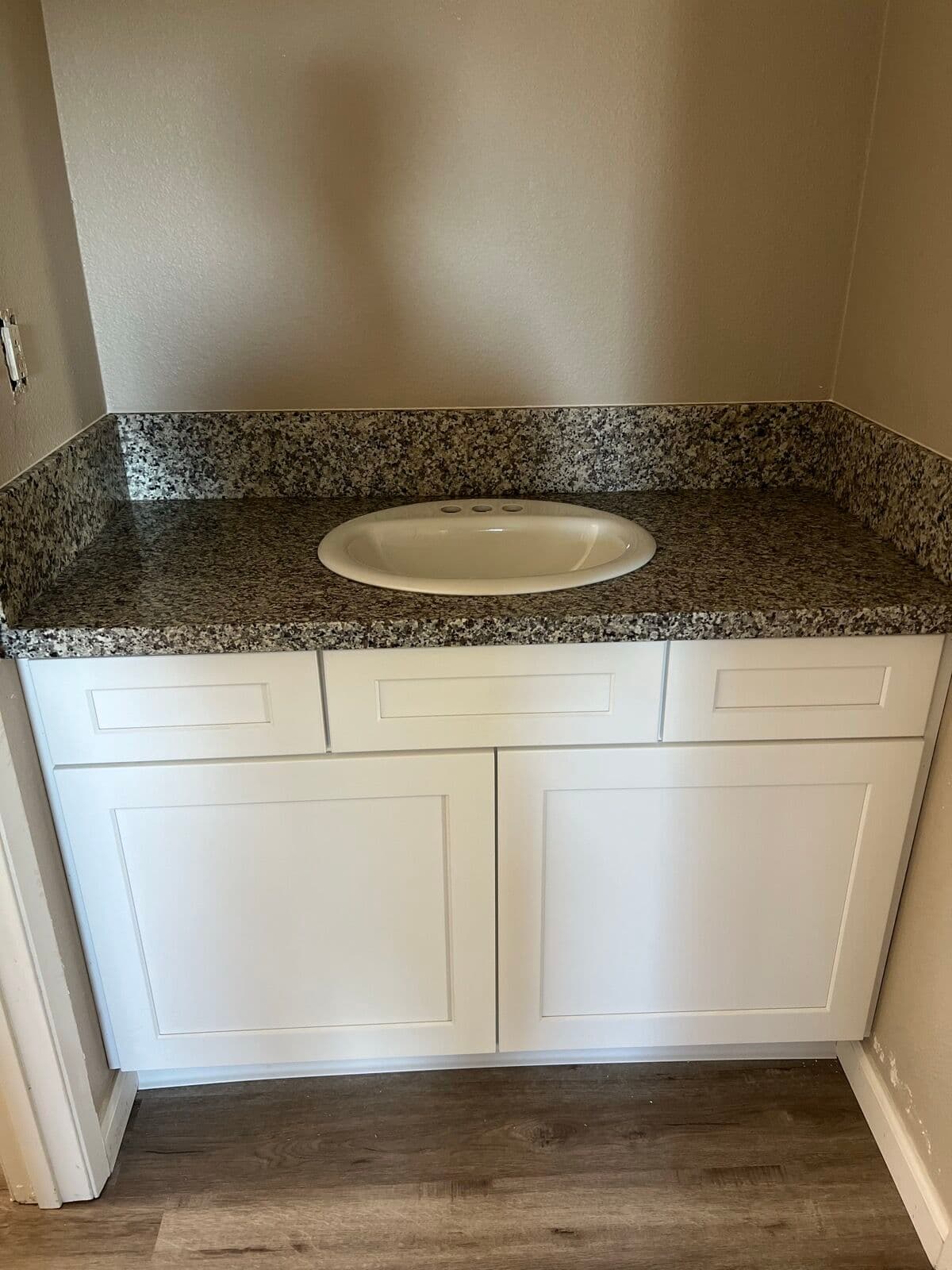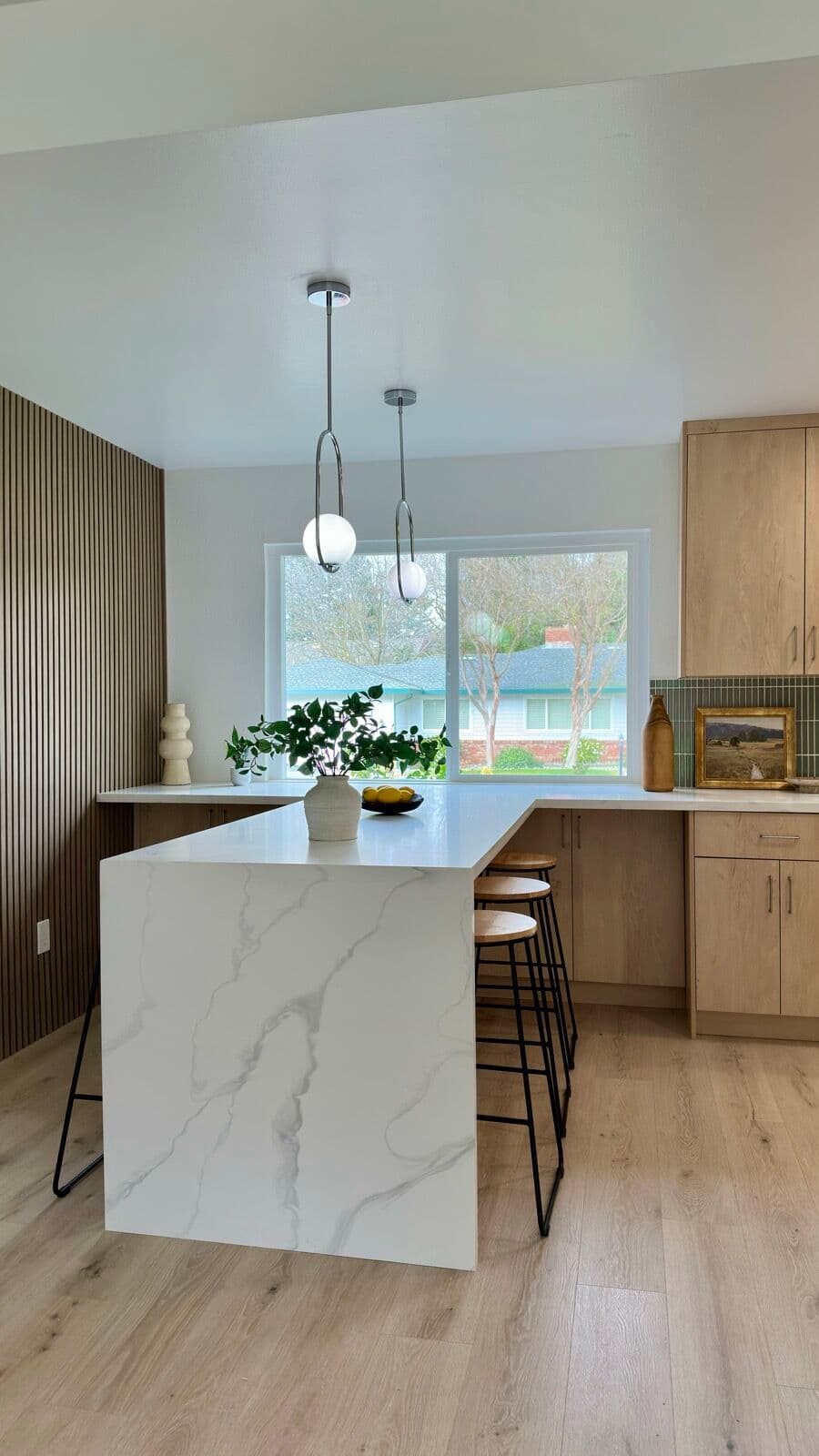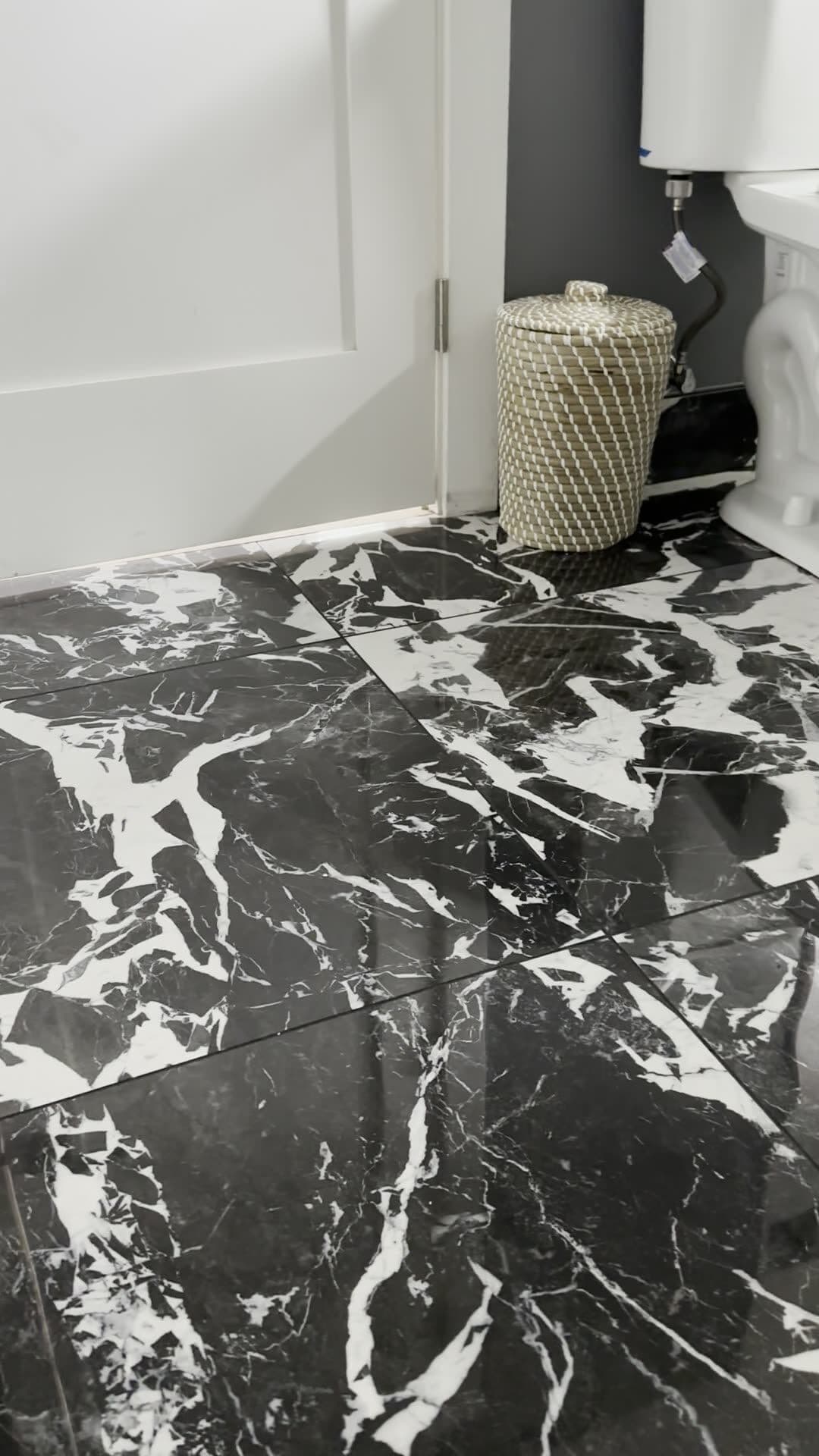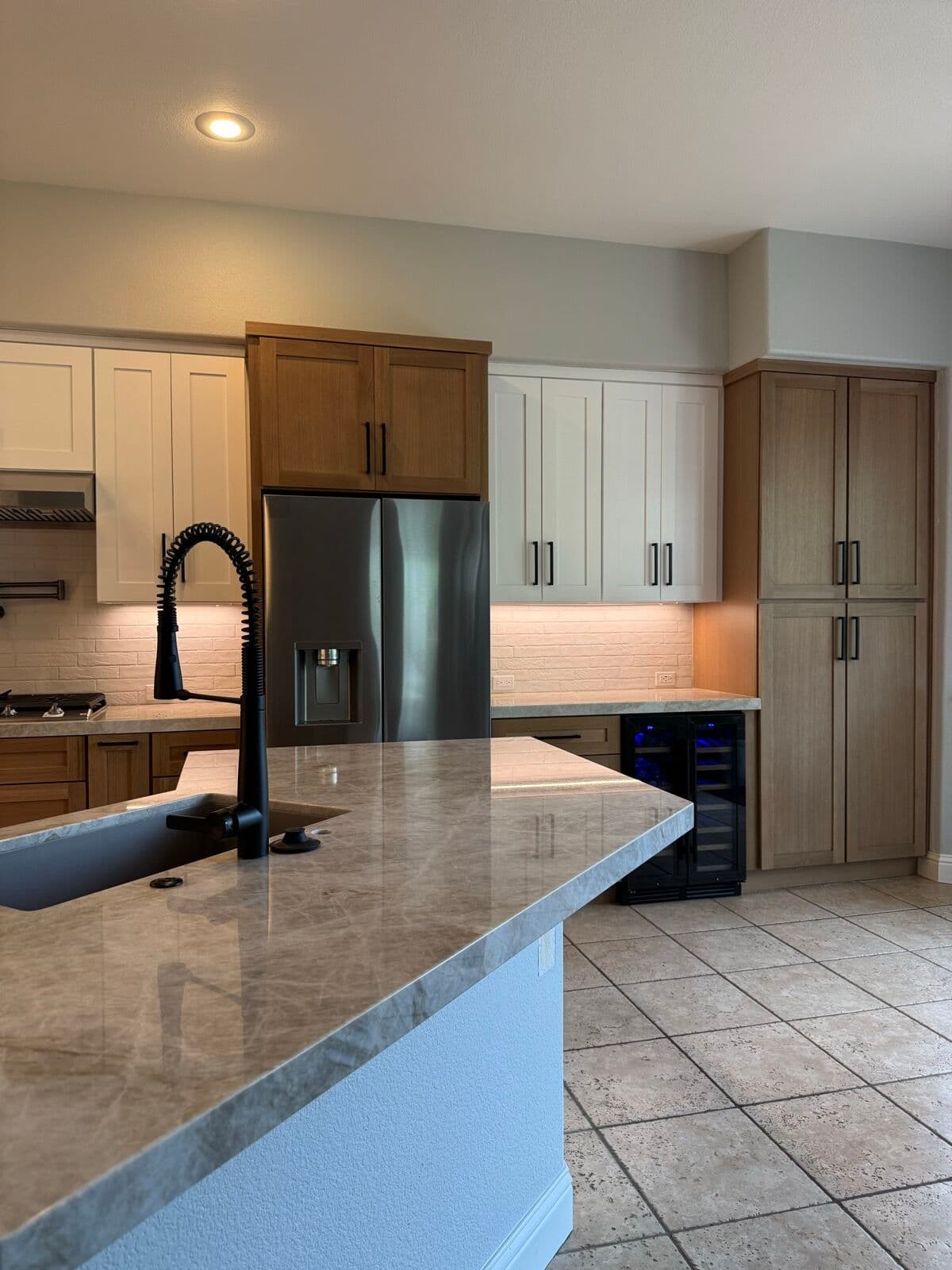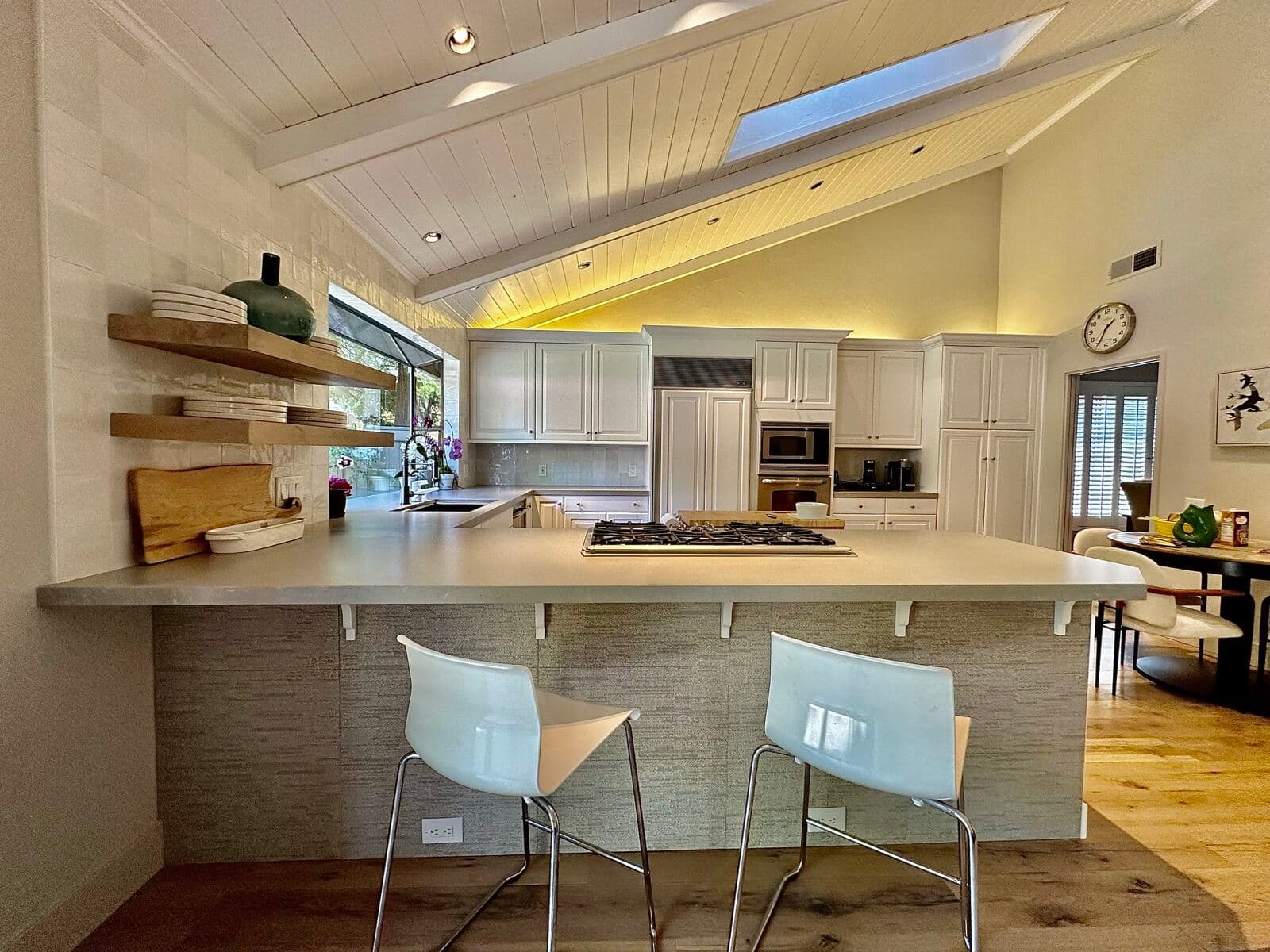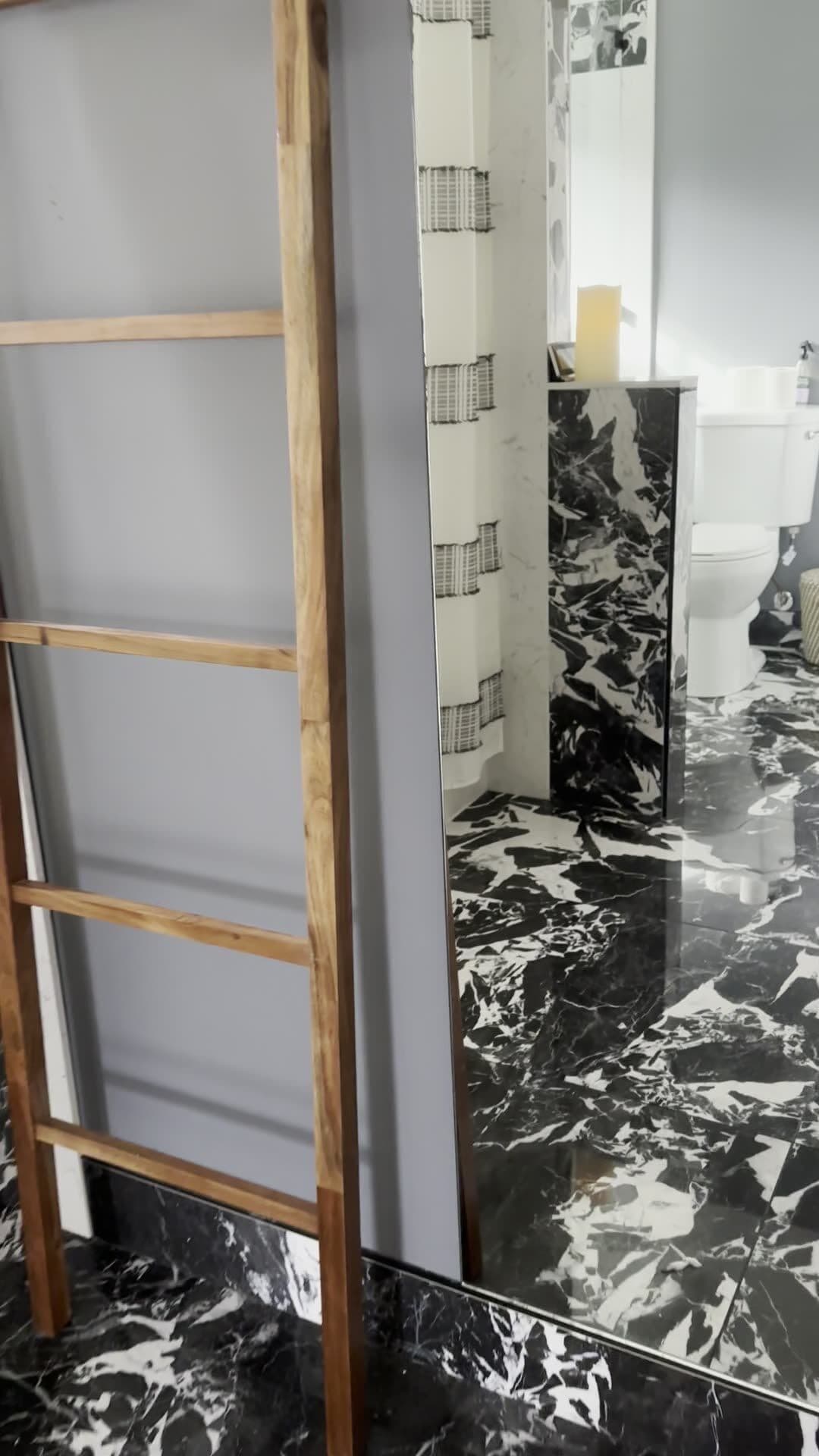
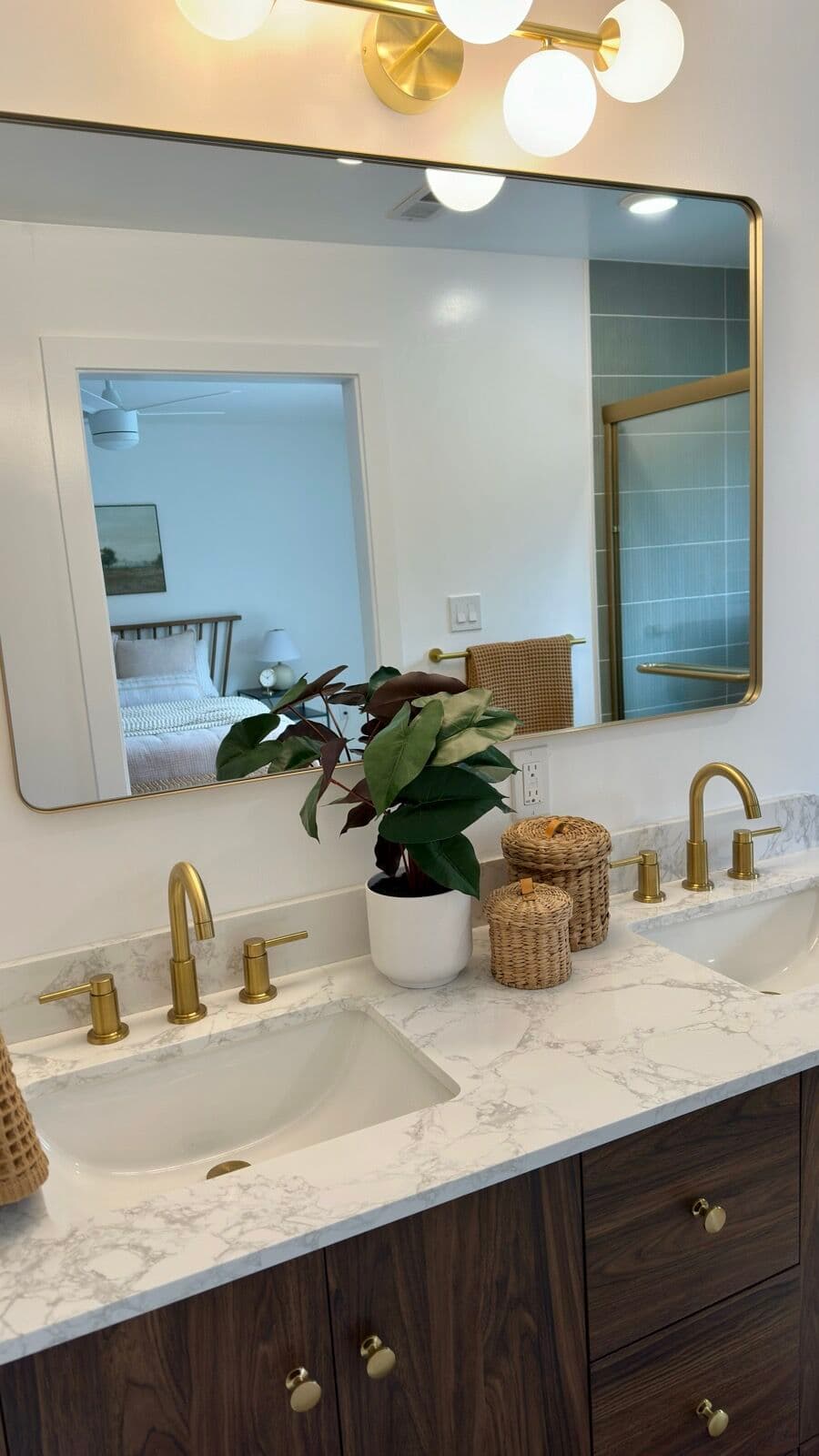
A vanity top is the cheapest piece of stone that changes a whole room. It is also the one most likely to come from a remnant — the offcut left when a kitchen slab is cut — which is why a bathroom top often costs a fraction of what people expect.
What the price depends on
- Size. A 36-inch single fits comfortably on a remnant; a 72-inch double usually needs its own slab.
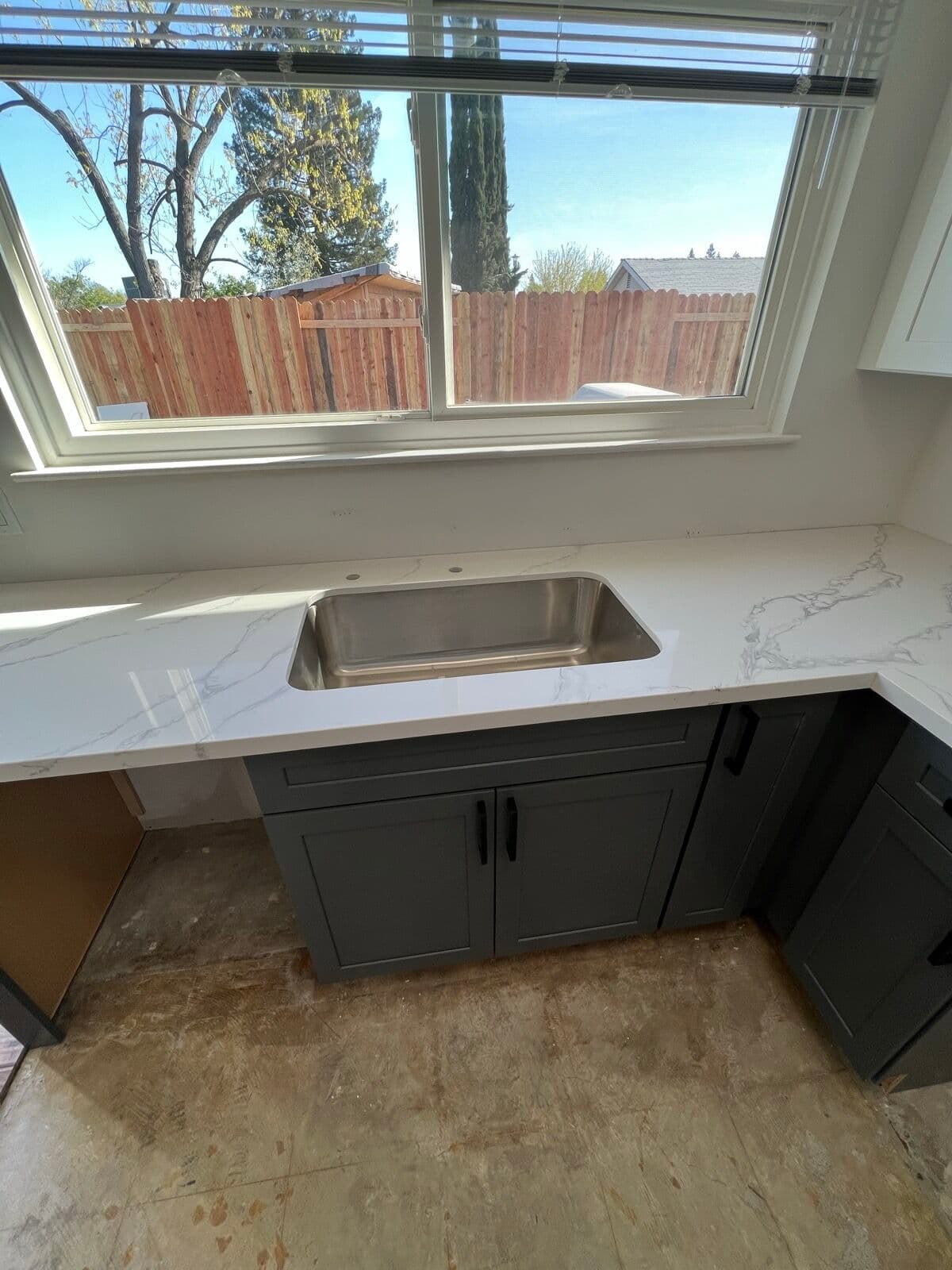
- The sink. Undermount needs a cutout and a polished reveal; a vessel needs only a drain hole; an integrated sink is part of the top itself.
- Faucet holes. Single-hole, widespread or wall-mounted — decided before cutting, because they are drilled at the fabricator.
- The backsplash. A 4-inch stone splash from the same material, full-height slab up the wall, or tile instead.
- Material. Quartz is the usual answer in a bathroom: non-porous, and toothpaste, hair dye and cosmetics wipe off it.
Measured, cut and set
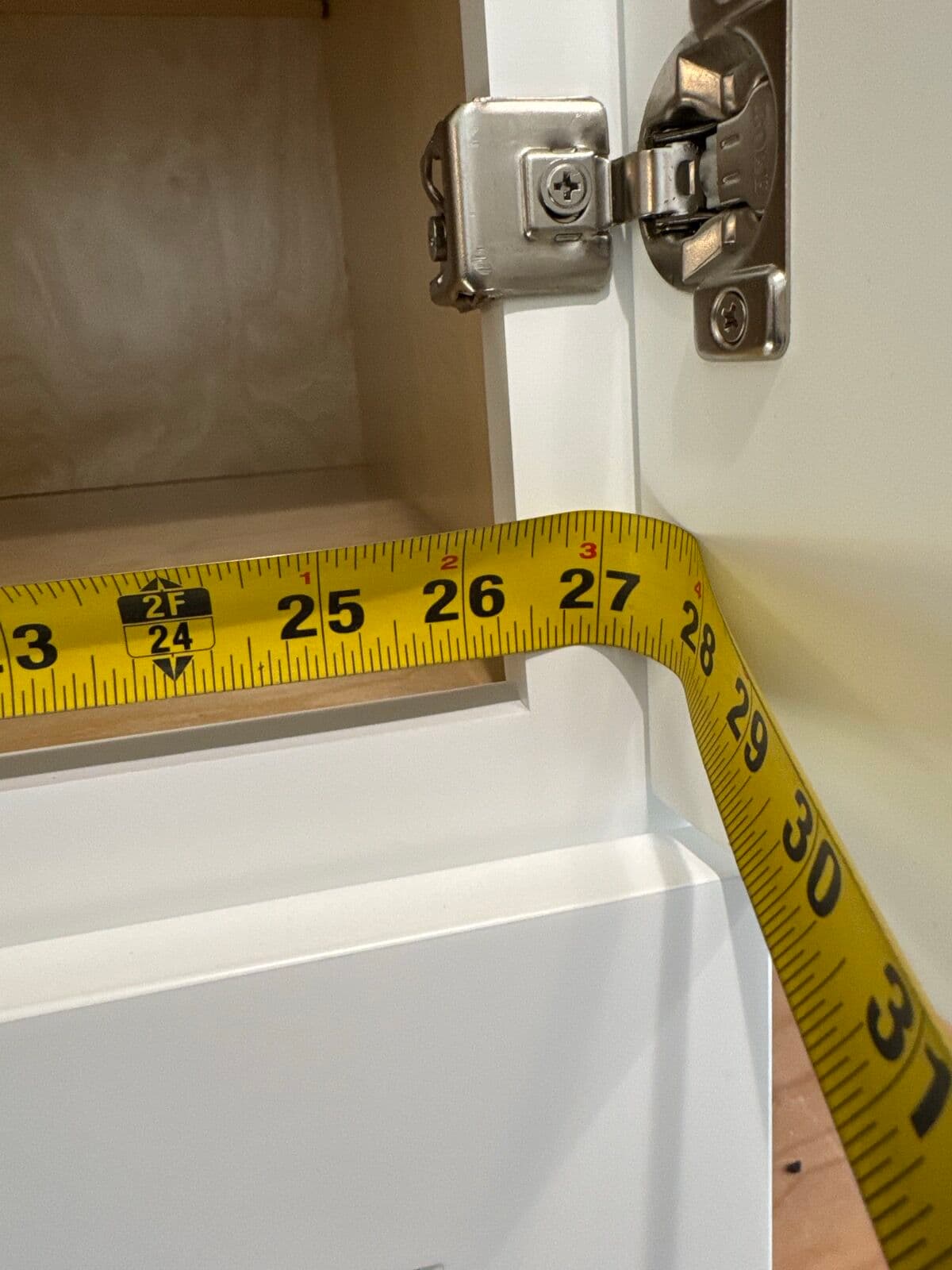
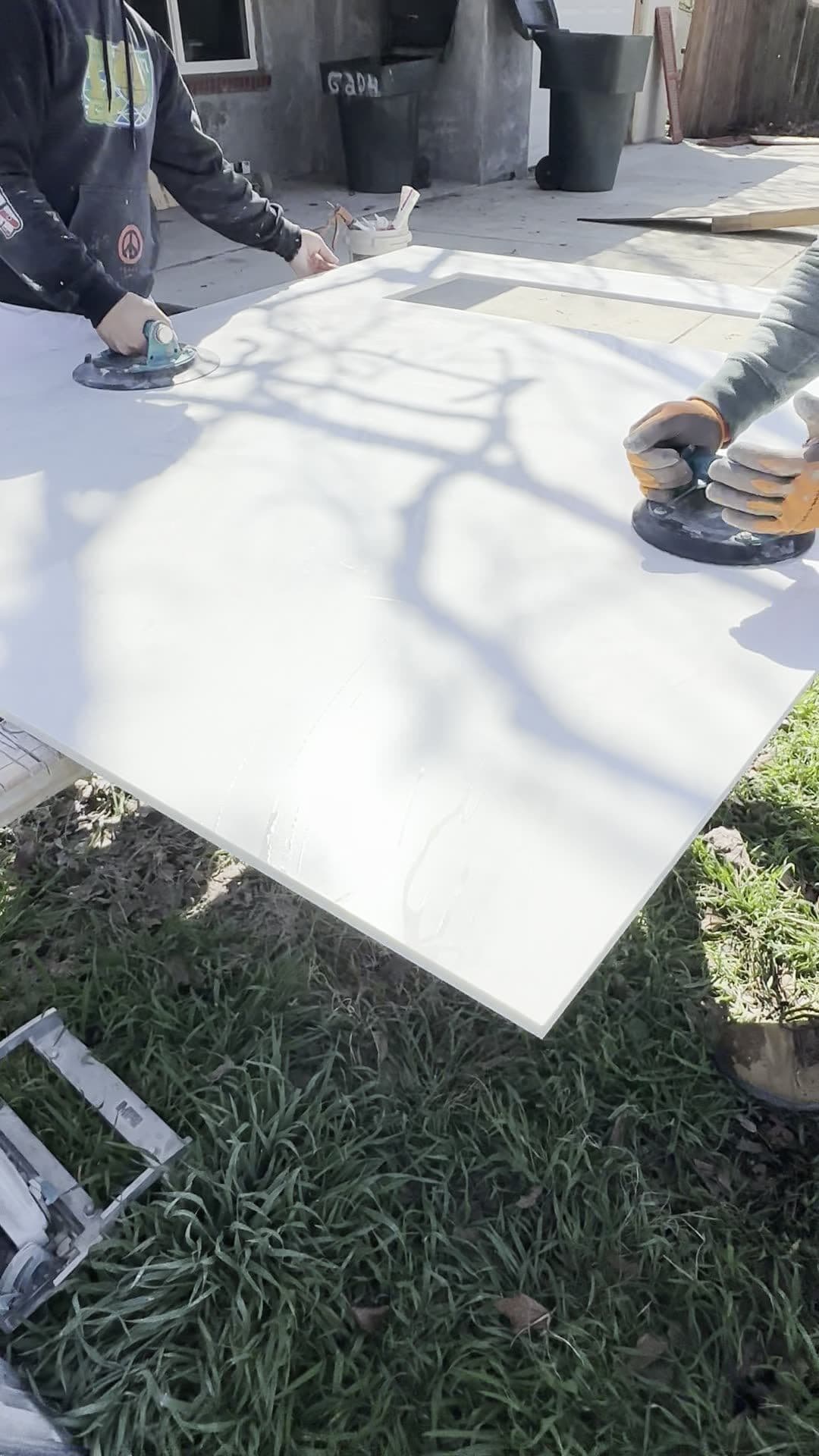
We template the vanity cabinet as installed — old top off first if it is being replaced — the fabricator cuts to that template, and our crew sets it, seals the joints and reconnects the faucet and drain. Usually a single visit once the stone is back.
If the cabinet is being replaced too, the top and cabinet go in together as a vanity and vanity top replacement — a one-day job in most bathrooms.
Materials worth considering
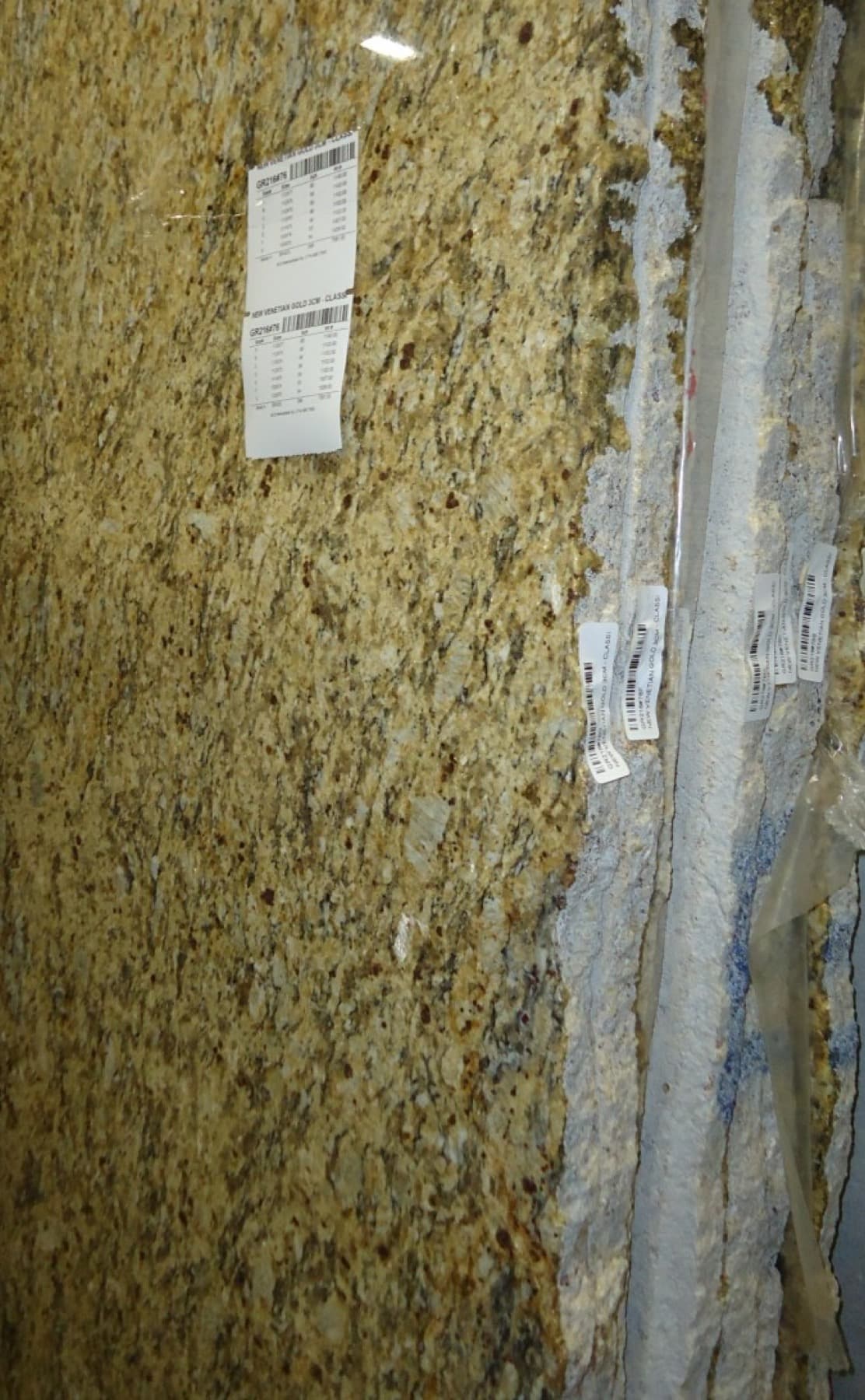
Quartz for zero maintenance, granite for a natural slab that hides everything, marble where the look matters more than the upkeep. Ask about remnants — the yard often has exactly enough of something expensive.
Part of a bathroom remodel, or a job on its own. Free measurement, price in writing.