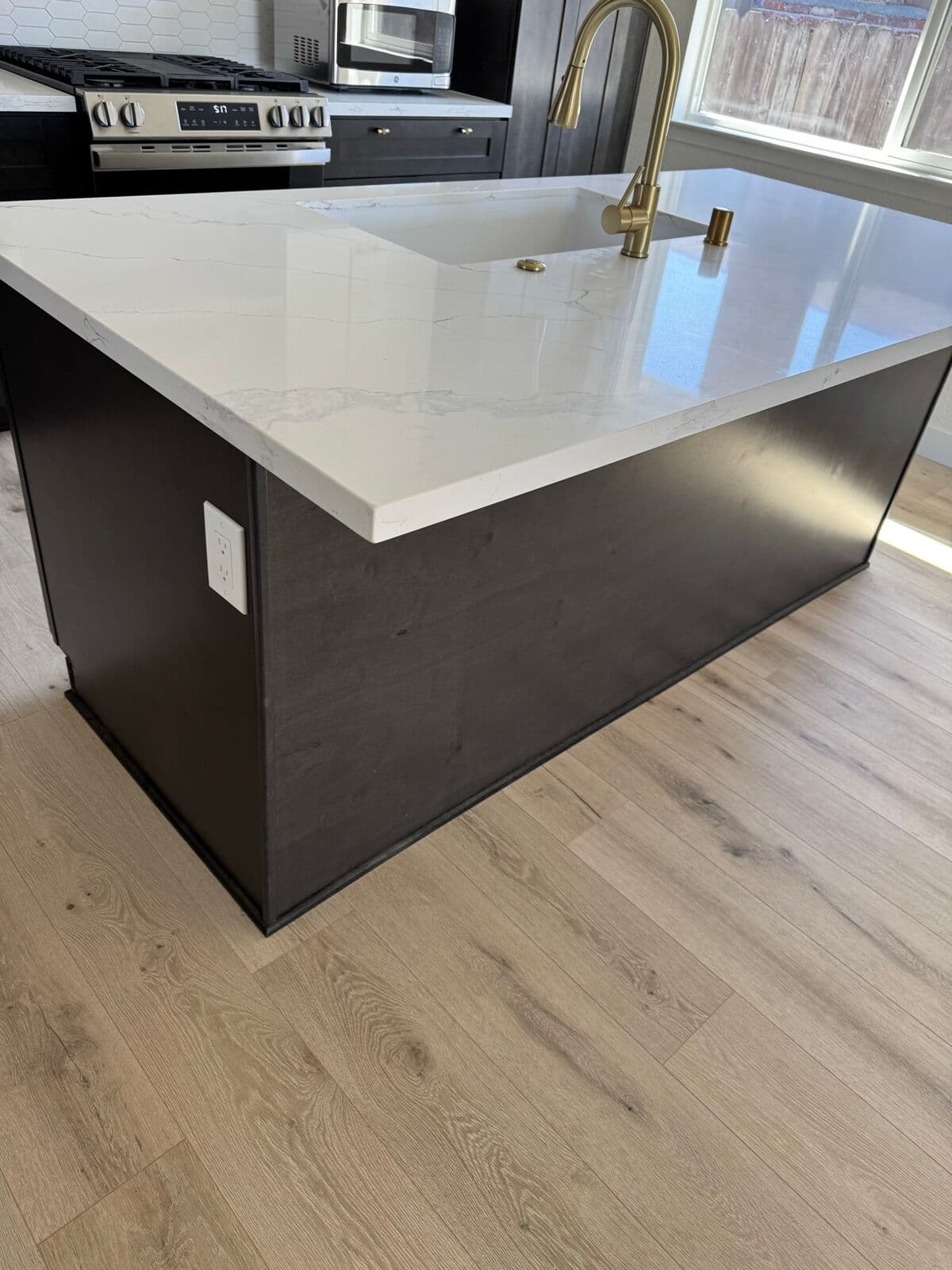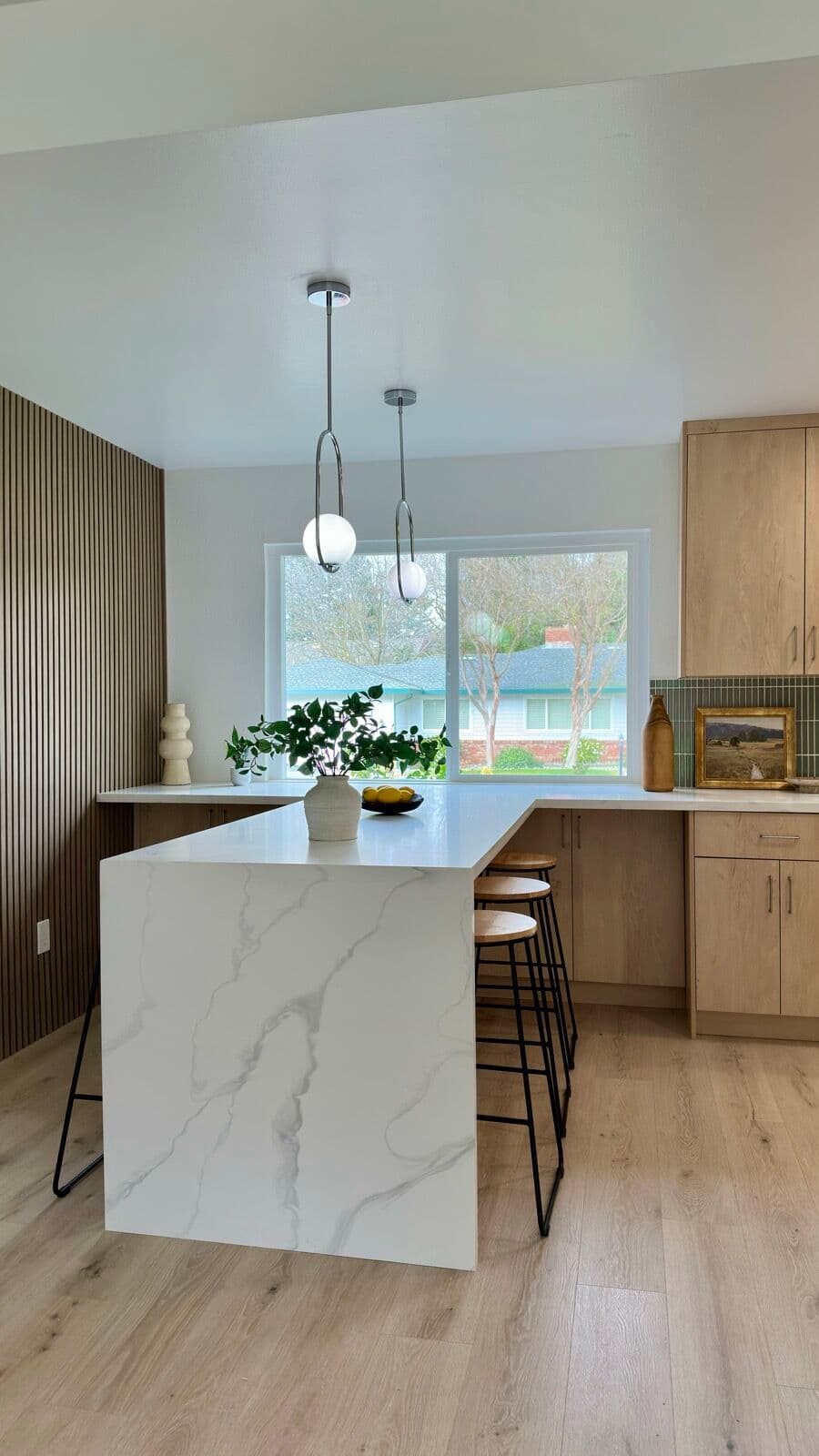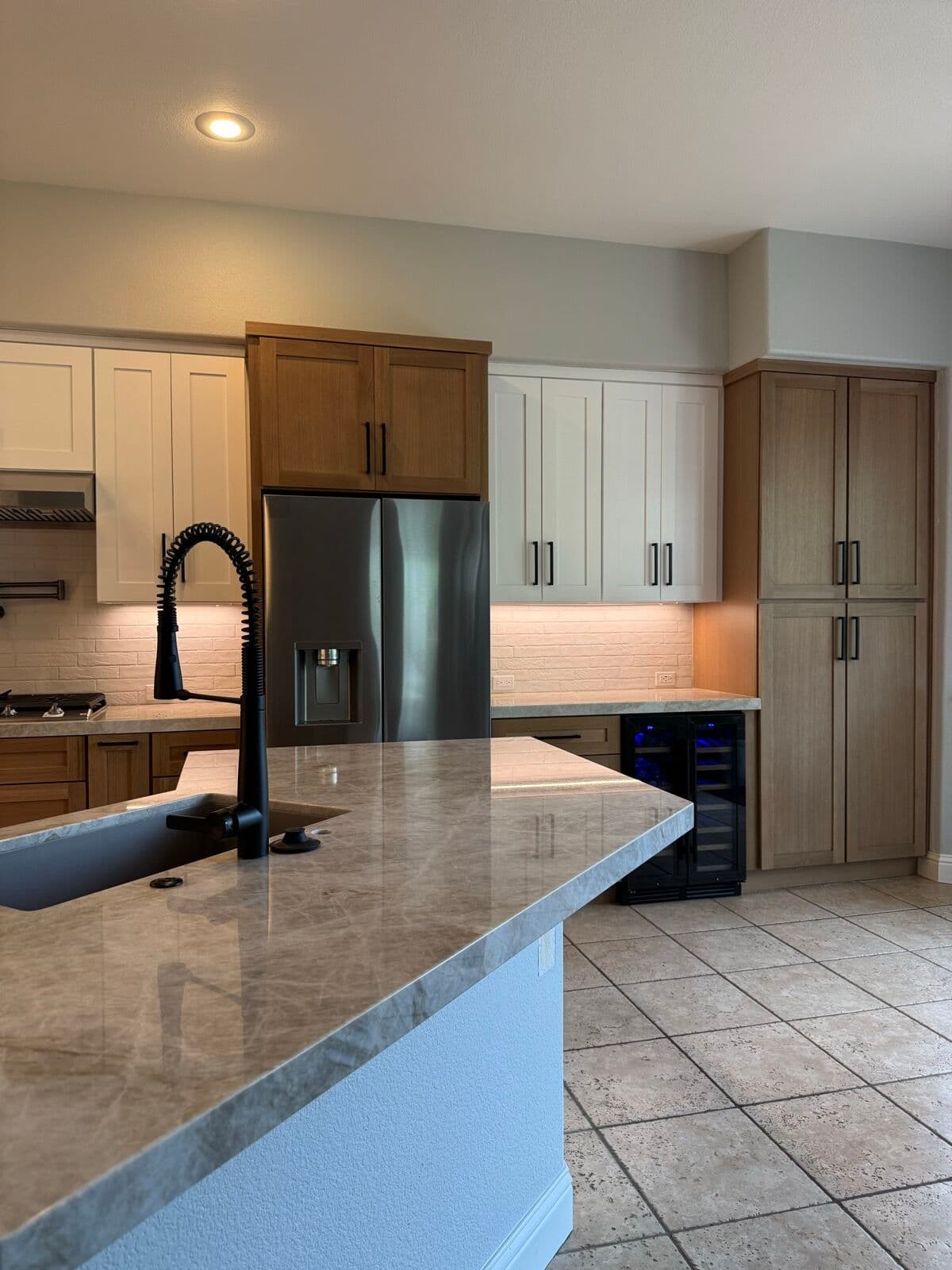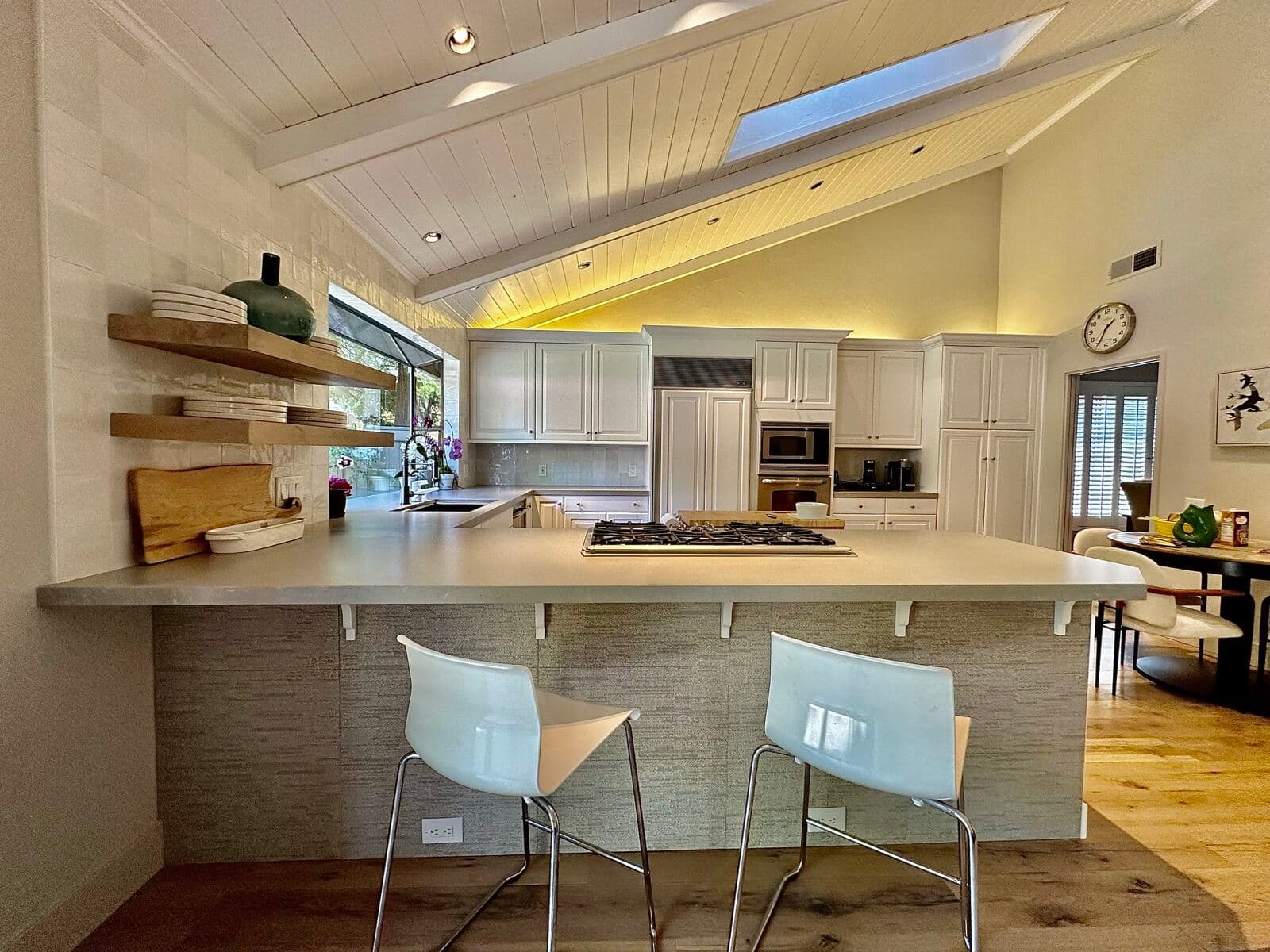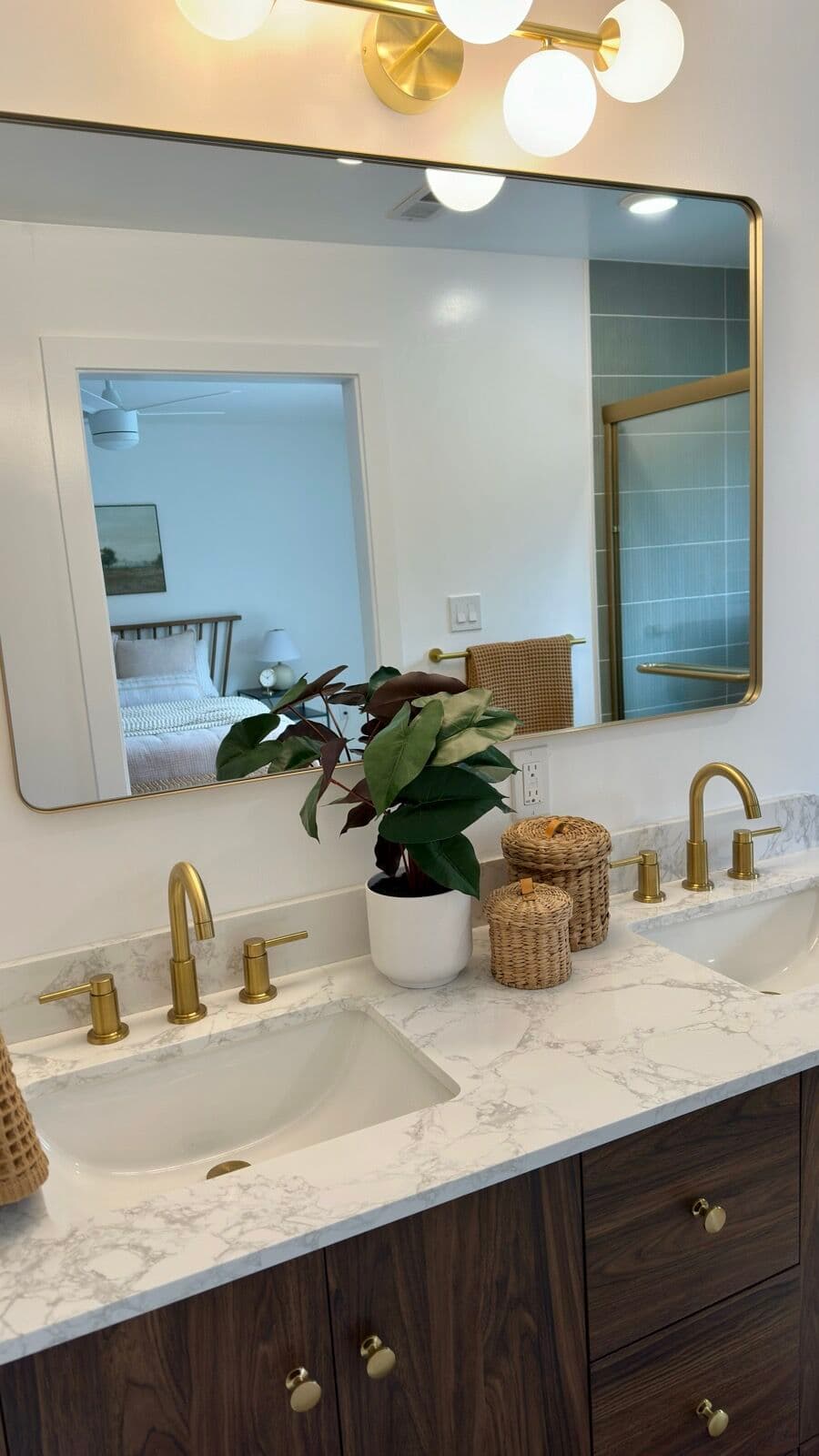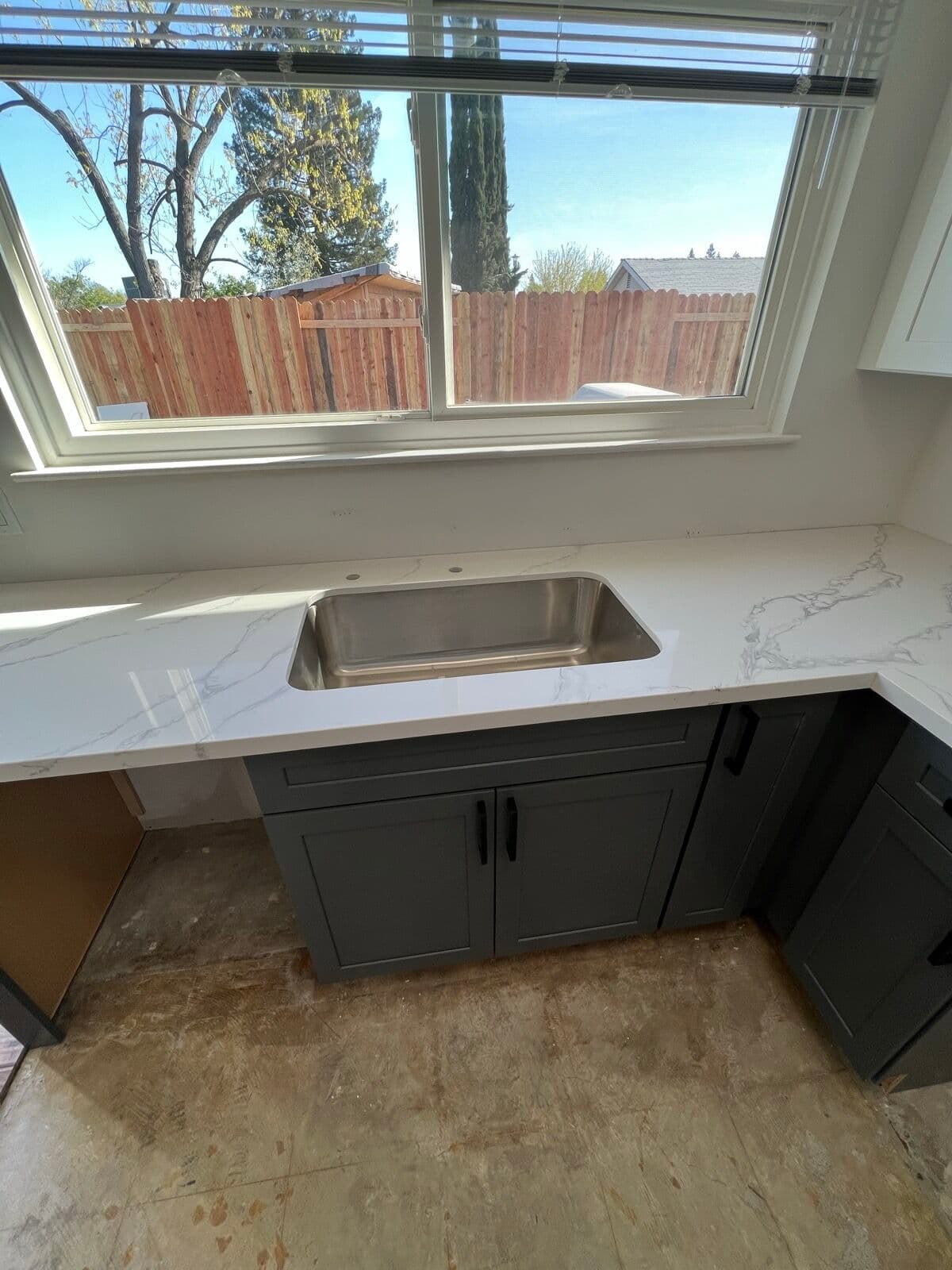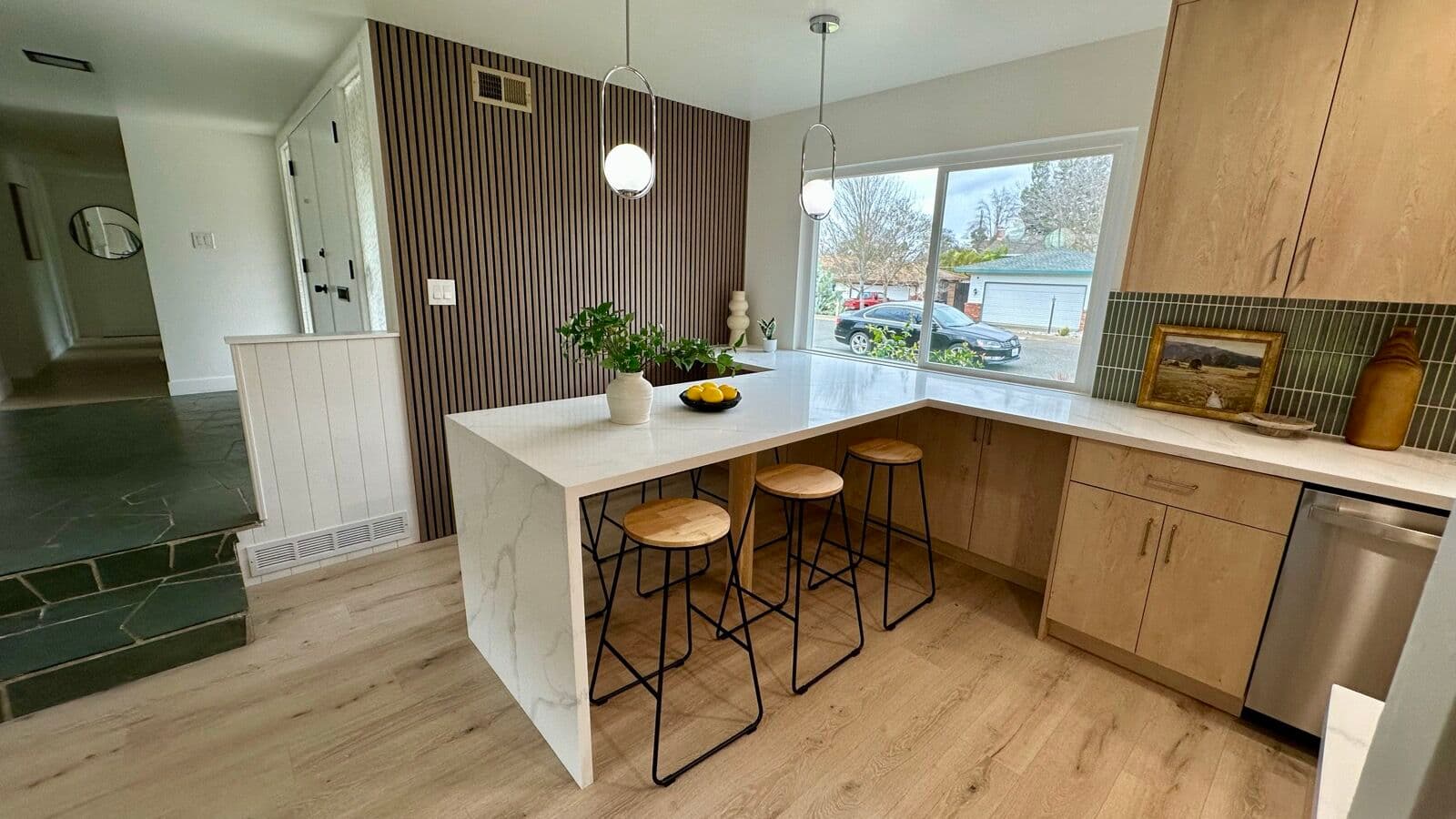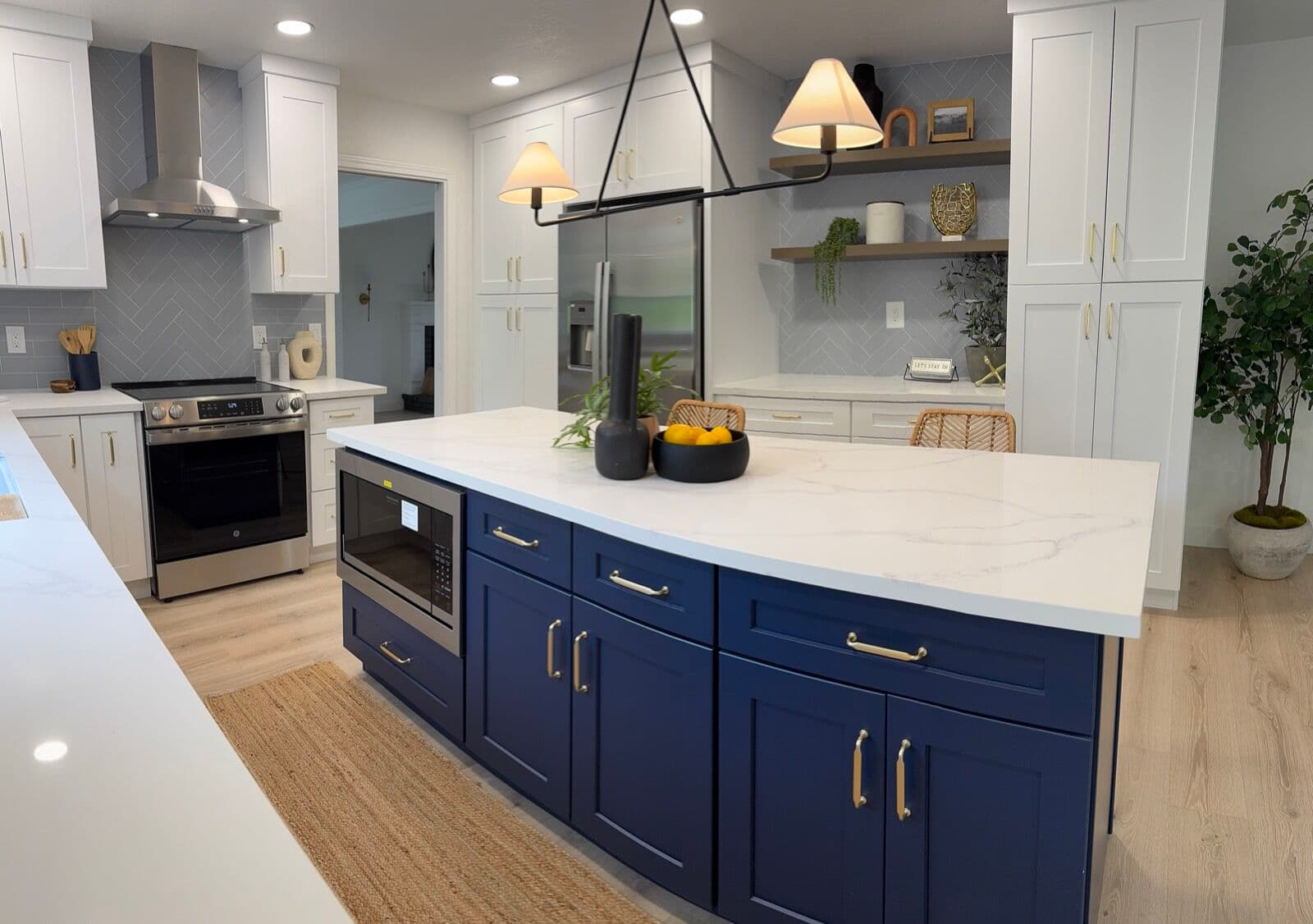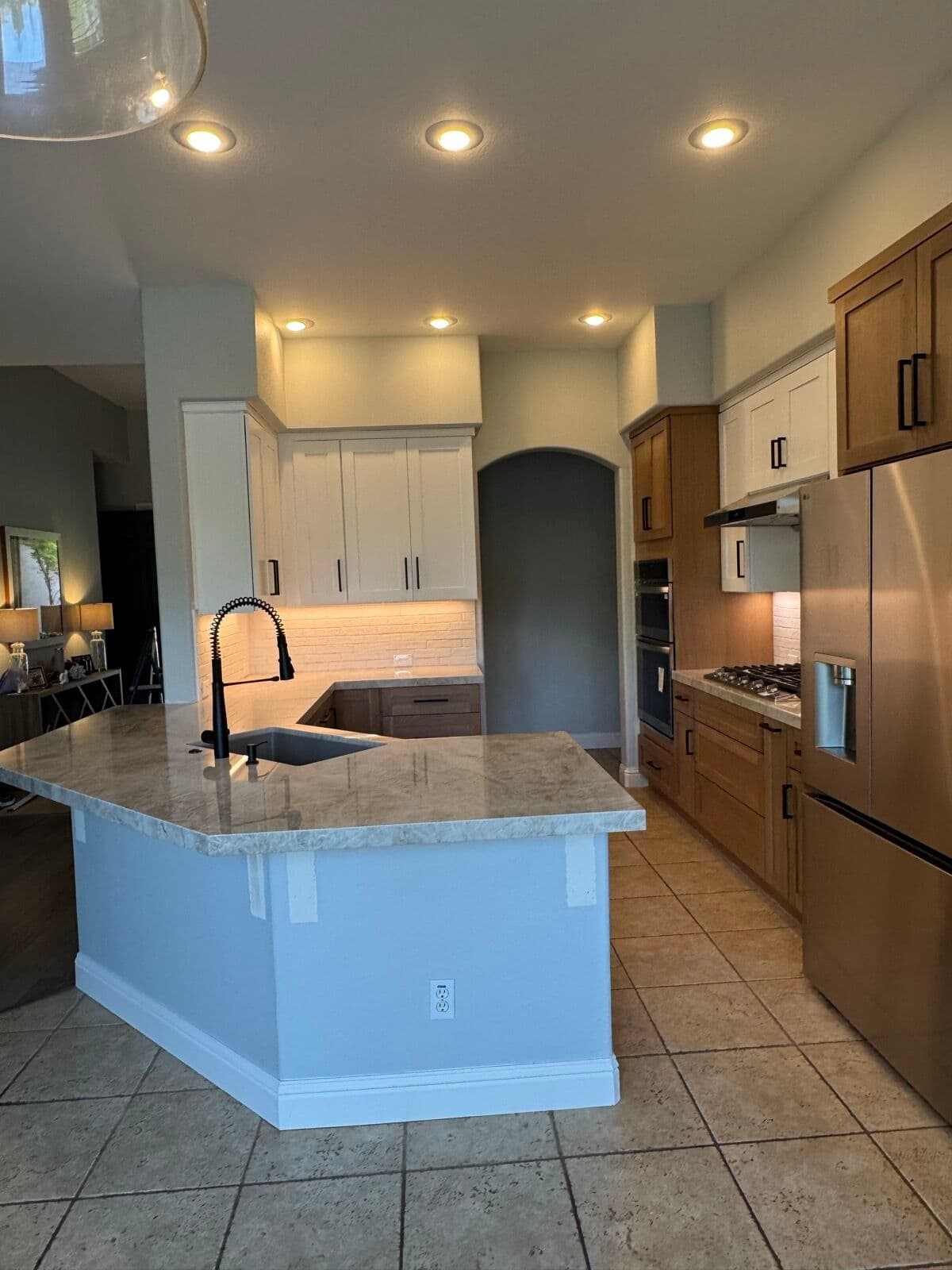
Instead of tile above the counter, the same stone continues up the wall. No grout lines, nothing to scrub behind the range, and the veining runs on from the countertop into the splash. It is the single most effective way to make a kitchen look designed rather than assembled.
Where it stops
Three common heights, and the choice changes the price:
- Standard 4-inch — a short return in the same stone, the cheapest option
- To the underside of the uppers — the usual full-height, roughly 18 inches of continuous stone
- Floor to ceiling behind the range, with tile or paint elsewhere — the feature wall version, and the most dramatic
What makes it work
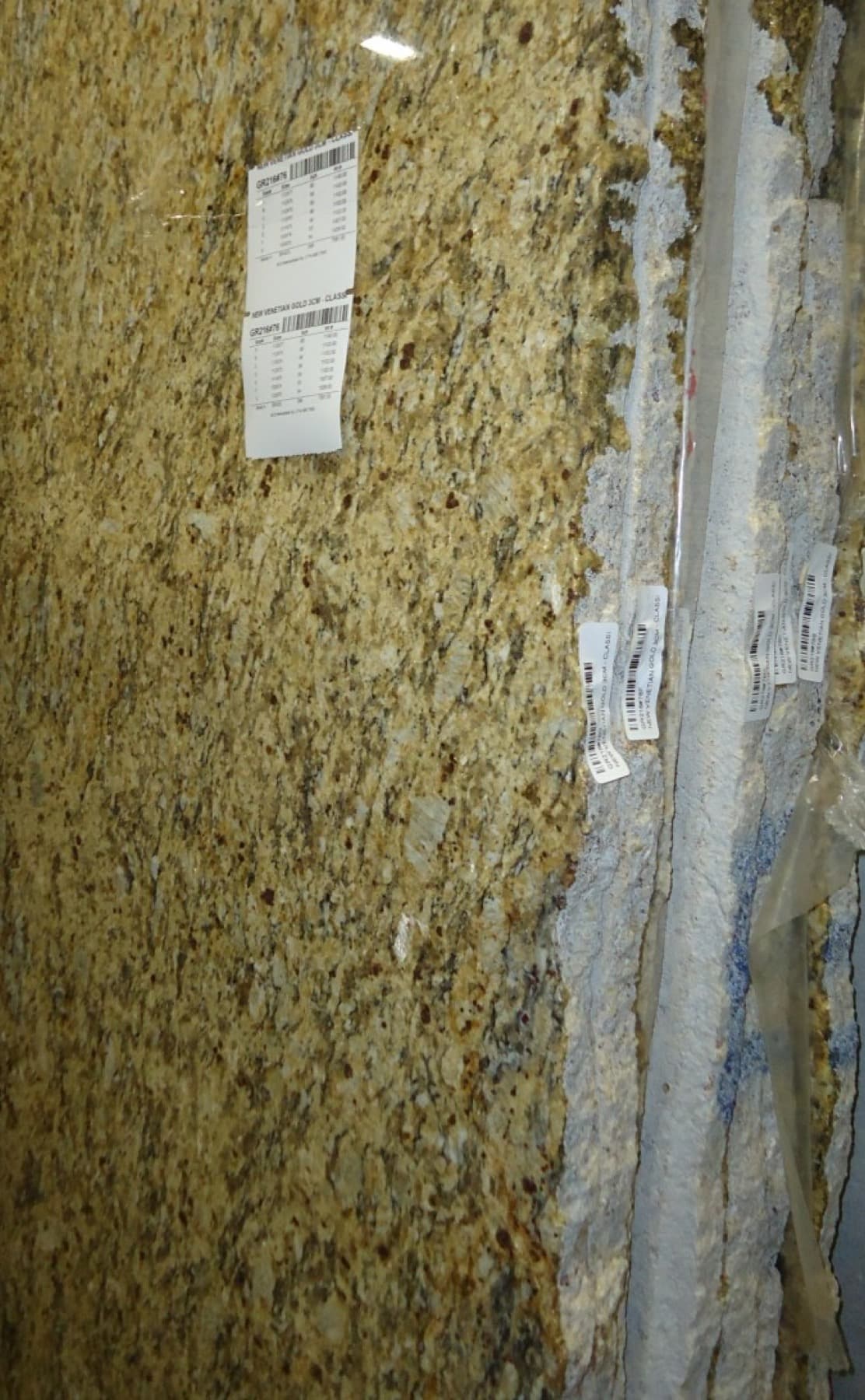
Slab quantity. A full-height splash can use as much stone as the counters, so it is decided before the slab is bought, not after.
Veining continuity. Where the counter meets the splash, the pattern should carry. That means both pieces cut from the same area of the slab, sequenced at the fabricator — the reason this is planned at layout with you.
A flat wall. Stone will not follow a wavy wall the way tile can. Where the drywall is out, we true it before templating.
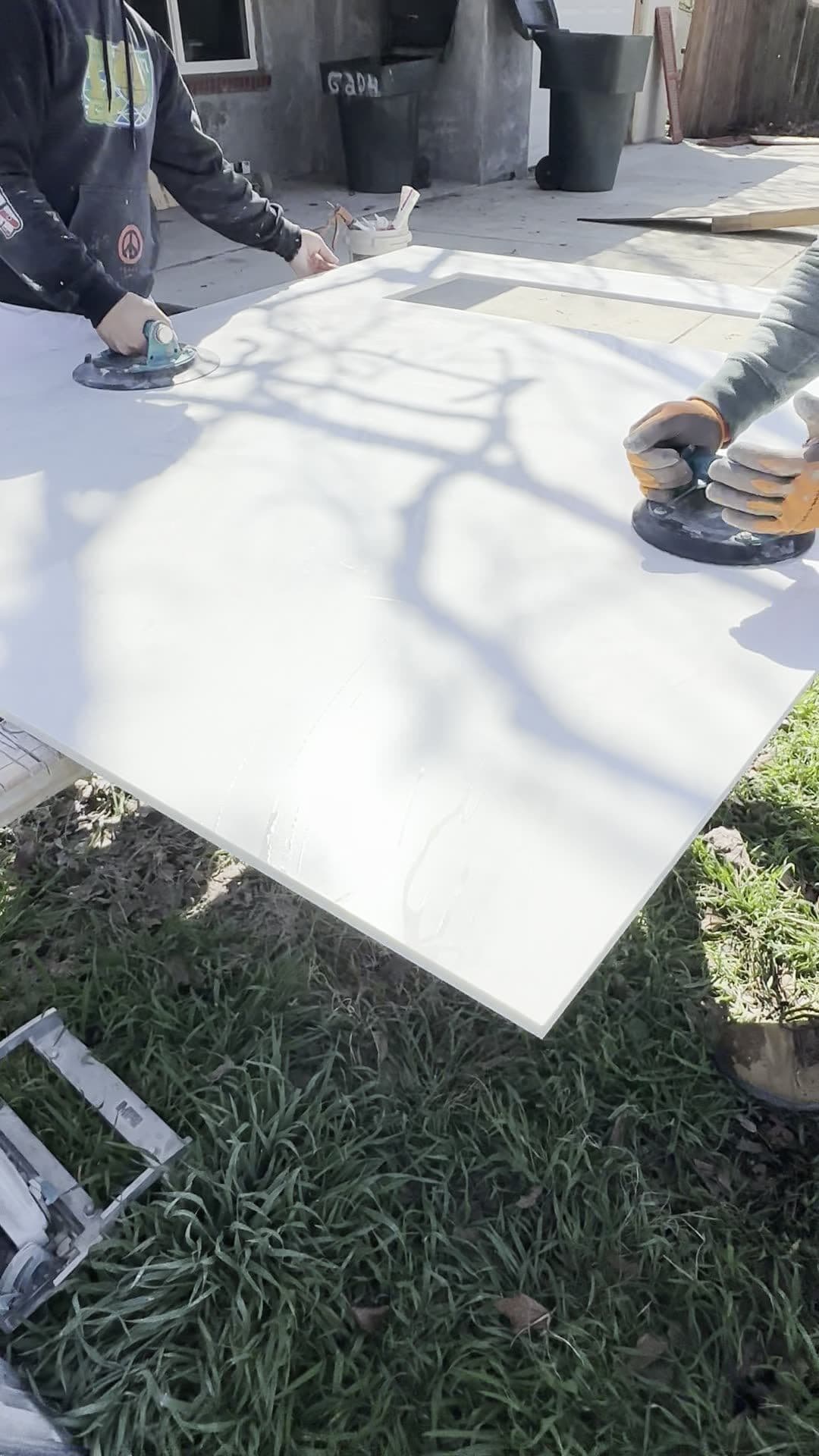
Cutouts. Outlets, switches and a pot filler are cut at the fabricator, so their positions are fixed at template. Moving an outlet afterwards means a new piece of stone.
Materials
Quartz is the most predictable and the easiest to match. Marble and natural stone gives the dramatic version, especially book-matched behind a range. Porcelain and sintered stone stays thin, which helps where the splash meets a window casing.
Priced inside your kitchen countertops scope. If you would rather have tile, that is a tile backsplash — usually cheaper, and a chance to use a material the counters cannot give you.