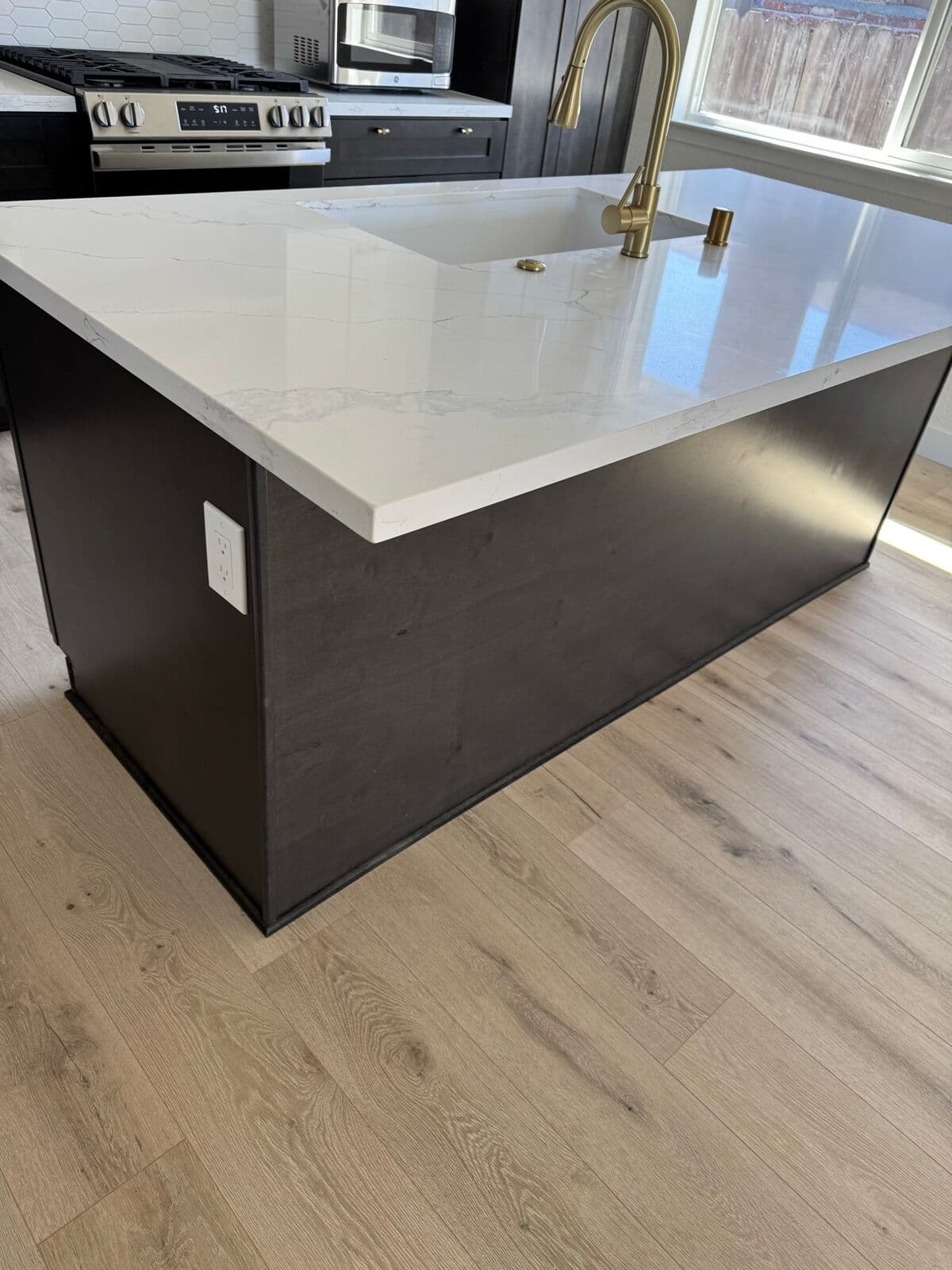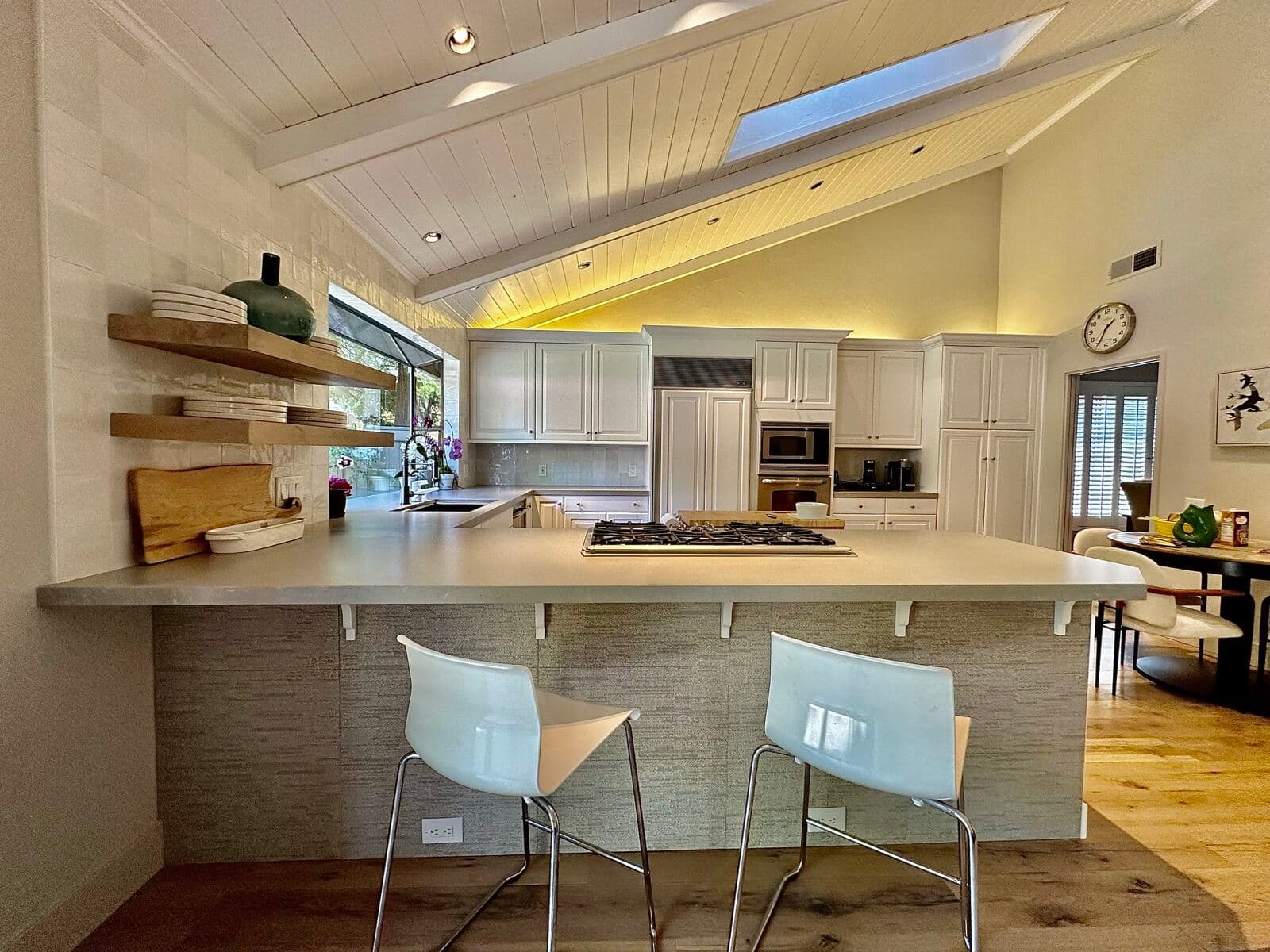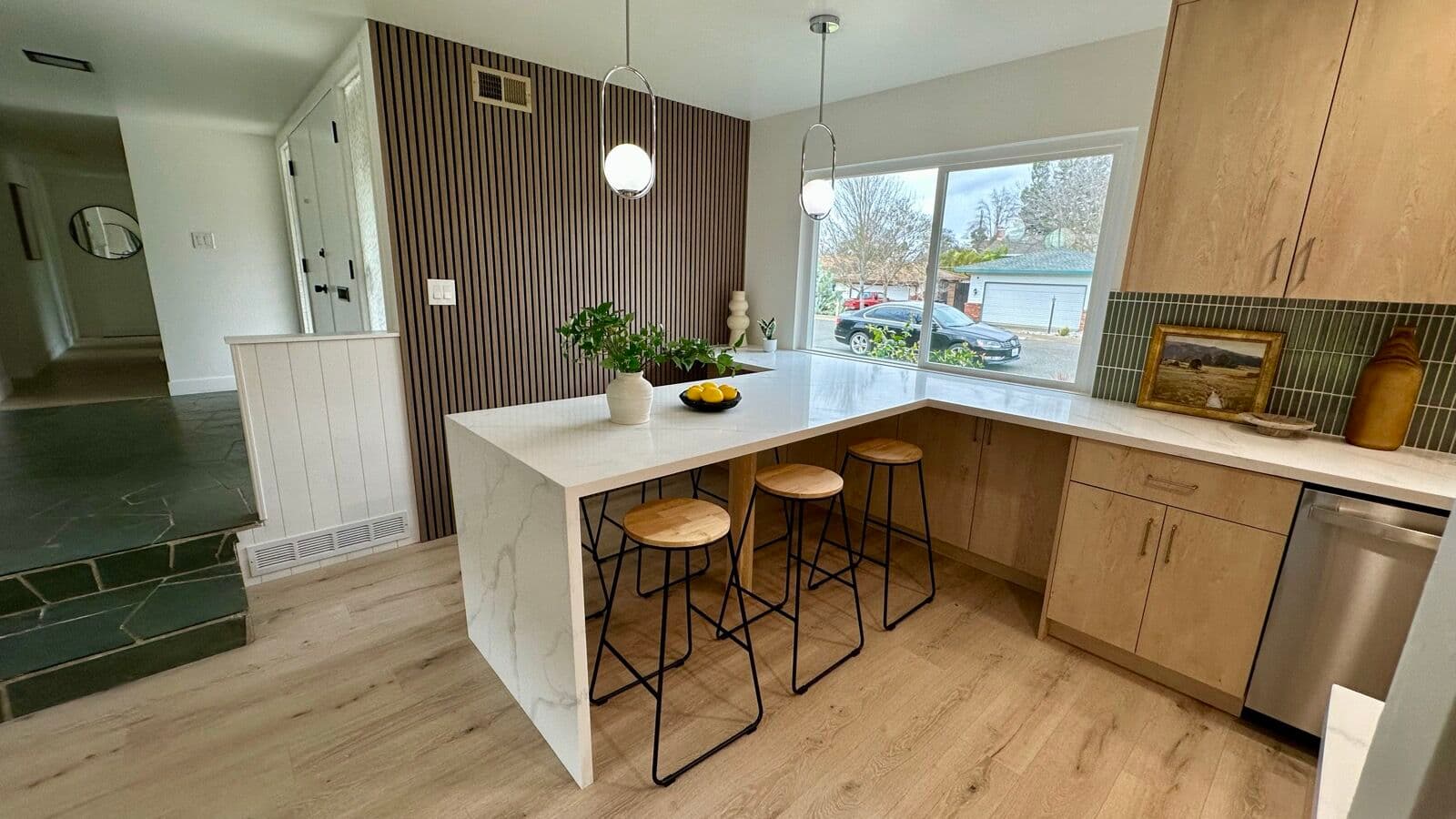
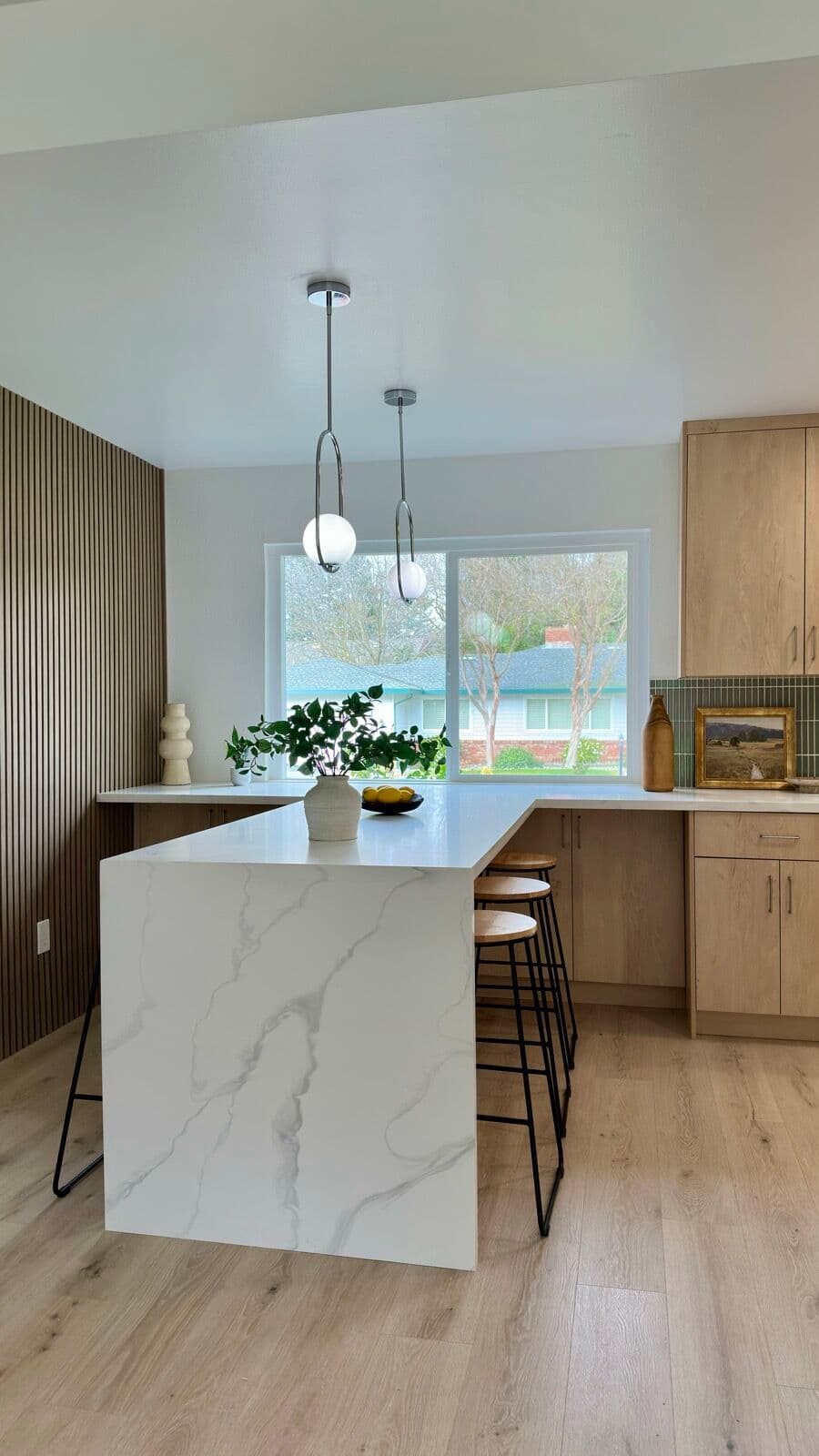
A waterfall edge takes the countertop over the end of the island and down to the floor, so the stone reads as one continuous piece instead of a top sitting on cabinets. It is the detail people point at, and it is entirely a fabrication decision — which means it has to be settled before the slab is cut.
Why the mitre matters
The vertical leg is a separate piece of stone, joined at the corner. Done well, the two pieces are cut from adjacent parts of the slab and mitred at 45 degrees, so the veining runs over the edge and continues down the side without breaking. Done badly, the pattern stops dead at the corner and the joint reads as a seam.
That match is planned on the slab, with you, at layout. It is also why a waterfall costs more than a square end: extra material, extra fabrication, and a slab big enough to take both pieces from the right place.
What it needs underneath
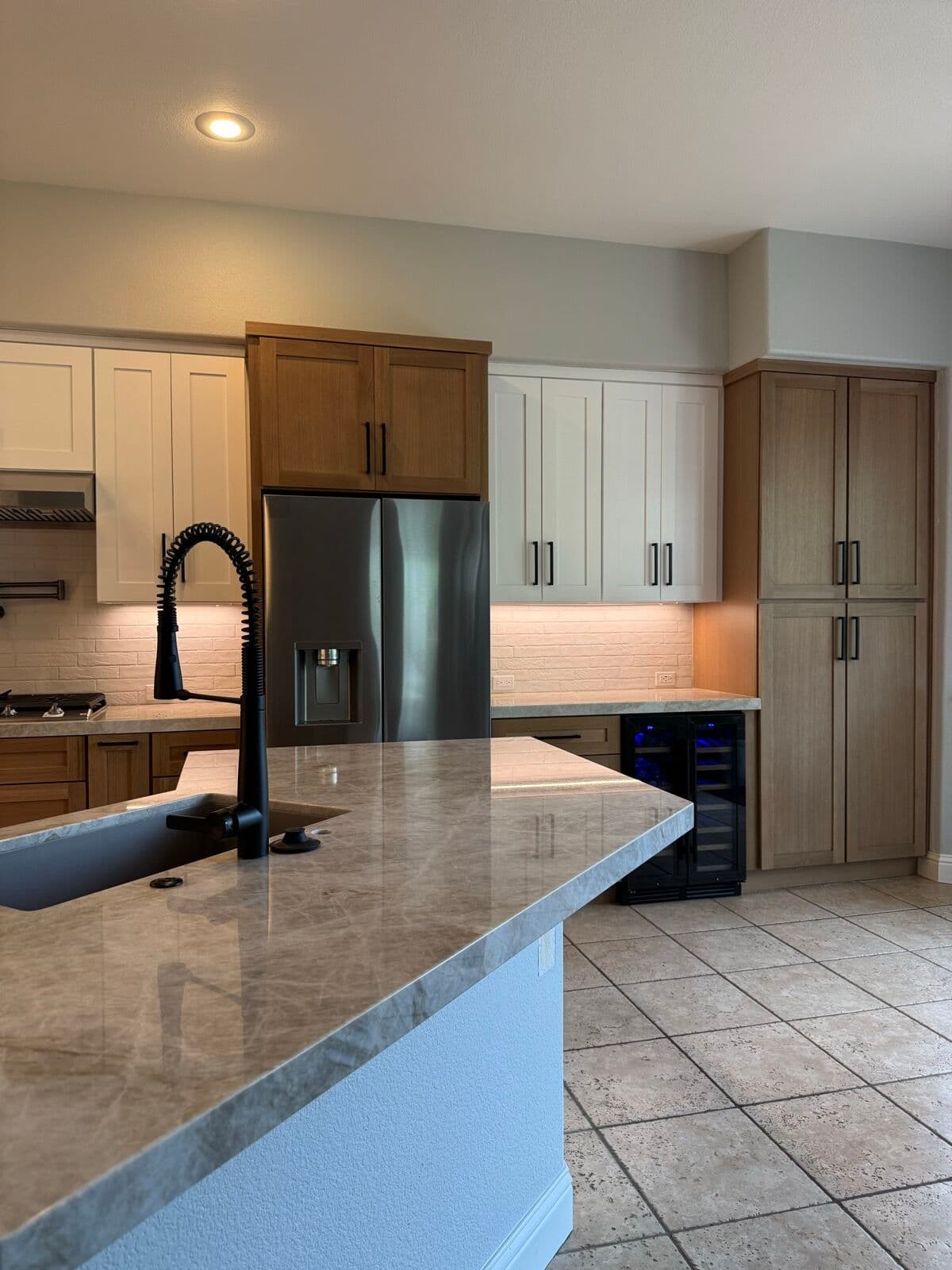
The vertical panel carries weight and takes knocks from stools and feet, so the cabinet end has to be square and solidly built, and the panel is bonded and supported rather than simply leaned in. On a seated island we plan the overhang and any hidden steel at the same time — see kitchen islands.
Material choices
Heavily veined quartz is the most forgiving because the pattern is consistent and the fabricator can match it precisely. Marble and natural stone give the most dramatic result and demand the most planning, since the veining is whatever the block gave. Porcelain and sintered stone mitres beautifully and stays thin at the edge.
Single-sided or both ends, on an island or a peninsula. Priced inside your kitchen countertops scope, and drawn before anything is ordered.