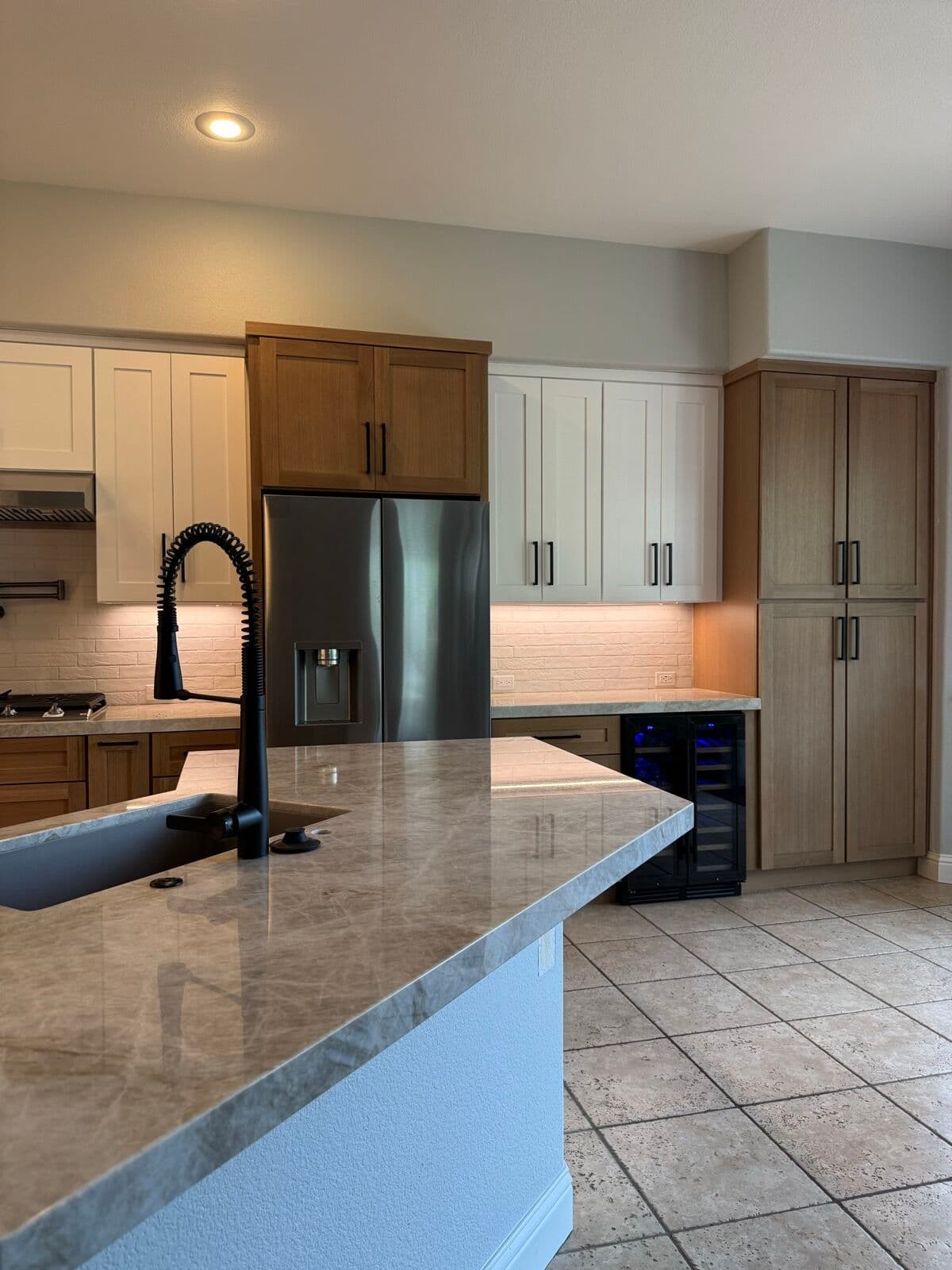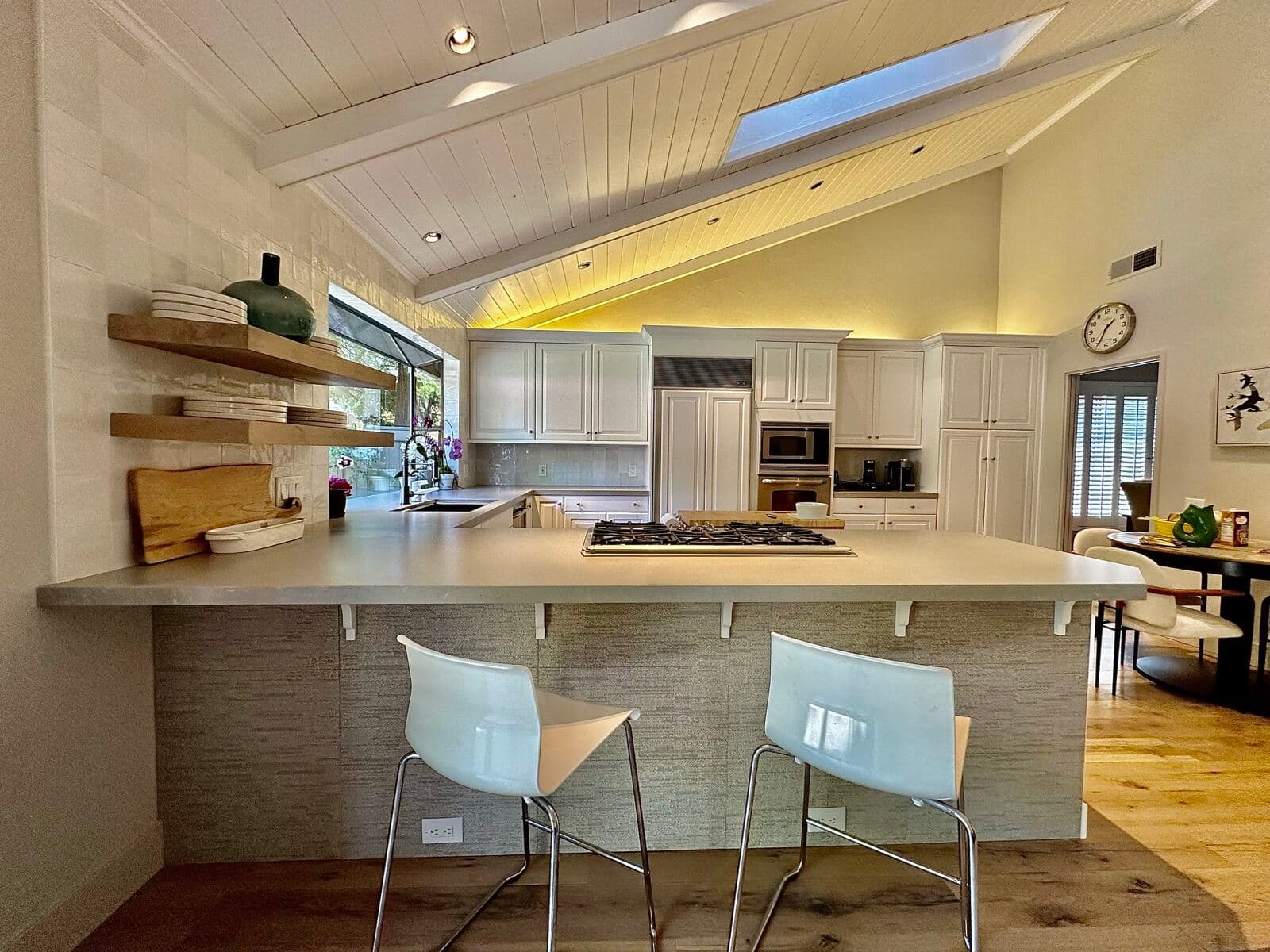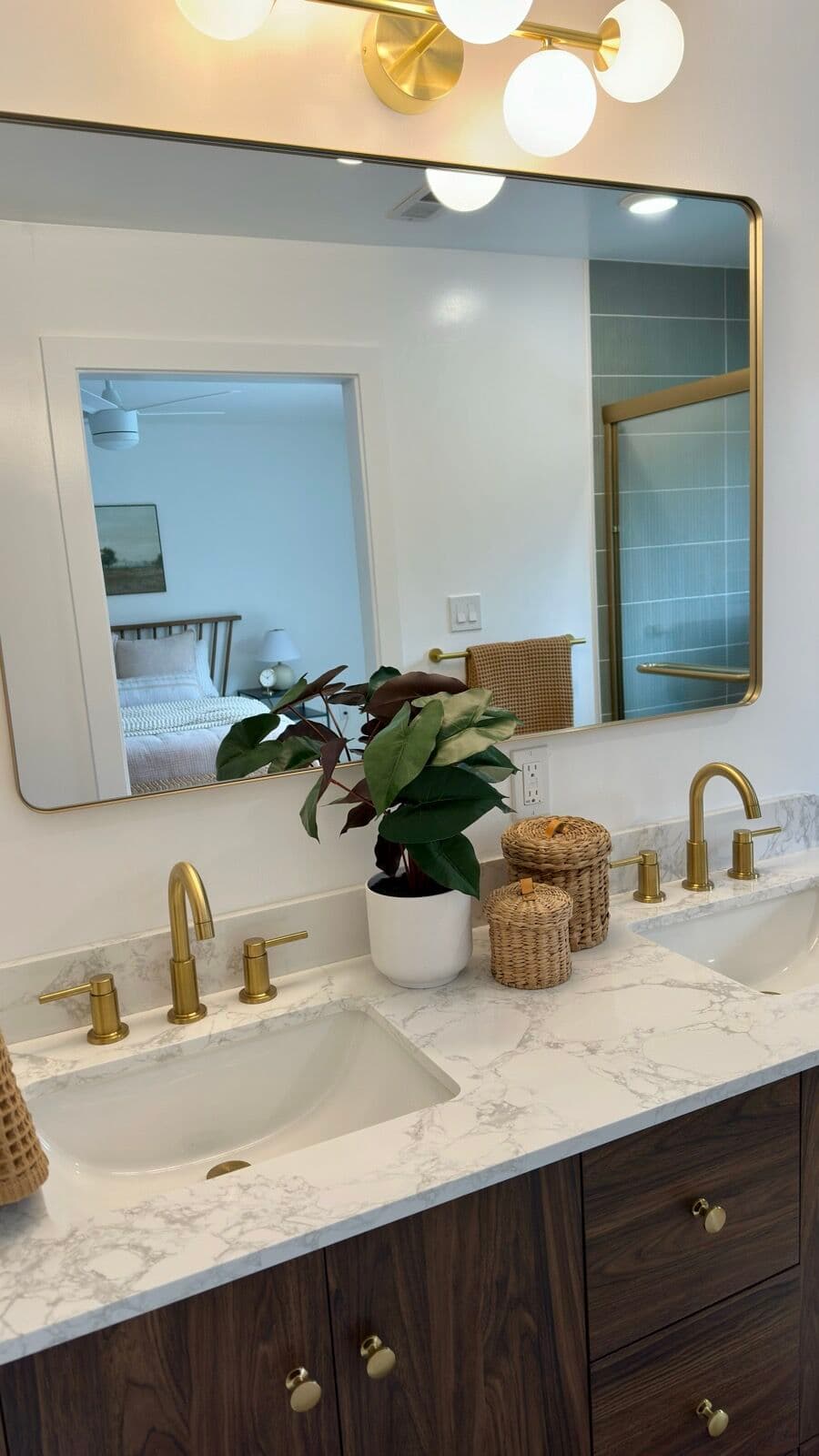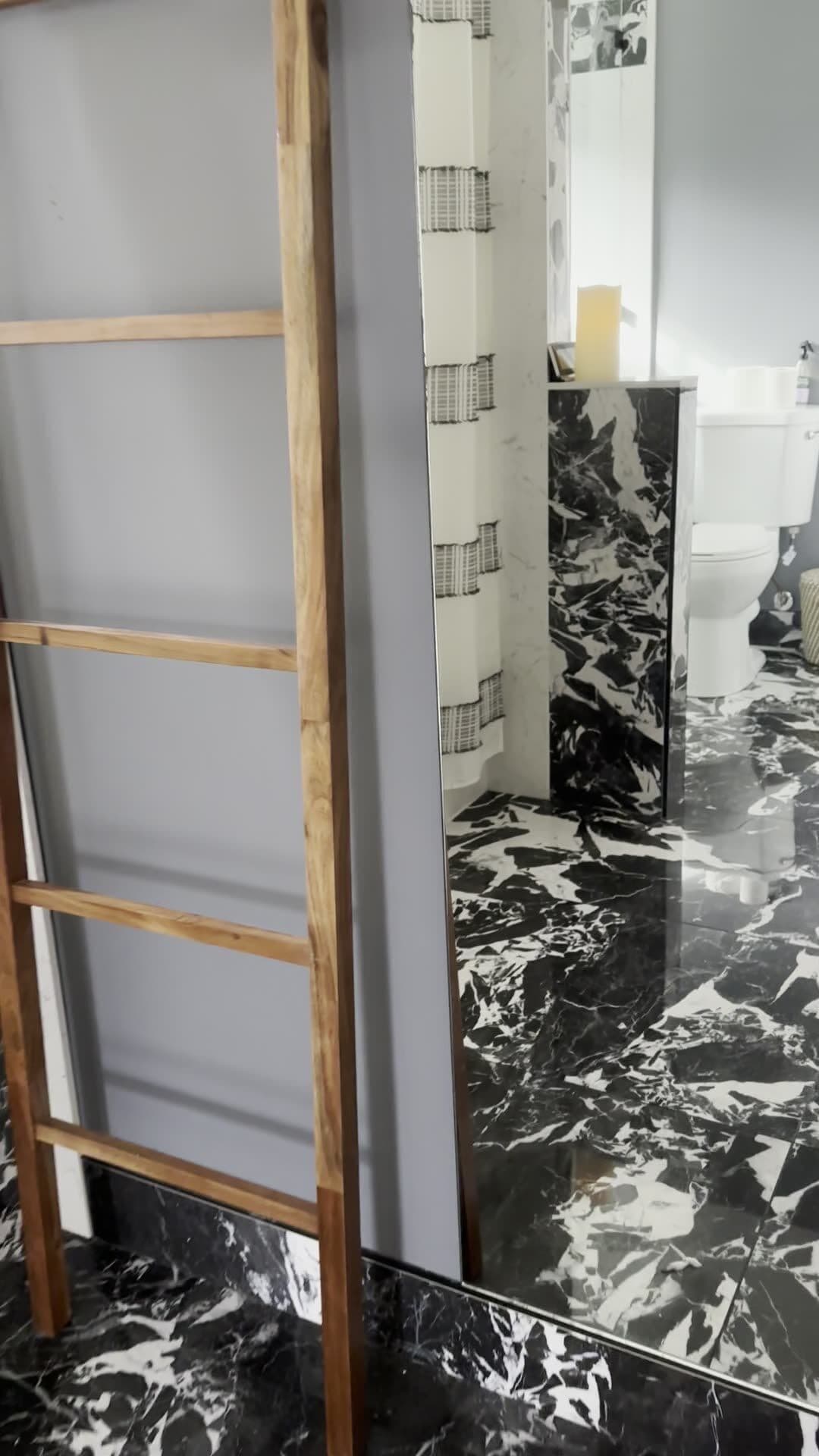
Some countertop jobs get quoted high or declined outright, because they need decisions made before cutting and a crew willing to carry the risk. Those are the ones we take. It is the reason countertops are the highest-volume work in this business.
The jobs we mean
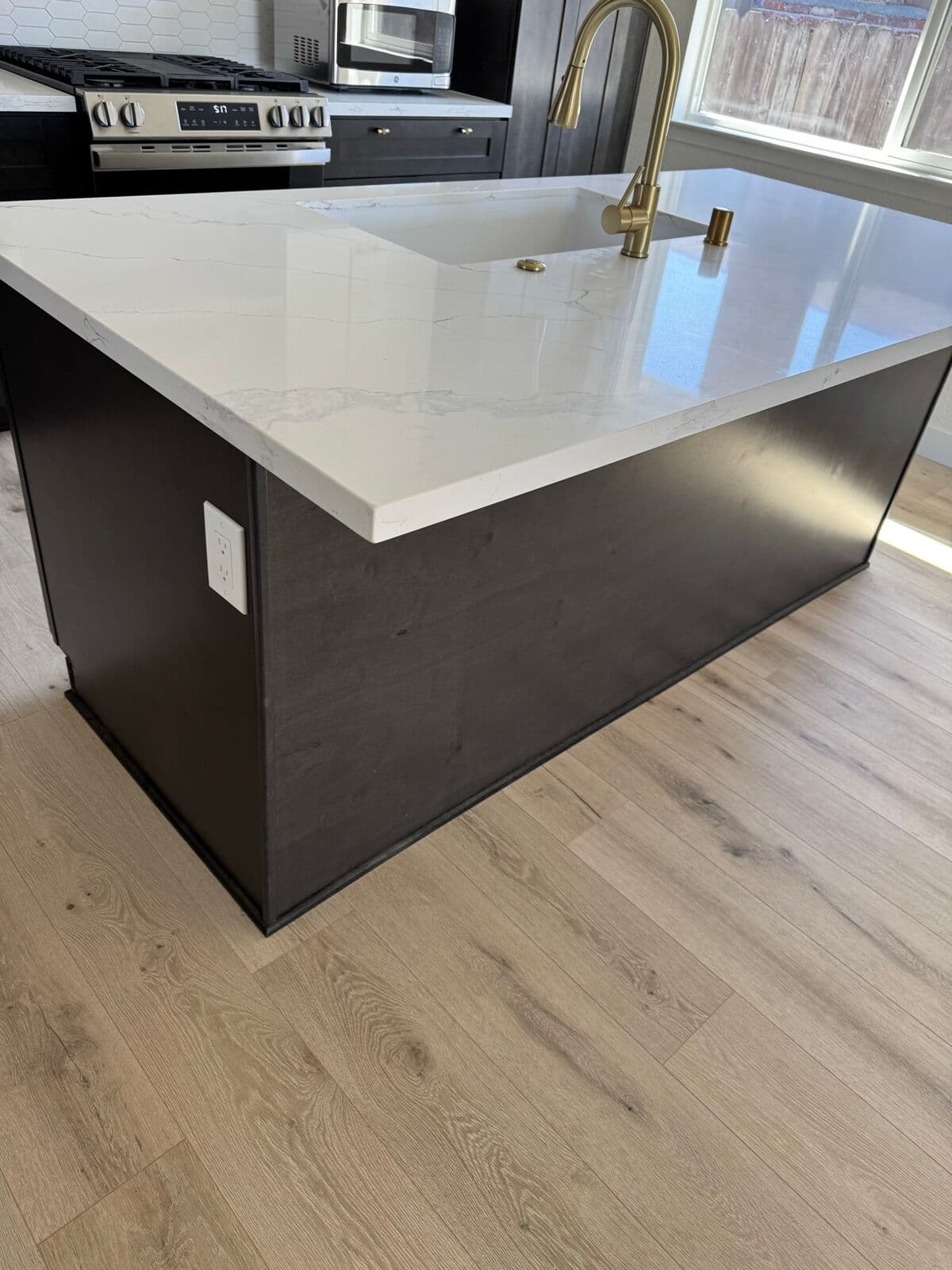
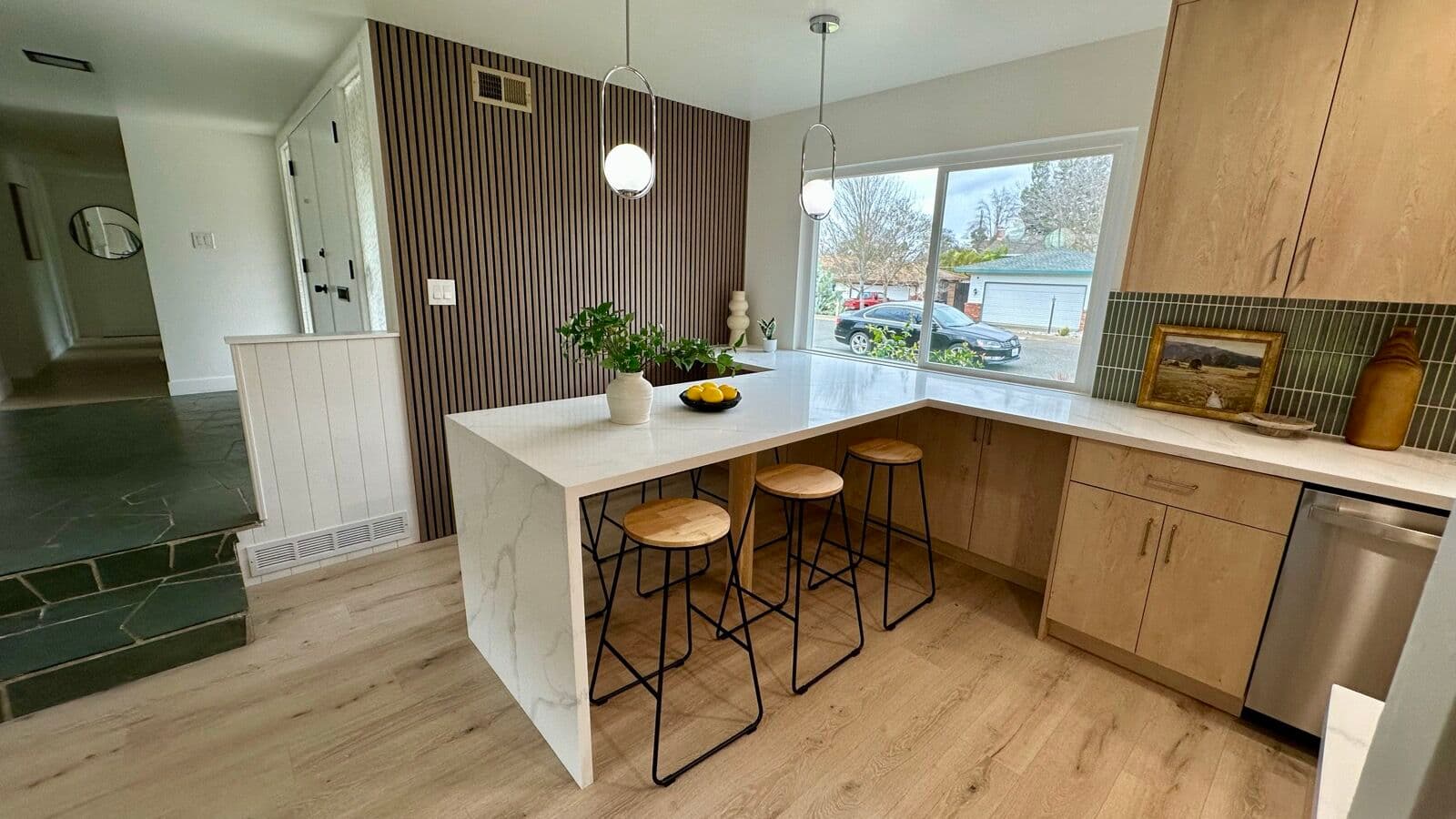
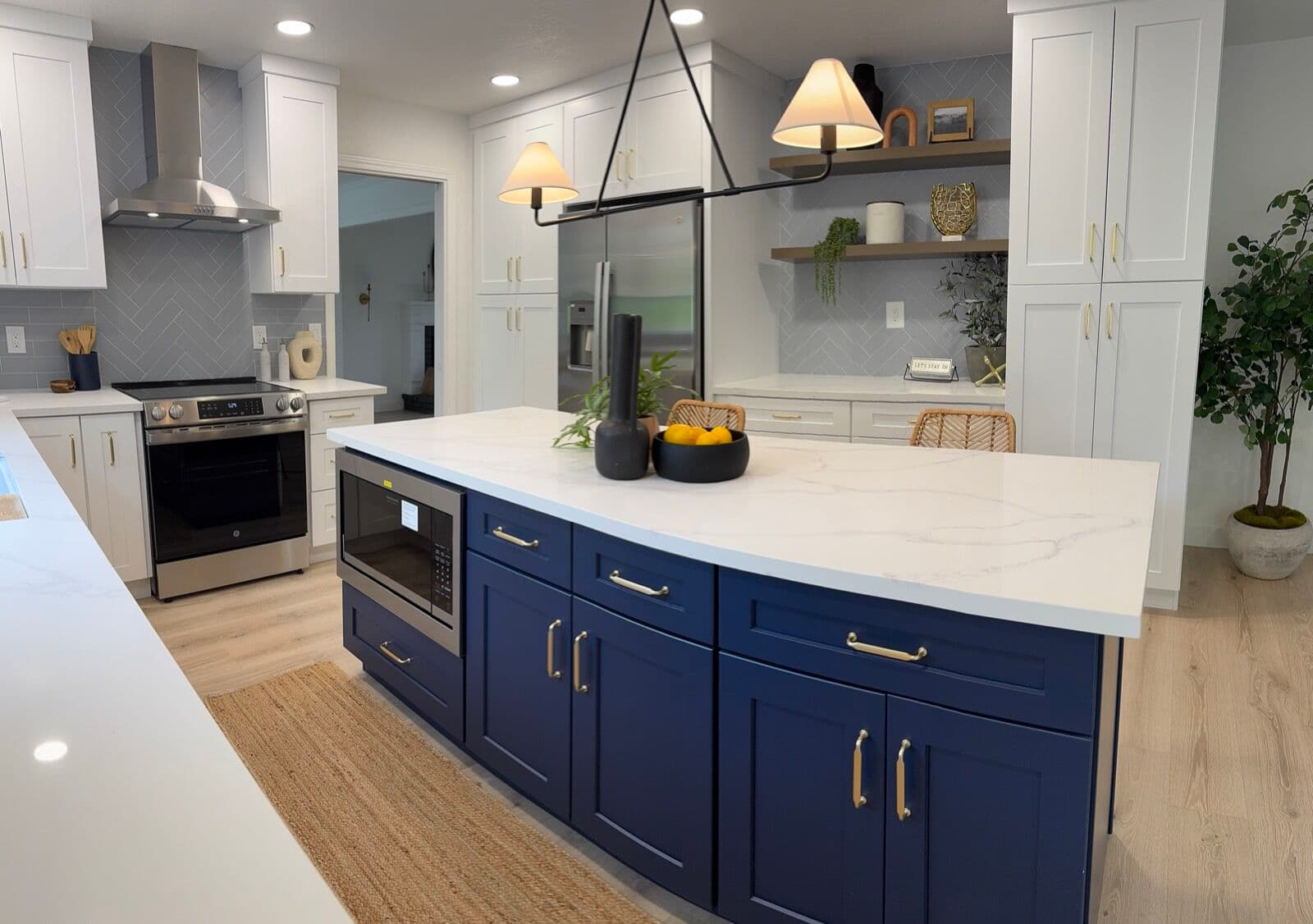
Oversized islands. Past a certain size no slab covers it, so the question is not whether there is a seam but where it lands and how well it is matched.
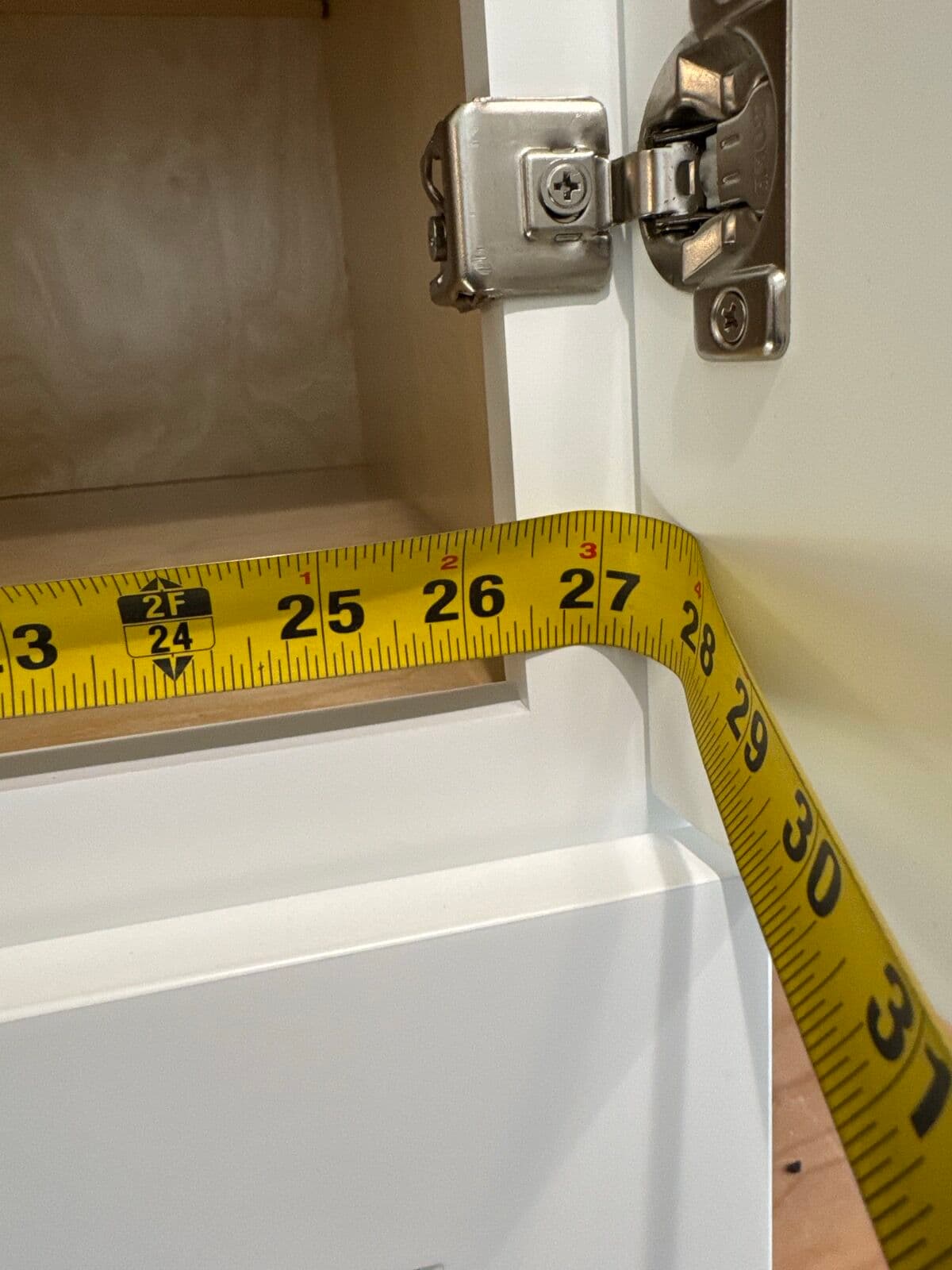
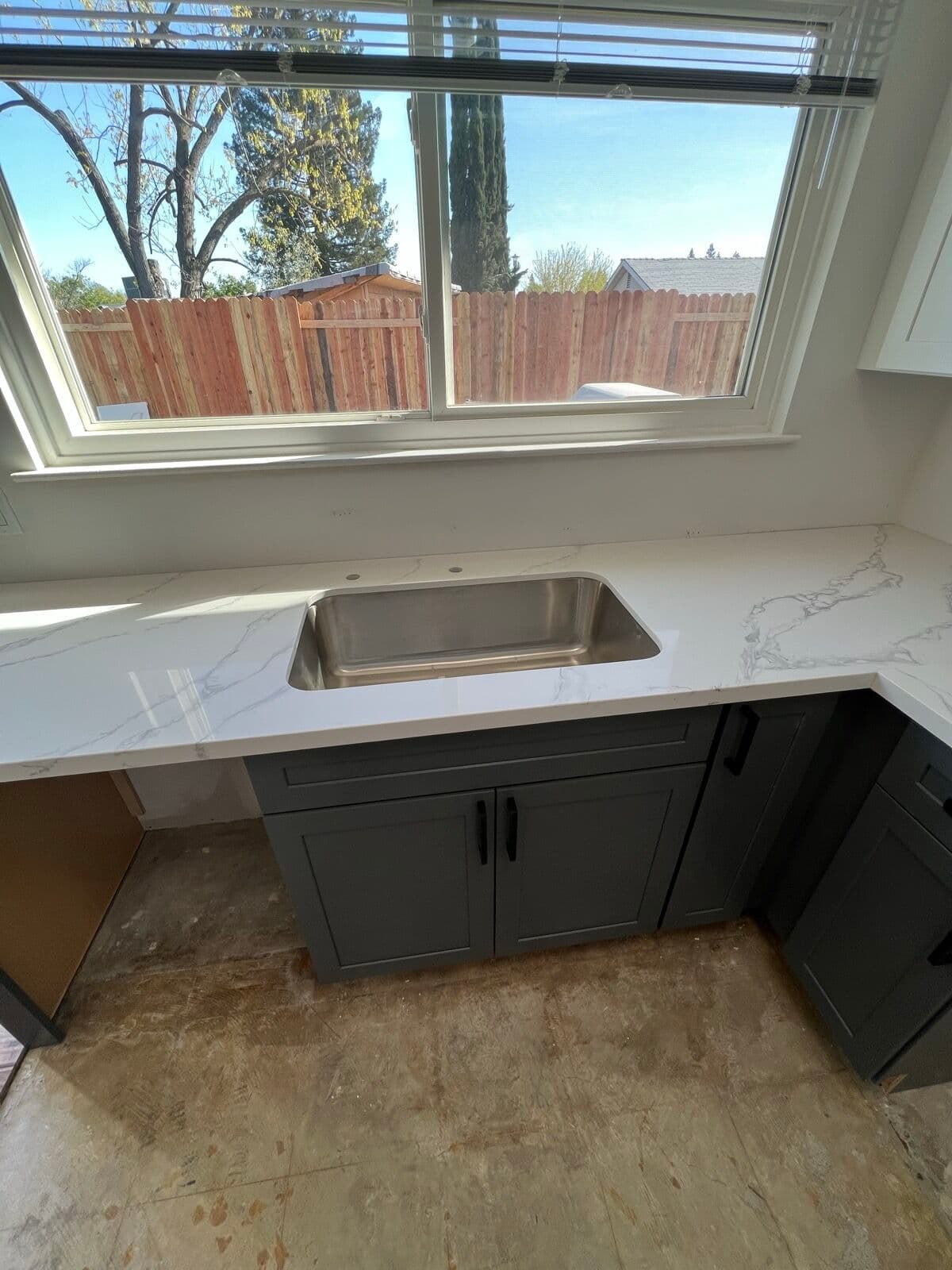
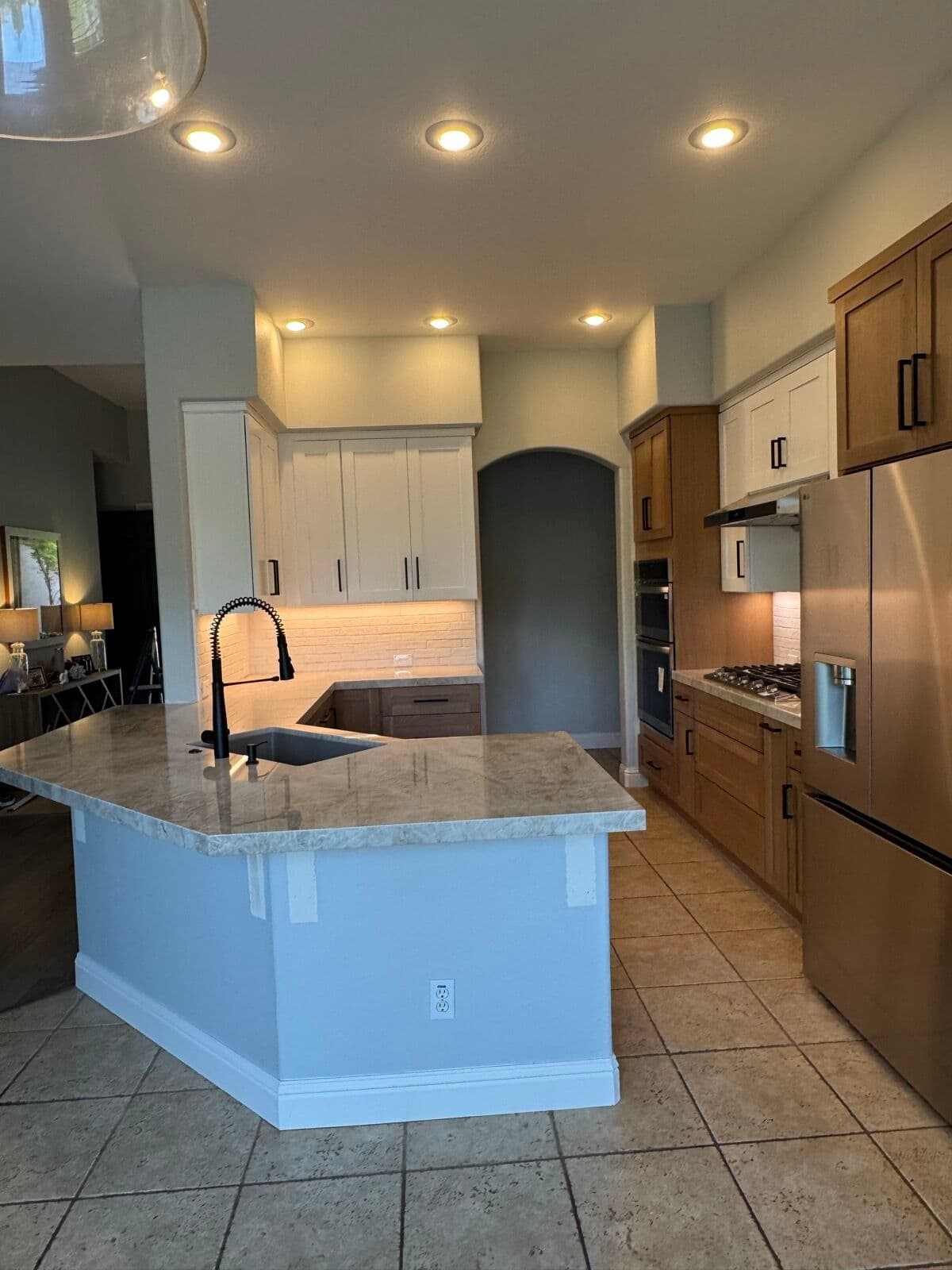
Walls that are not square. Older Sacramento houses rarely give you a true 90 degrees. Digital templating captures the real angle and the stone is cut to it, rather than cut square and packed out with caulk.
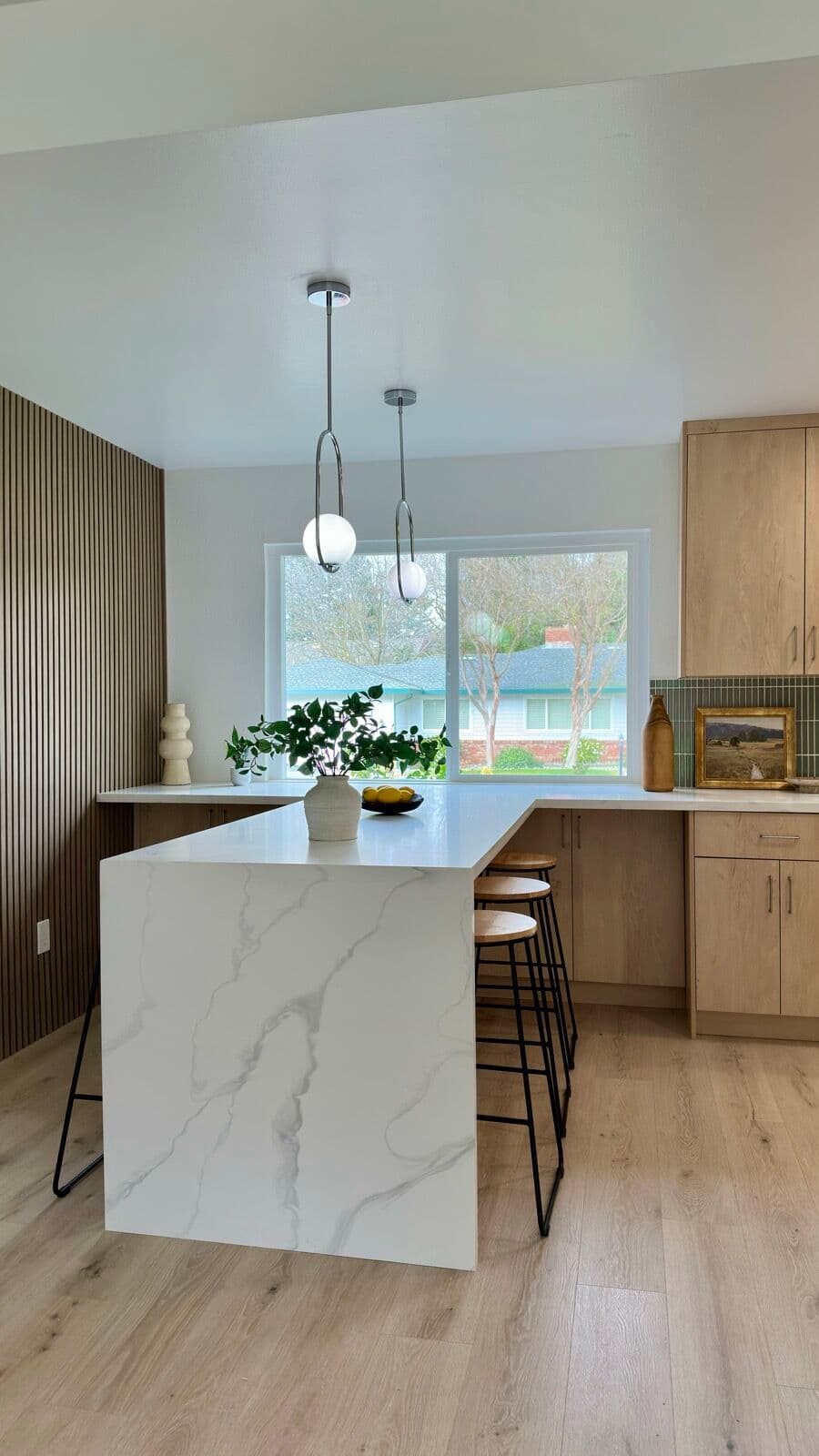
Odd angles and multi-piece tops. Peninsulas that turn, wrap-around counters, runs that die into a window casing.
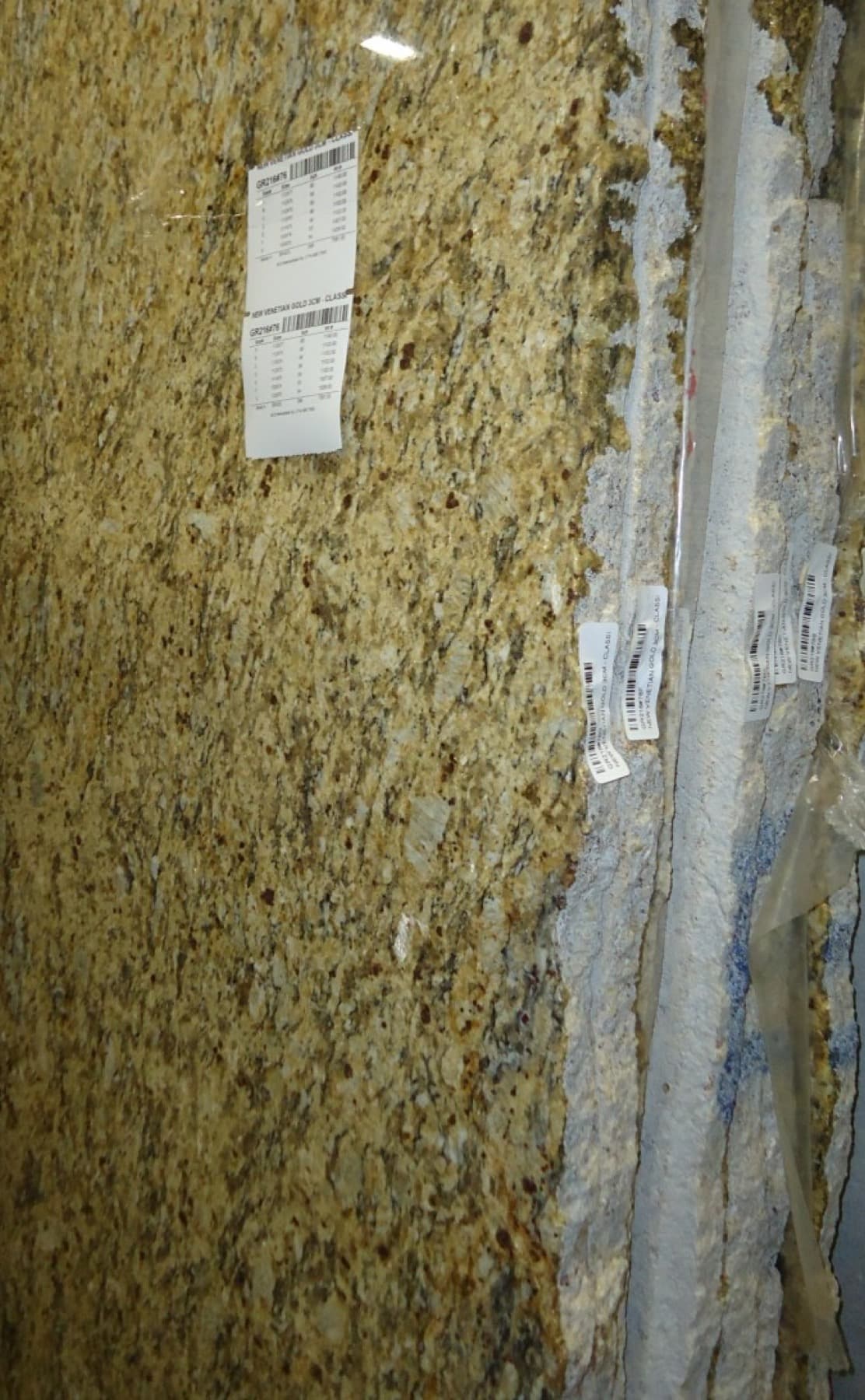
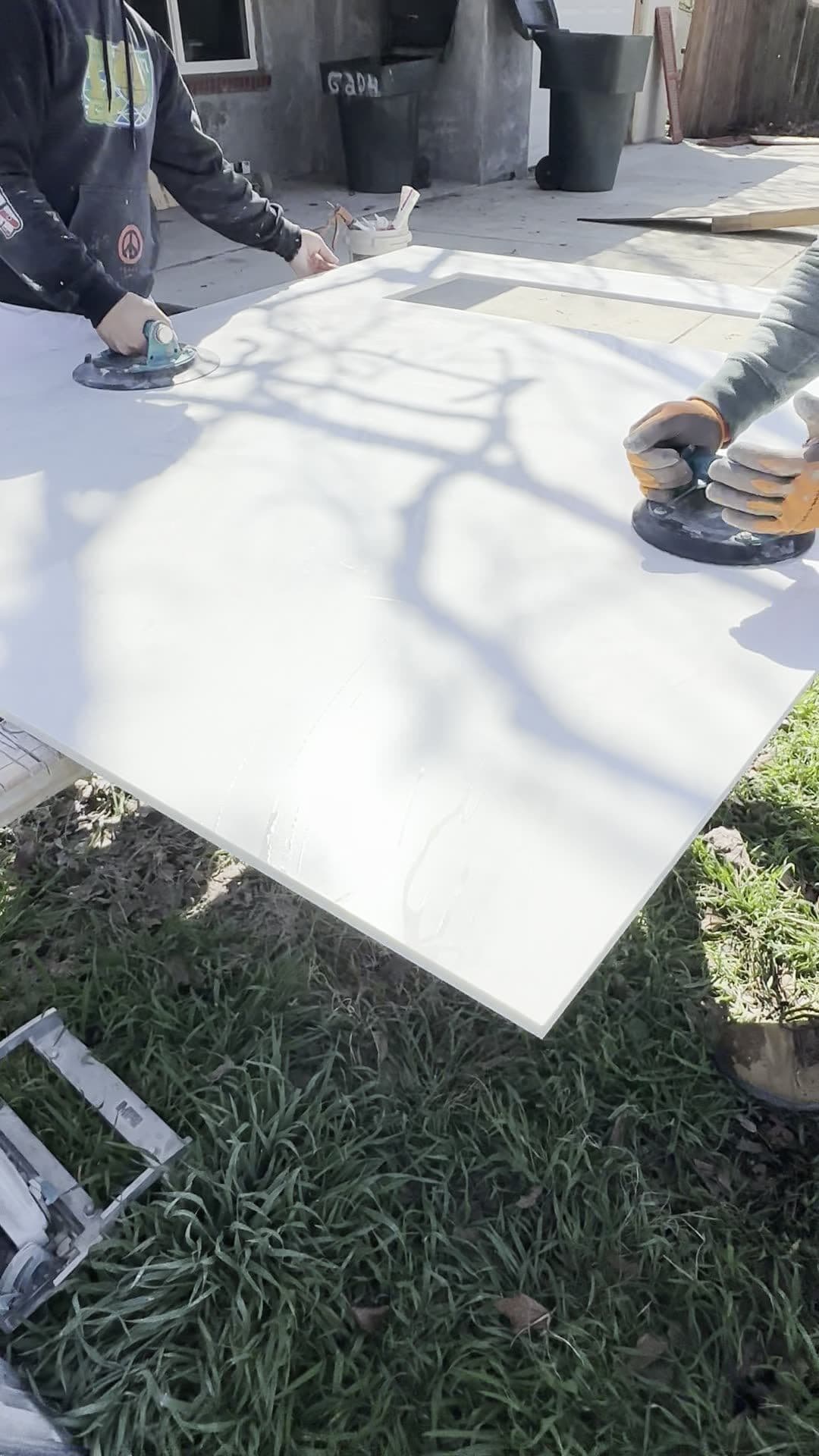
Book-matched seams. Two adjacent slabs cut so the veining mirrors across the joint — a slab-layout decision made at the yard, not at fabrication.
Full-height slab behind a range, where the counter, the splash and sometimes a waterfall end all have to carry one continuous pattern.
Long unsupported overhangs, which need hidden steel sized to the span rather than corbels added afterwards.
Why they go wrong elsewhere
Every one of these is decided before the slab is cut. Where the seam falls, which part of the slab lands on the island, how the veining turns a corner — get them wrong and the fix is a new slab. Crews that template quickly and cut from a drawing are the ones who decline this work, and they are right to.
How we handle it
Layout planned on the actual slabs at selection, digital templating off the installed cabinets, fabrication by partner shops that do this daily, and installation by our own crew — one company answerable for the result rather than a supplier and a sub pointing at each other.
Bring us the kitchen somebody else called difficult. Free measurement, and an honest answer about what the stone will and will not do.