The second-generation update most Folsom kitchens are due
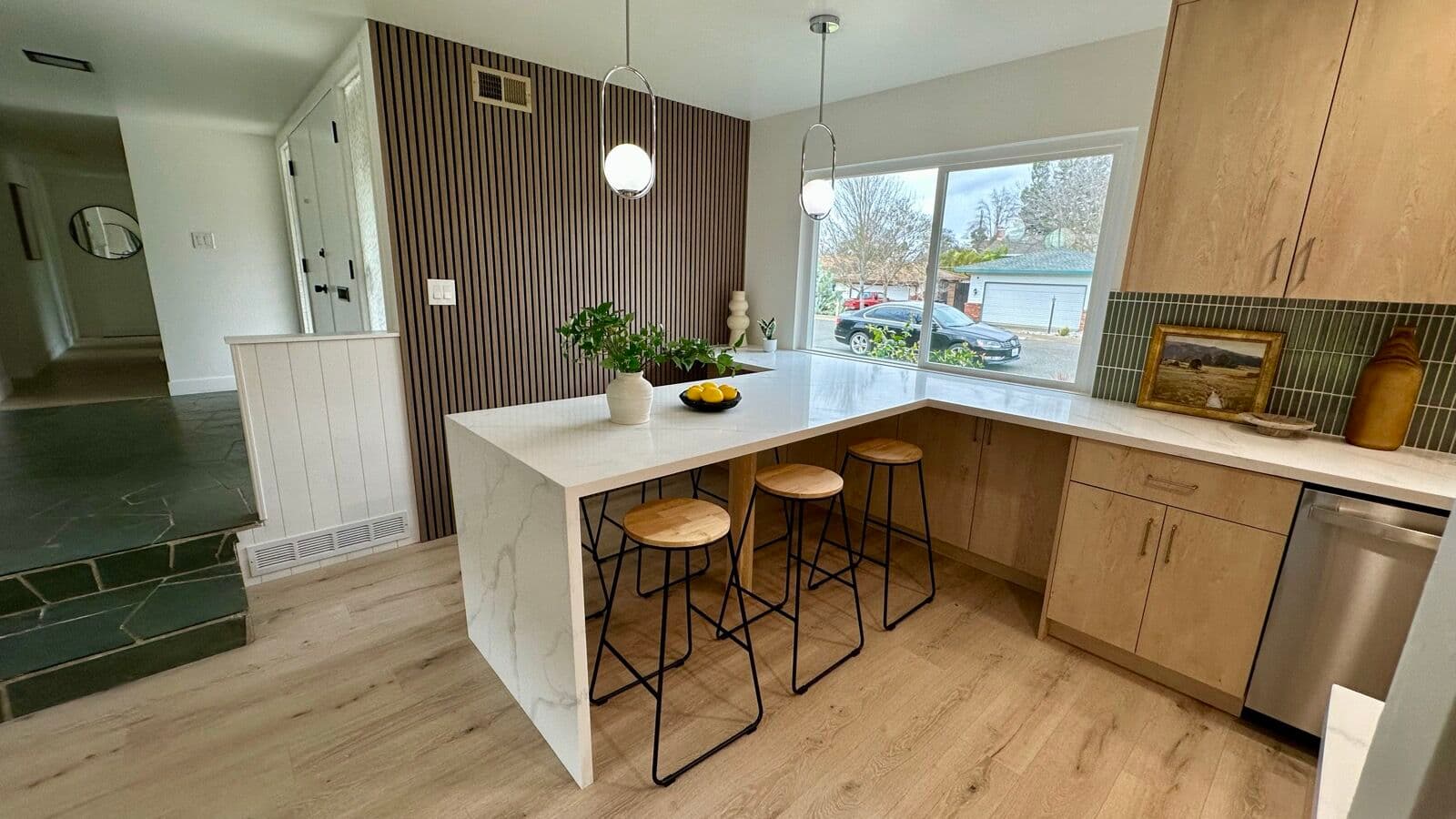
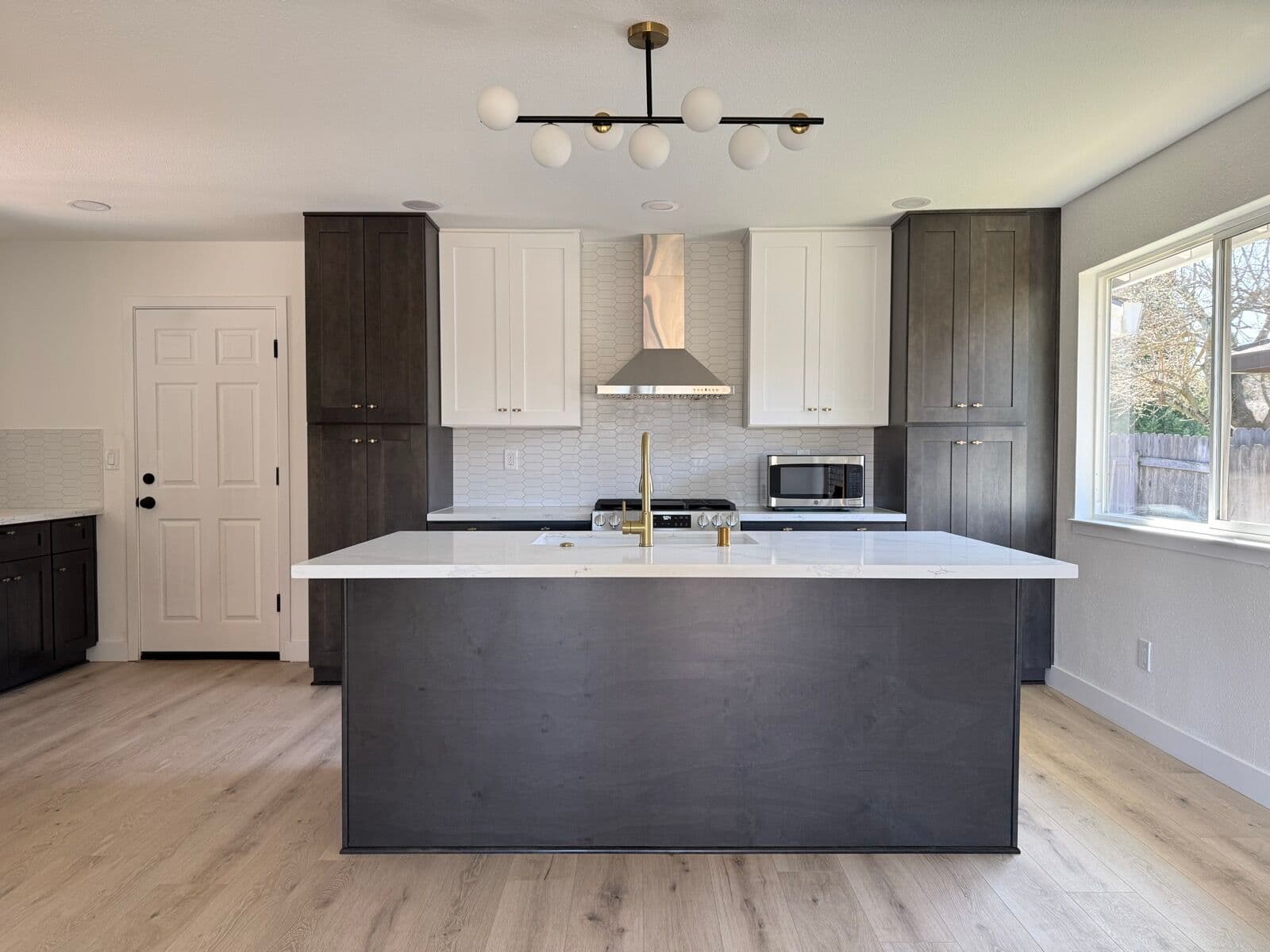
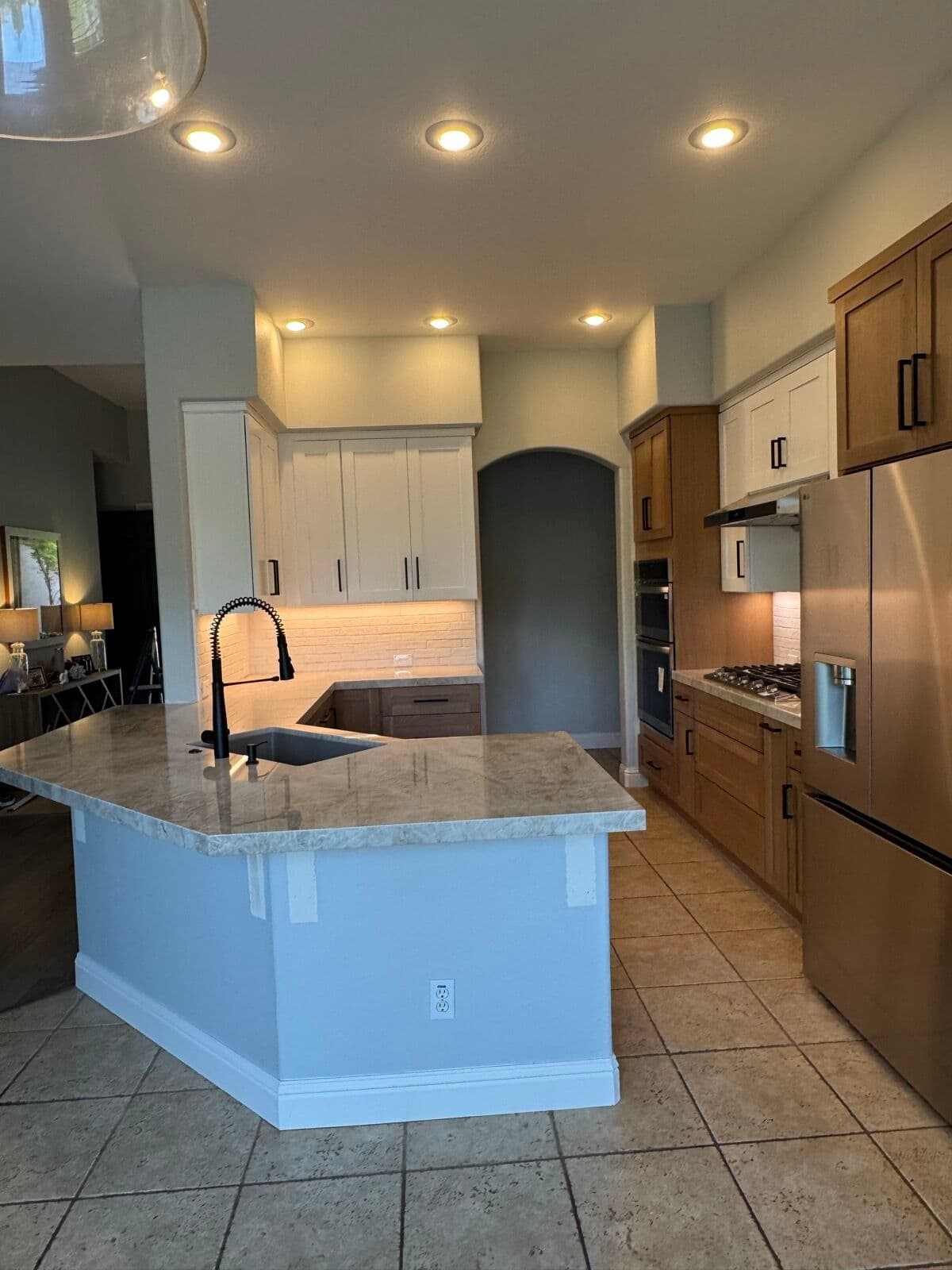
Folsom built out mostly after 1980, so its housing is young by Sacramento-region standards — but a kitchen finished in 1992 is still a 1990s kitchen. Natoma Station, the original American River Canyon and Briggs Ranch all carry the same signature: stained builder-grade boxes, uppers at standard depth, and finishes chosen off an option sheet three decades ago. Many of these kitchens have already had one cosmetic pass — paint, hardware, maybe a countertop — and are now due the real update. That usually means new cabinets built to our specification in place of the original stained boxes, paired with quartz or granite tops from our partner fabricators. Where the boxes are genuinely sound, refacing is the honest alternative, and we quote it when it fits. The layouts themselves mostly work — by the 1990s, builders had already learned to open kitchens to family rooms — so this is rarely wall-moving work. It is a cabinetry-and-finishes job at heart, which keeps the disruption manageable. The result reads as a new kitchen because everything you touch and see is new, even though the room itself never moved an inch.
What to do with the garden tub
The oversized primary bath is the other Folsom signature: a garden tub, a long double vanity, and more floor than the room knows what to do with. The tub is the sticking point. Owners tell us the same thing over and over — it gets used a few times a year and takes up a quarter of the room. The common rework replaces the tub with a properly built tiled shower and swaps the long vanity run for new cabinetry and a stone top in the same footprint. Because the room is already large, this is comfortable work: no walls move, and the layout that felt dated becomes the reason the new bath works so well. The wet area itself — tub out, tiled shower in — runs one to two weeks as its own wet-area remodel. The vanity and top can be done with it or later; a straight vanity-and-top swap is two to three days. We quote each piece on its own line so you can stage the work if that suits the budget. The garden tub owes nobody an apology — it was what buyers wanted in 1991. The room is big enough to become what you want now.
Historic Folsom is a different kind of job
The district around Sutter Street plays by different rules. These are gold-rush-era and early-twentieth-century houses on small footprints, with tight kitchens and single baths — the opposite problem from a Briggs Ranch tract home. There is no builder option sheet to update. Every kitchen is its own puzzle, and the puzzle is layout: making a small room work harder, finding storage where the original plan never put any, fitting a real shower into the only bath in the house. Cabinets built to specification matter more here than anywhere else in Folsom, because stock cabinet sizes assume square walls and true corners, and houses this age do not reliably offer either. We measure accordingly. The honest trade-off to understand: a small historic kitchen can cost as much to remodel as a larger tract kitchen, because the difficulty lives in the fitting, not the square footage. What you get back is a kitchen designed around the actual room rather than forced into it. If you own one of these houses, bring us the problems the last remodel ignored. Small rooms reward careful work, and they punish the other kind.
Quartz, granite, and what fits a Folsom house
For the 1990s tract kitchens, quartz is the workhorse: consistent slabs, no sealing, and a clean upgrade from whatever the builder installed. Granite remains the right call for owners who want natural stone and accept occasional sealing as the cost of it — and in neighborhoods where houses share floor plans, a granite slab is one guaranteed way yours will not repeat the one next door. Porcelain suits a thinner profile and takes heat well. All three come through our partner fabricators — the countertops page walks through the differences — and every top is templated off your installed cabinets, not off a plan. On the cabinet side, painted shaker fronts are the reliable center for both eras of Folsom housing: current without being trendy, equally at home against a 1990s family-room opening or historic-district trim. Two-tone schemes, the island darker than the perimeter, add depth without committing the whole kitchen to one color. The principle underneath all of it is simple. You will live with these surfaces for decades, so choose for the house you have, not for the photograph you saw somewhere.
Working with OTG from Folsom
The shop is at 4212 Roseville Rd in North Highlands, 14.3 miles and about 25 minutes from Folsom. Kitchen and bath work is all we do: cabinets built to our specification by manufacturing partners, countertops fabricated by partner shops, and installation by our own crew. Countertops follow a template-then-install sequence — cabinets first, then a template taken from the installed boxes, then the finished stone fitted on a separate visit — and the short drive keeps those visits on the calendar instead of drifting. On multi-week jobs you see the same crew daily, and the person who measured your kitchen is the one answering questions while it is open. Every project begins with a free written estimate. We measure, we agree the scope, and the number on paper is the number. CSLB license #1076872. Whether it is a Natoma Station kitchen due its second-generation update, a Briggs Ranch garden tub finally giving way to a real shower, or a Sutter Street cottage that needs careful hands, the first step is the same: we come look at the room and put the price in writing before you decide anything.