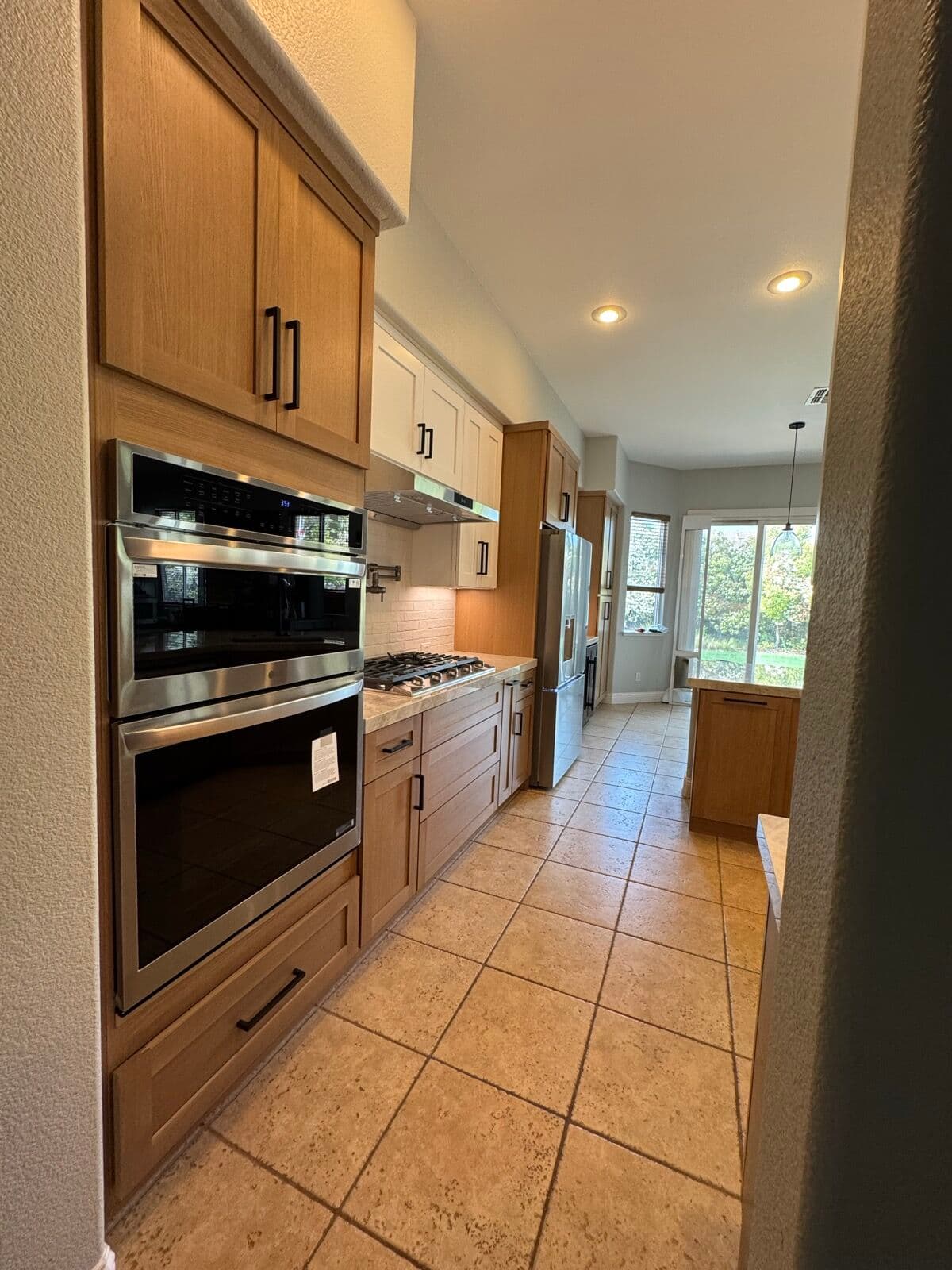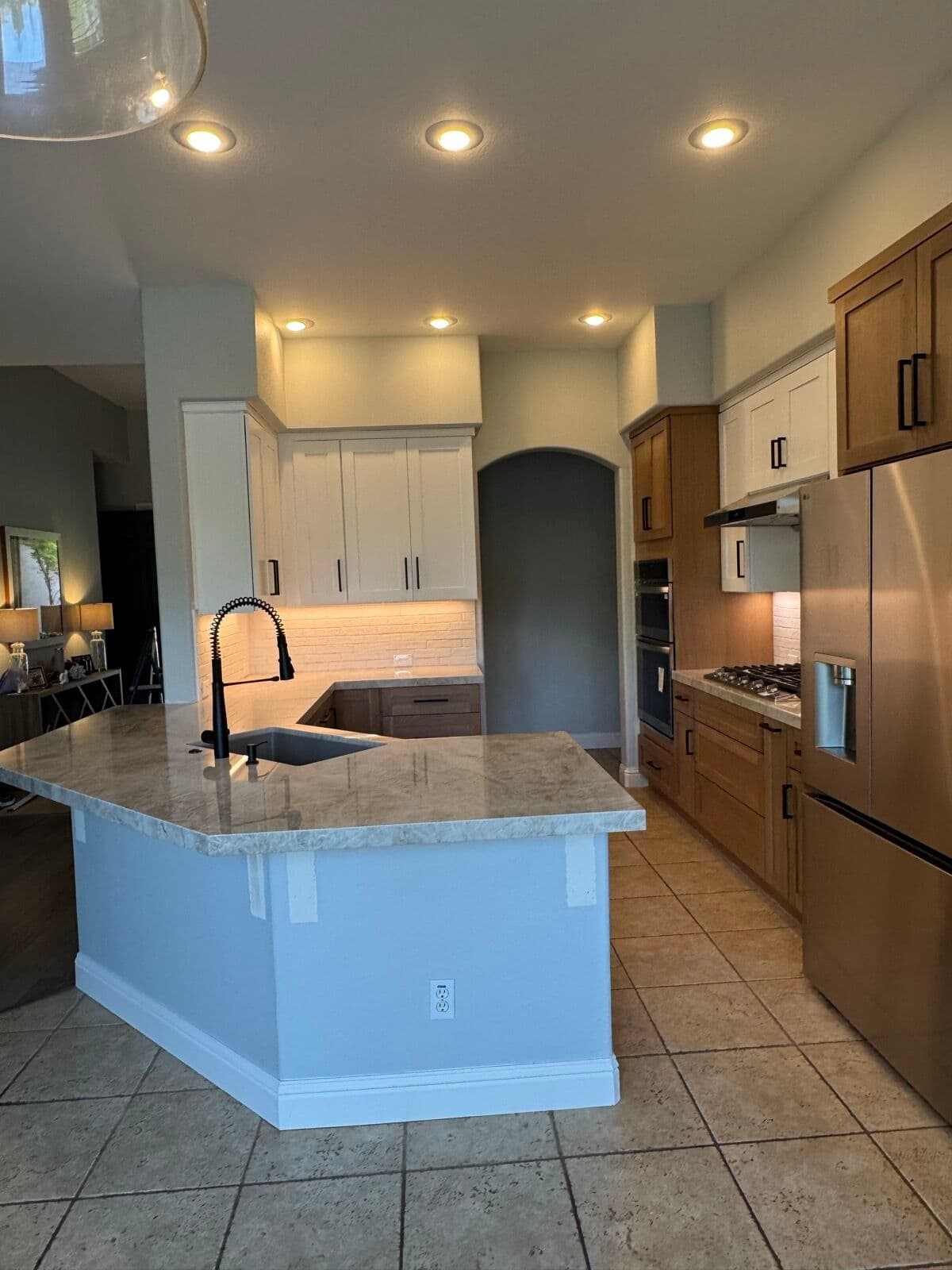
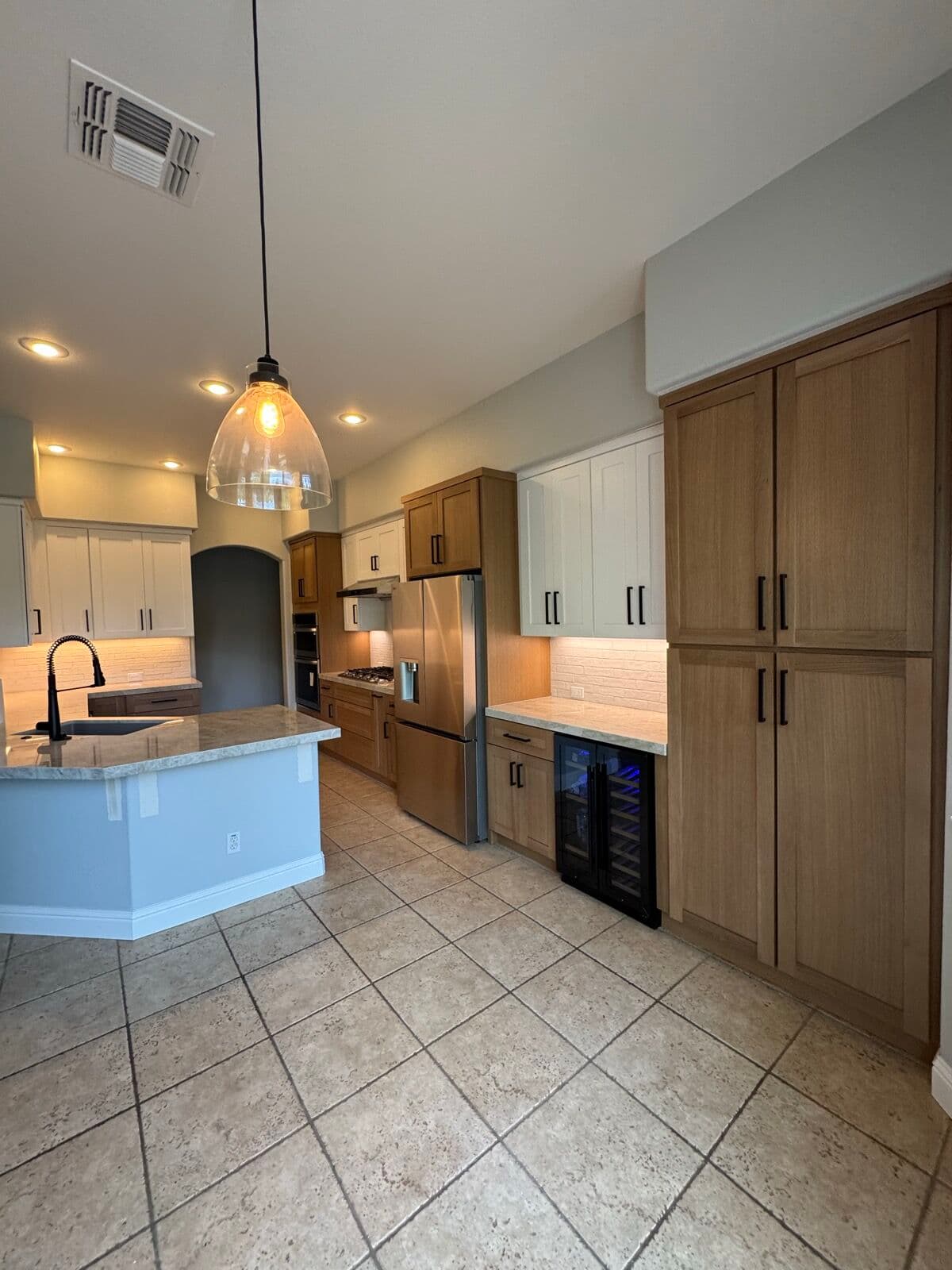
A panel-ready appliance wears a door made from your cabinetry instead of a stainless front. The fridge stops being the biggest object in the room, the dishwasher disappears beside the sink, and the eye reads one continuous run of cabinets.
It is a detail that only works if it is decided early, because the cabinet order depends on it.
What it takes
The appliance has to be a panel-ready model — you cannot add a panel to an ordinary one. Each manufacturer publishes its own panel dimensions, weight limit and hinge requirements, and those numbers go to our cabinet partners before anything is built. A door that is a quarter inch out will not close, and a panel heavier than the hinge is rated for will sag within a year.
So the sequence is: choose the appliances, get their specification sheets, then order the cabinets. Not the other way round.
Where it is worth doing
- Refrigerators — the biggest visual win, and the most expensive appliance to buy panel-ready
- Dishwashers — the cheapest way into the look, and the one most people start with
- Beverage coolers and wine fridges in an island or a butler's pantry
- Warming drawers and undercounter units in a bar run
Where it is not
A range or a hood is meant to be seen — panelling everything makes a kitchen read as furniture with no cooking in it. And in a rental or a flip, the money is better spent on the countertops, where it shows to every future buyer rather than to a design eye.
How we handle it
The panels are made from the same door style and finish as the rest of your kitchen cabinets, from the same run of material, so the colour matches. We set the appliance, hang the panel, and adjust the alignment against the doors either side of it — the whole point is that the gaps are even, and that is fitting work, not delivery work.
Specified inside a full kitchen remodel or a cabinet order, and drawn into the 3D rendering before you approve it.