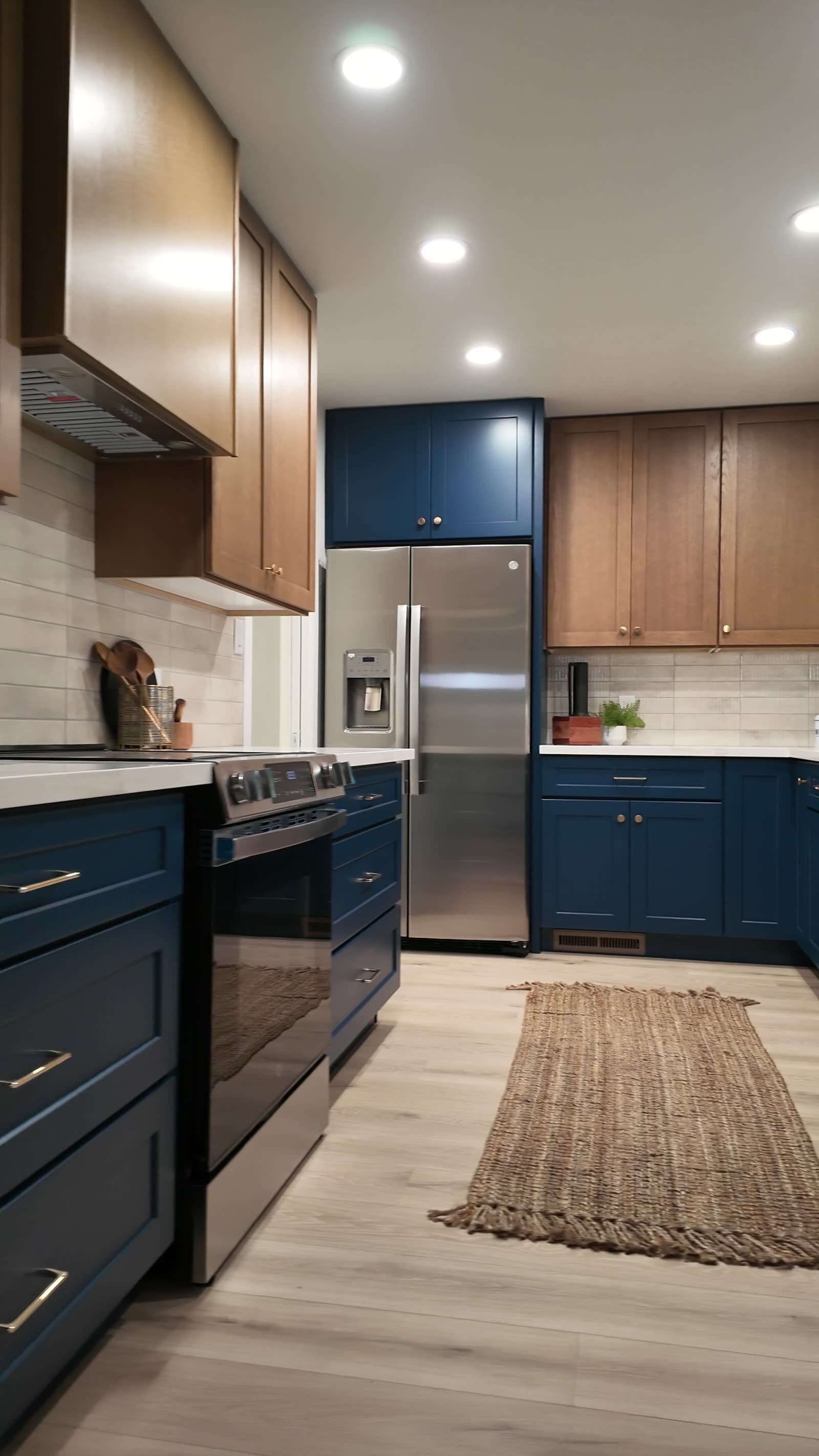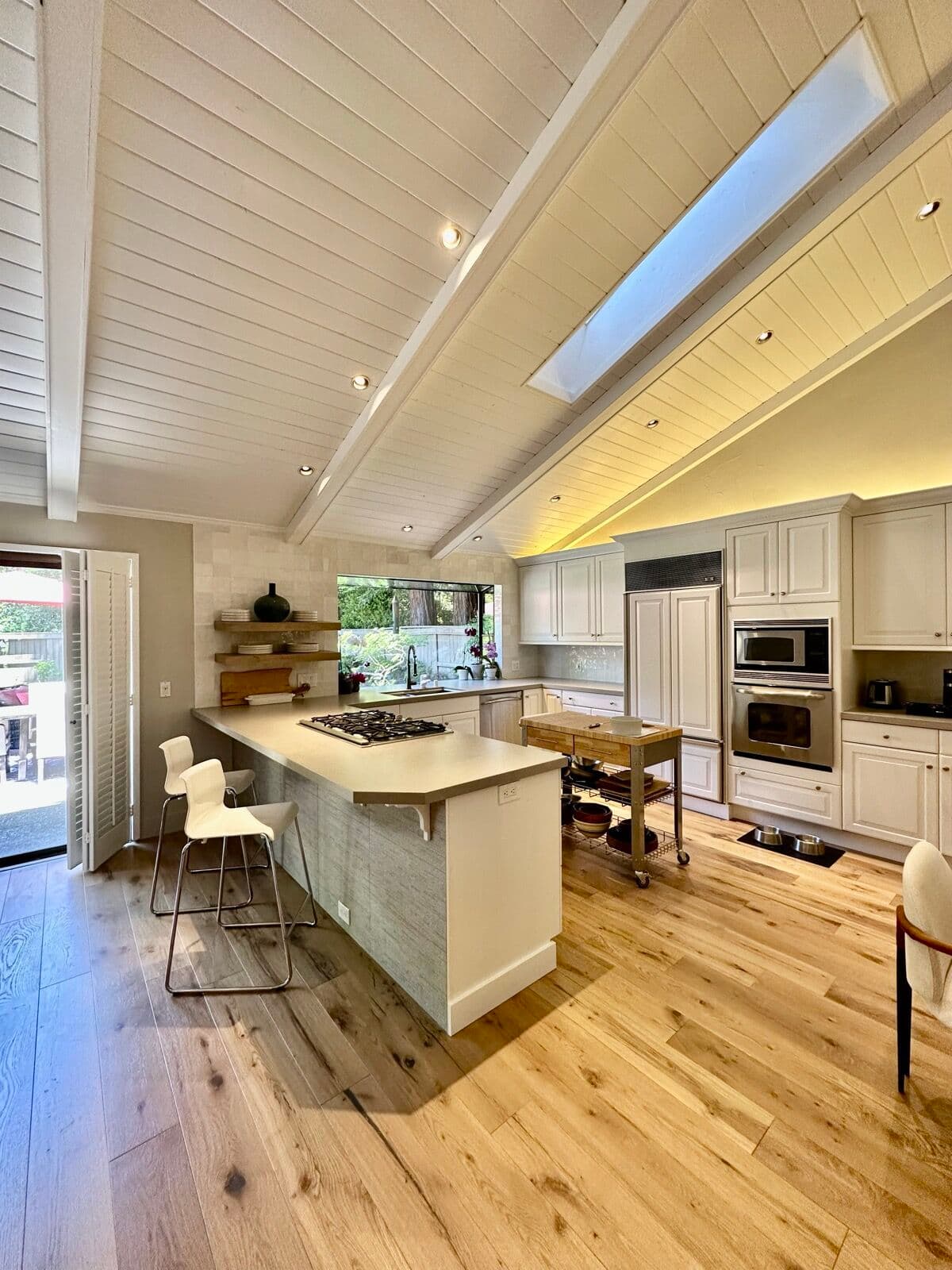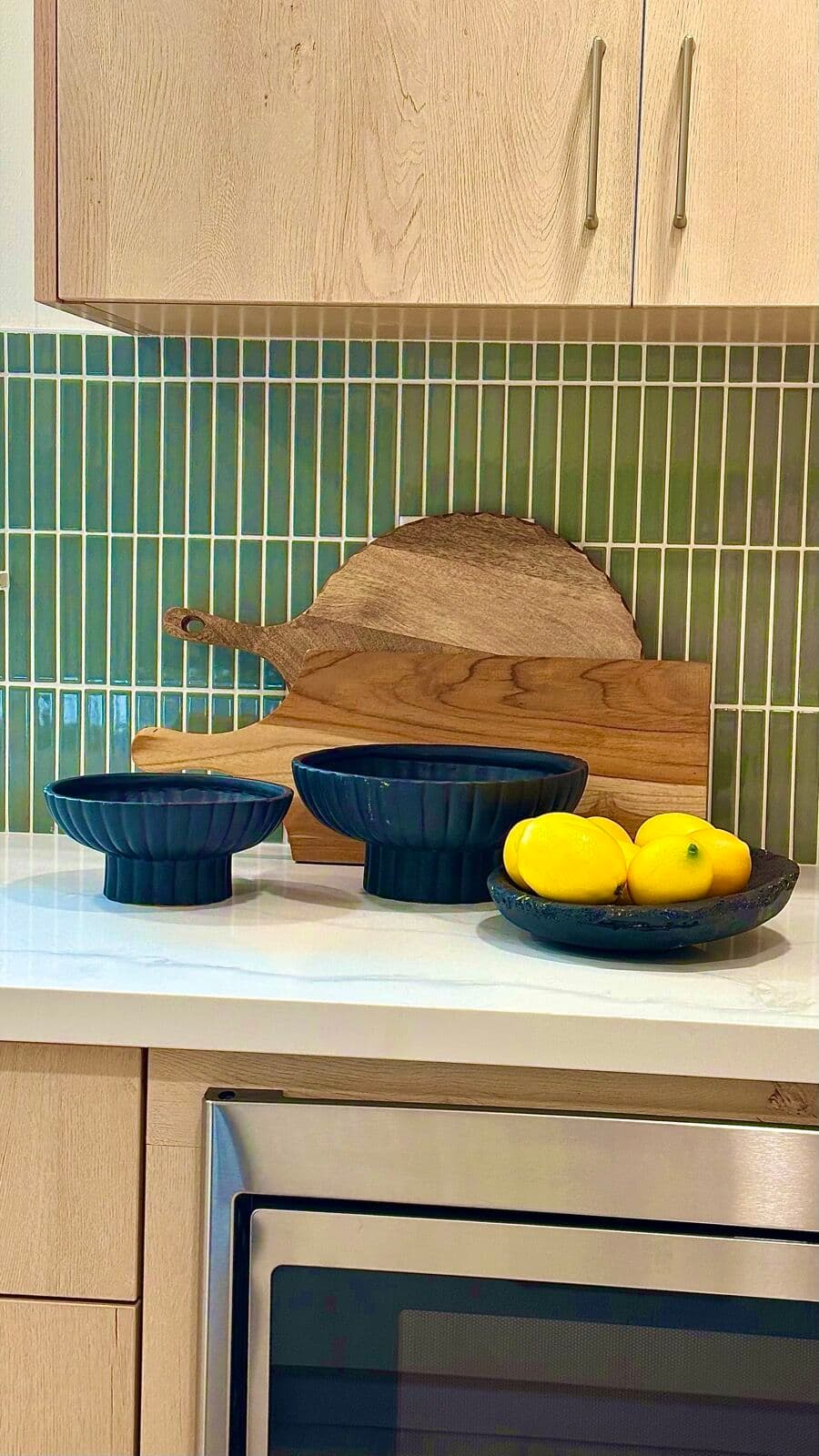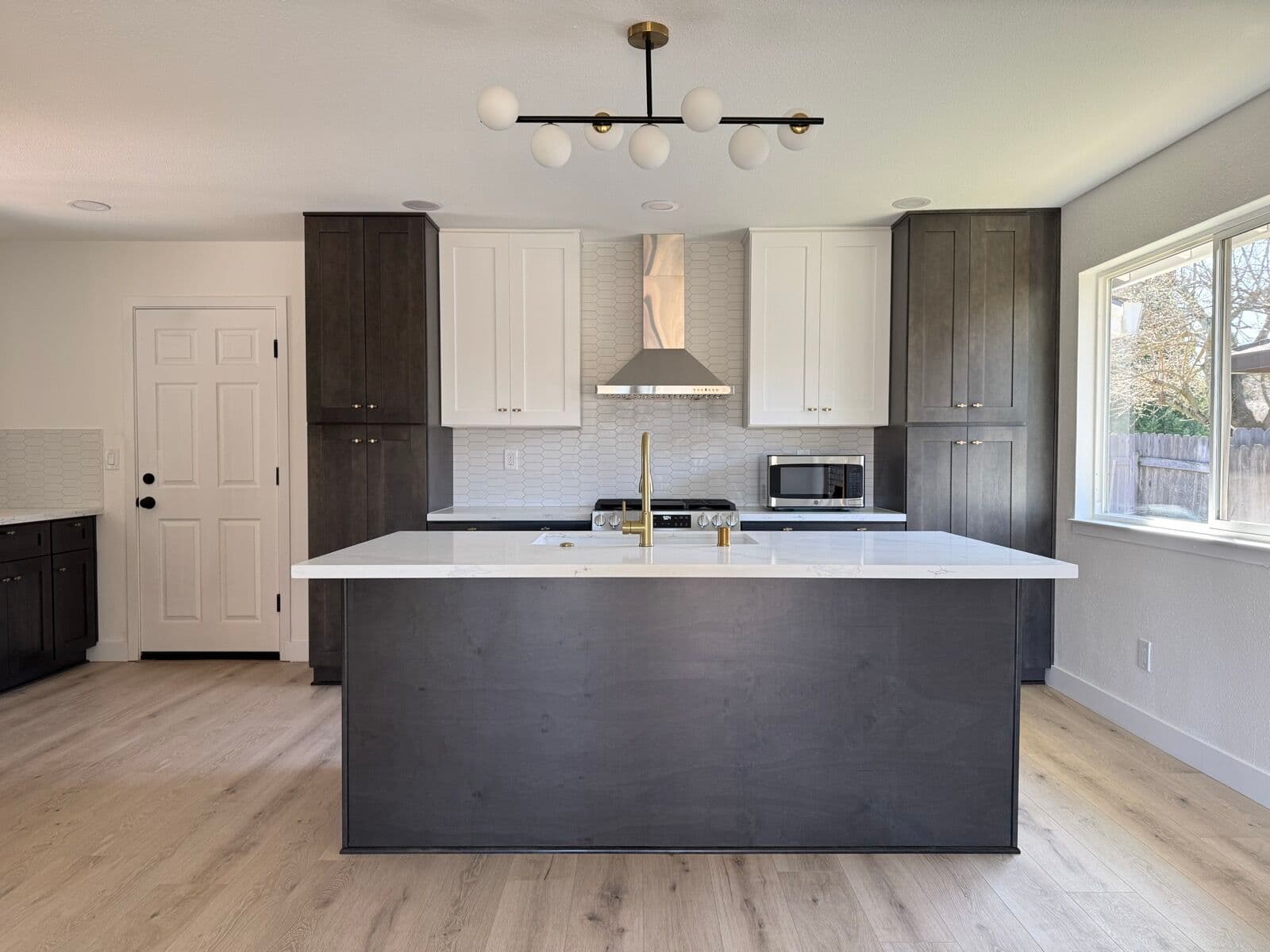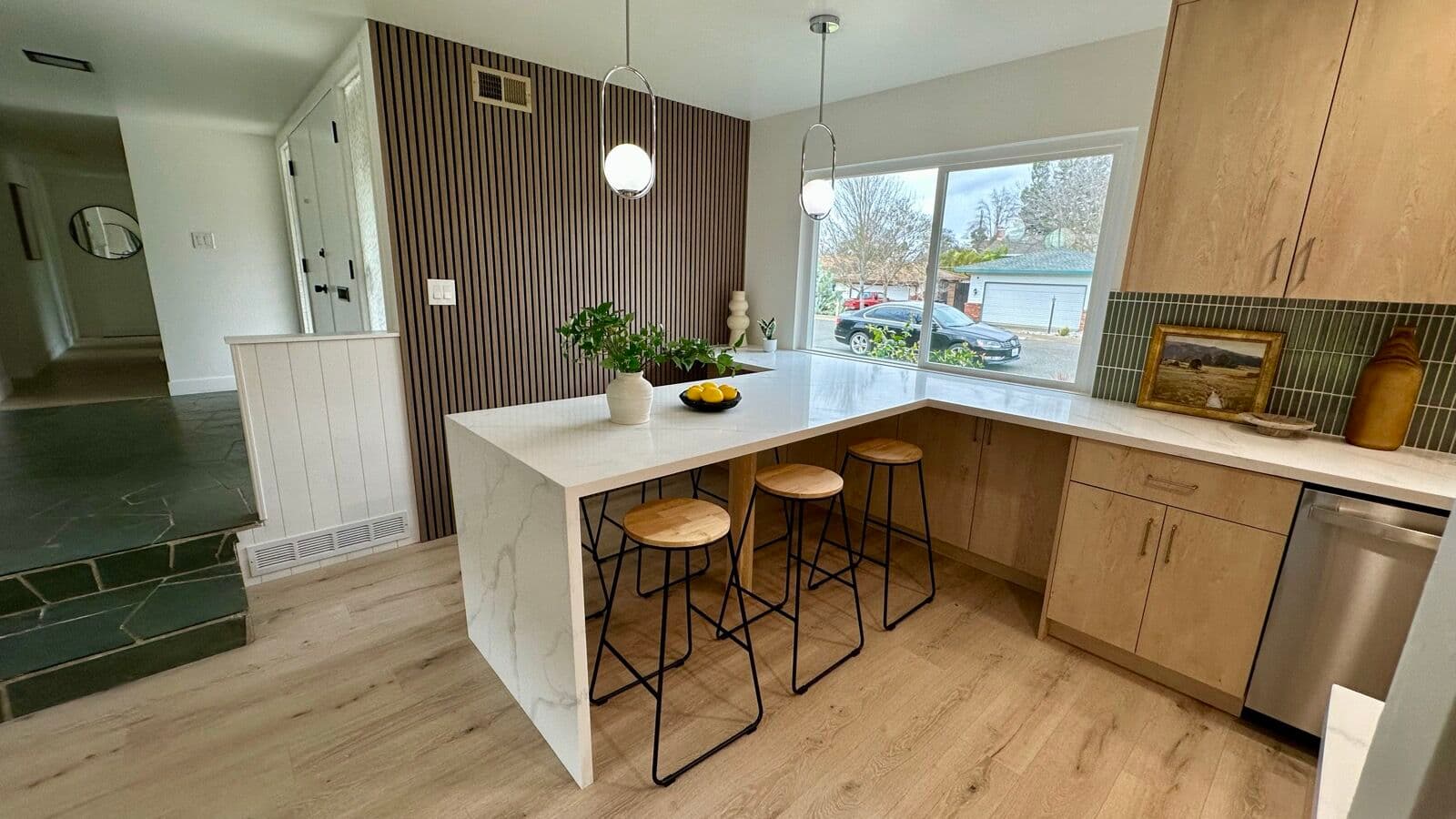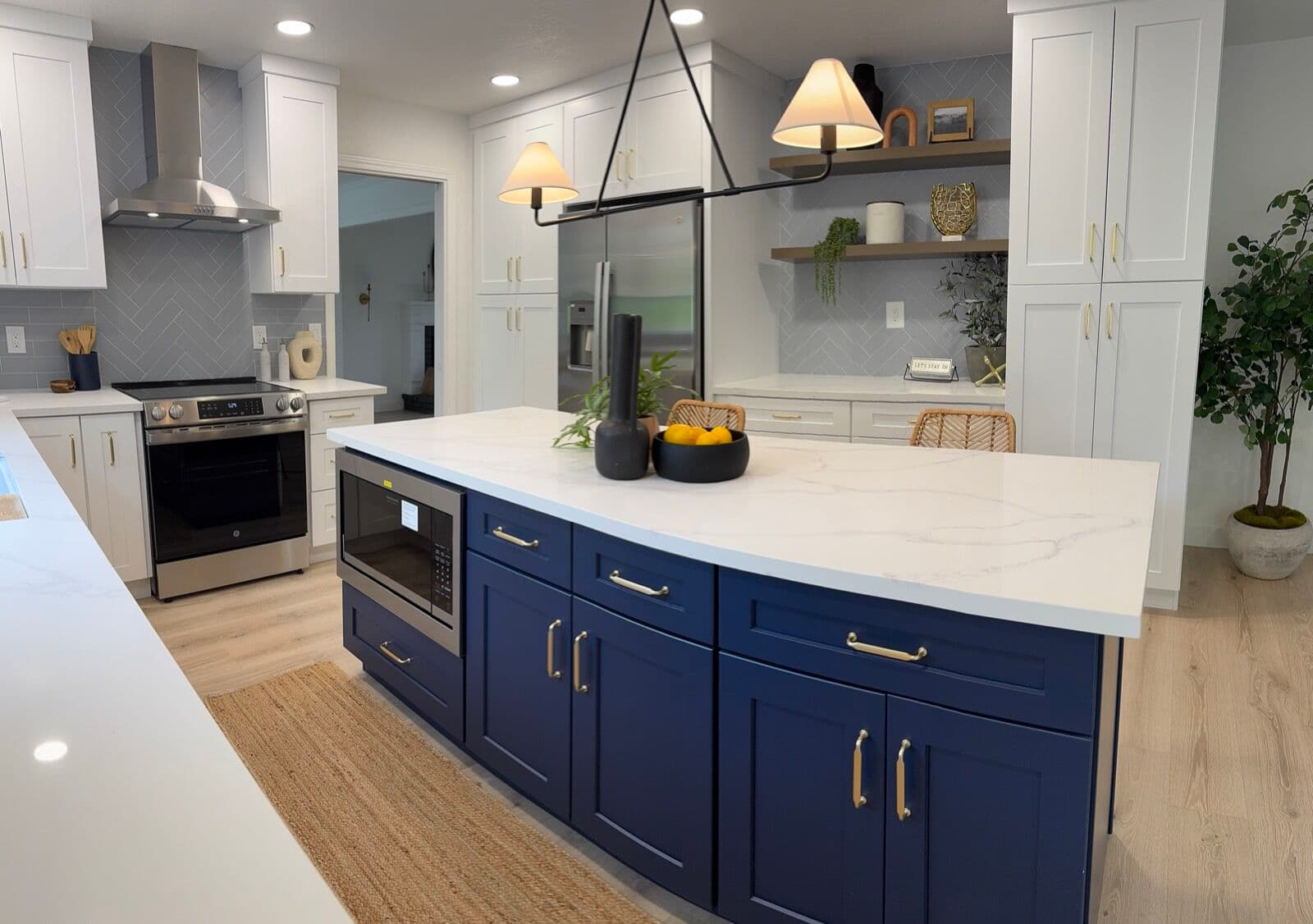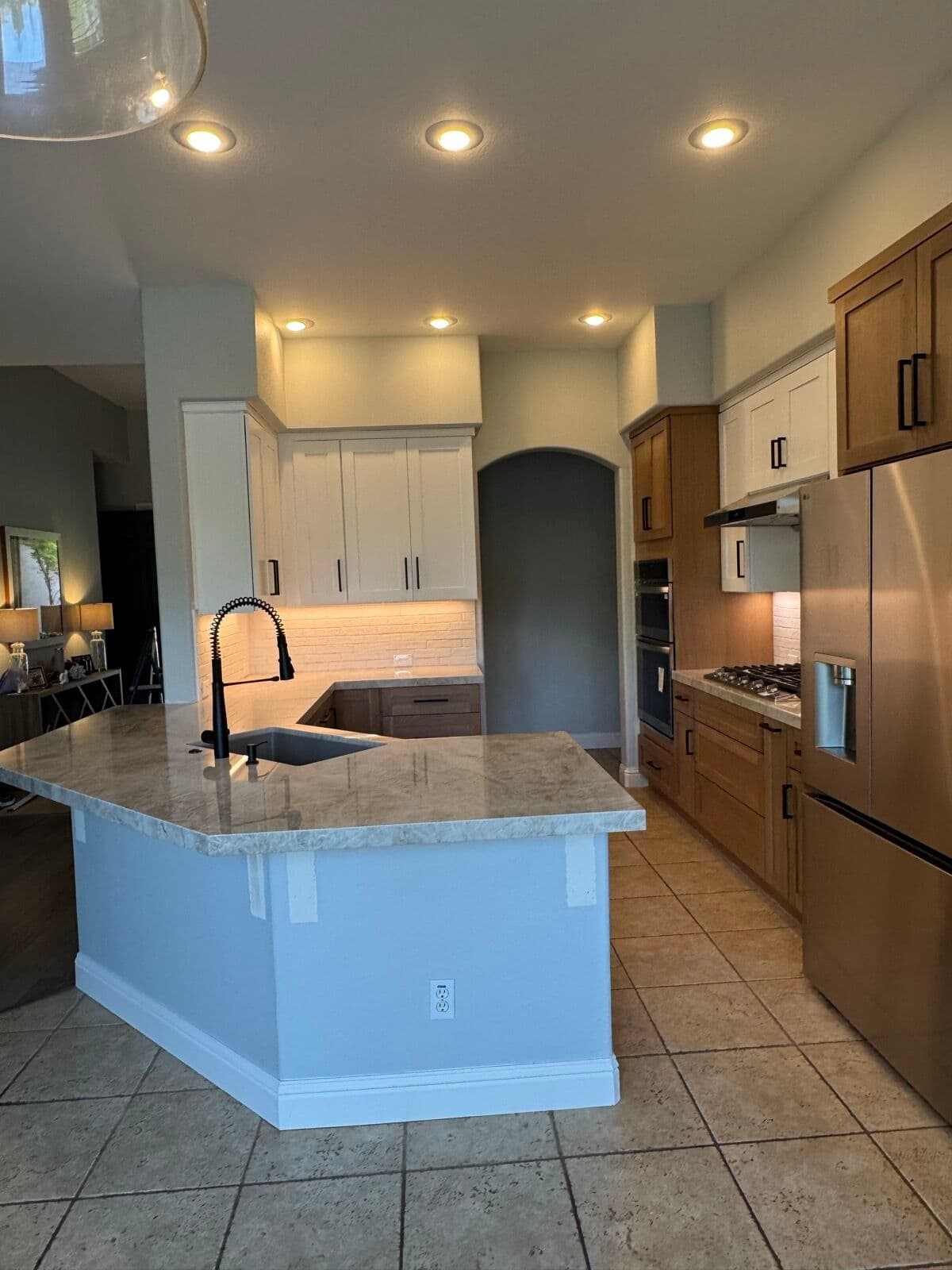
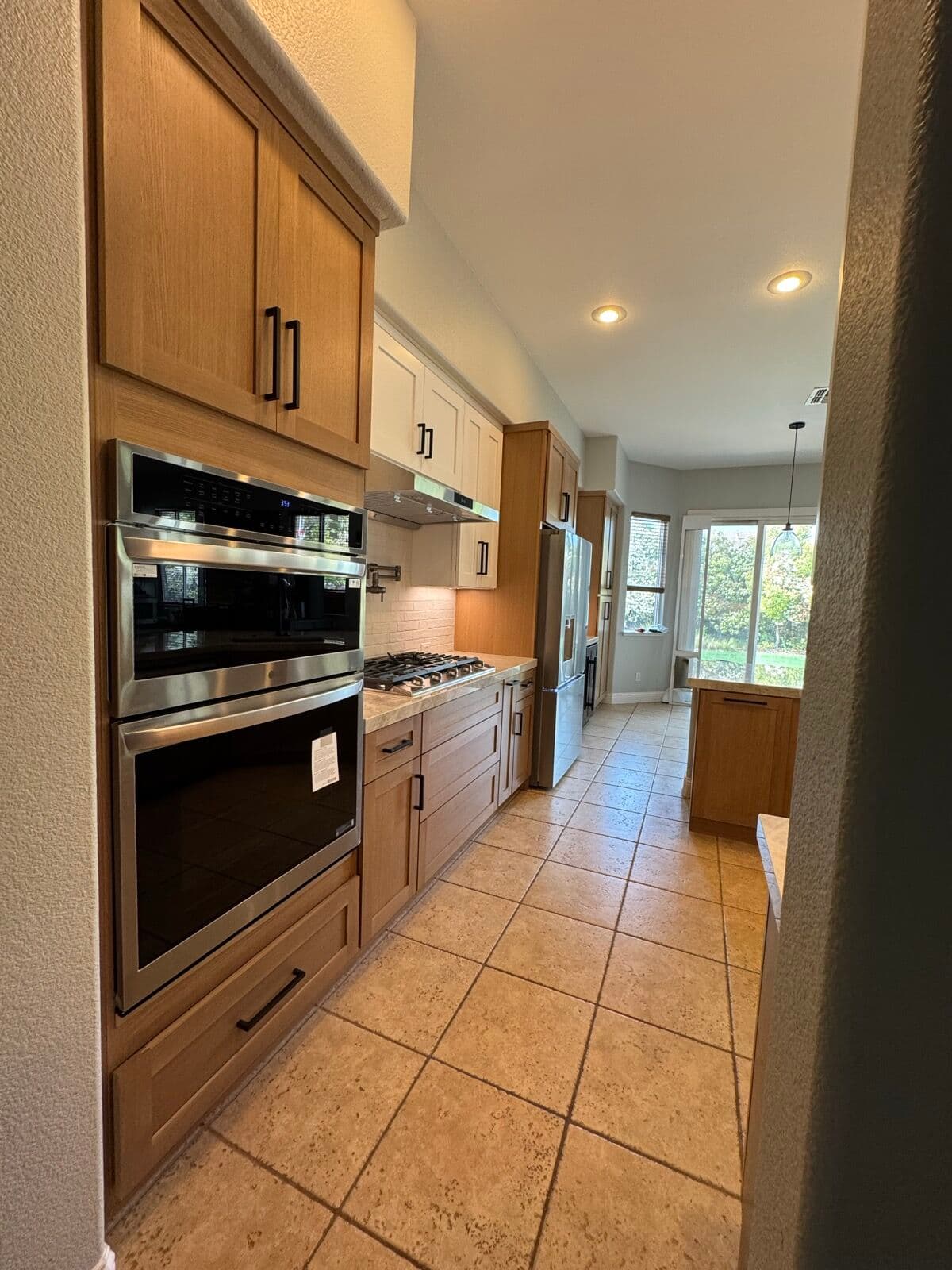
Most dated kitchens have one thing in common: a single fixture in the middle of the ceiling, casting your own shadow onto the counter you are chopping on. Good kitchen lighting is three layers doing different jobs, and it is far cheaper to install while the cabinets are off the wall.
The three layers
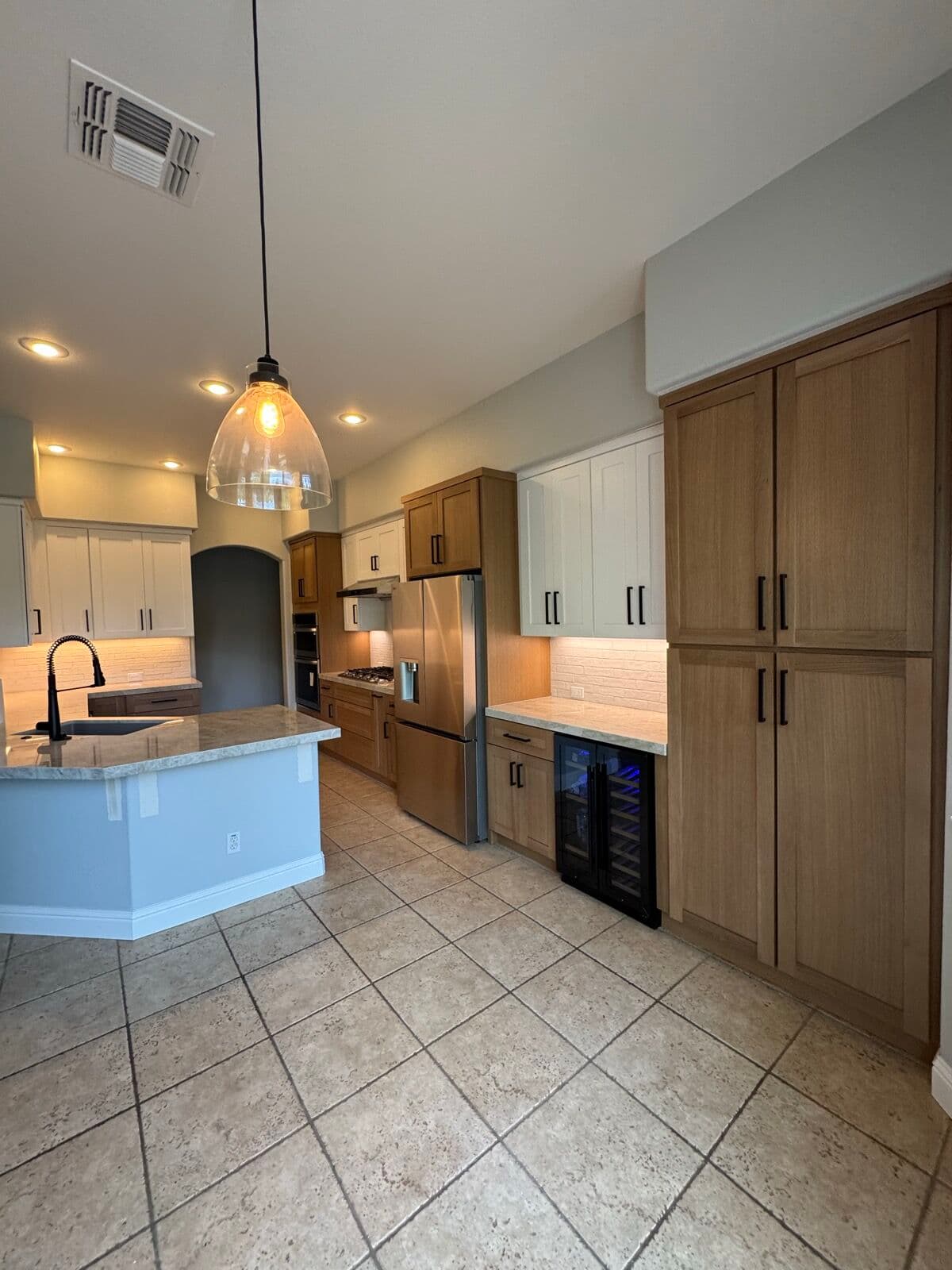
Task light goes under the wall cabinets, aimed at the counter. This is the one people notice most after a remodel, because it is the light you actually work by. Continuous LED strip beats puck lights — no scalloped hot spots, no bulbs to change.
Ambient light is the ceiling layer: recessed cans laid out around the cabinet run rather than in a grid, so the beam lands on the counter edge instead of the back of your head.
Accent and decorative is the pendant over an island, a light inside a glass-front cabinet, or a strip above the uppers washing the ceiling.
What we plan before the drywall closes
- Where you stand to prep, wash and cook — the layout follows those spots
- Switching: which layer turns on with which switch, and where the switch lands as you enter the room
- Dimming on the ceiling and pendant layers, so the room works at 7am and at 9pm
- Colour temperature kept consistent across every fixture, usually 2700–3000K in a kitchen. Mixed temperatures are the most common lighting mistake we see
- Whether the existing circuit can carry it, and what the panel allows
The honest scope
We install the fixtures and the low-voltage runs as part of a kitchen remodel or a cosmetic refresh. Where a job needs new circuits or panel work, that is done by a licensed electrician on our schedule — we sequence it, and you get one written scope covering the lot.
Under-cabinet lighting is worth adding to almost any refresh: the cabinets are already coming off, the wiring is a few hours' work, and it changes how the kitchen feels at night more than any other single line item.