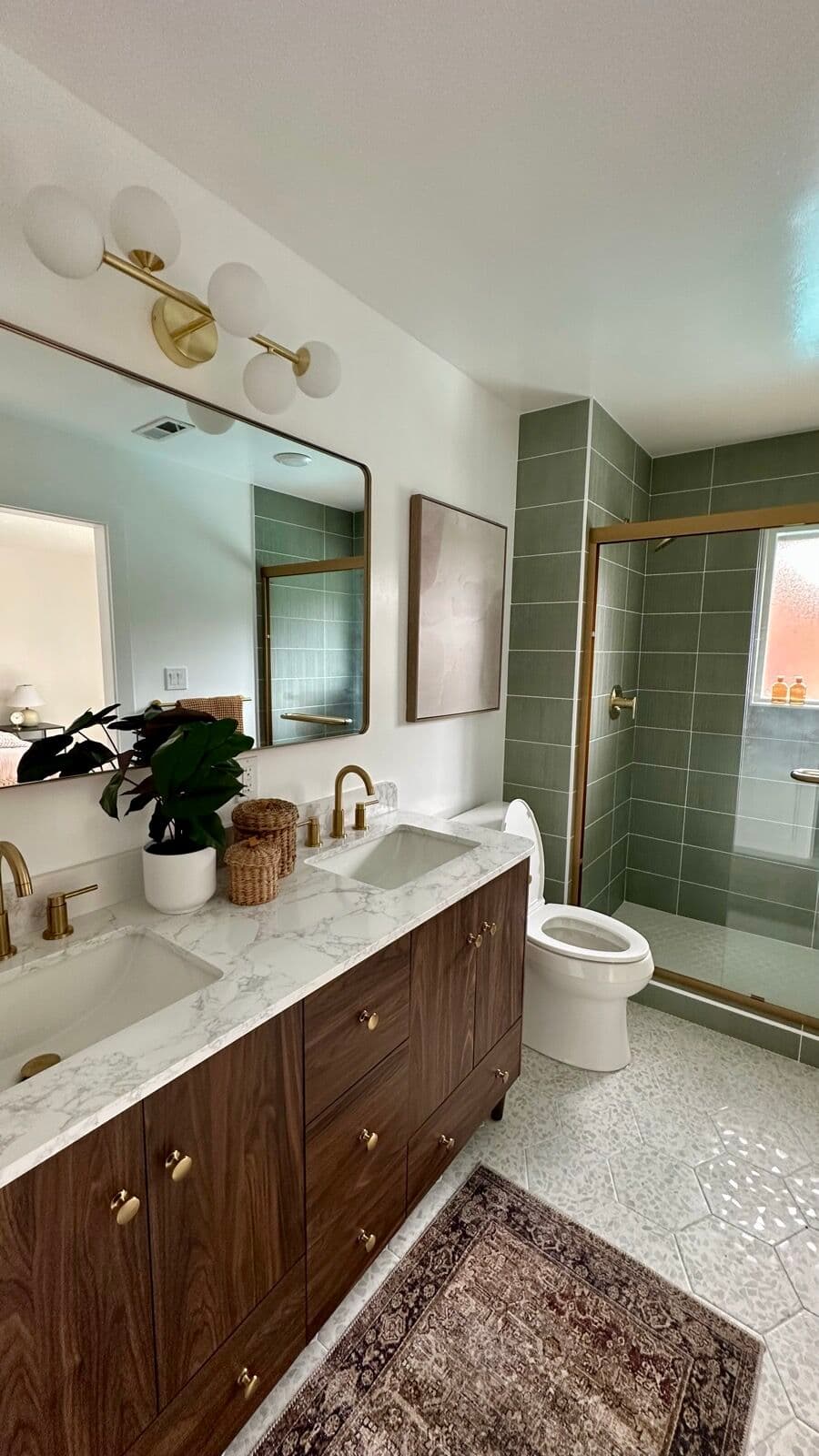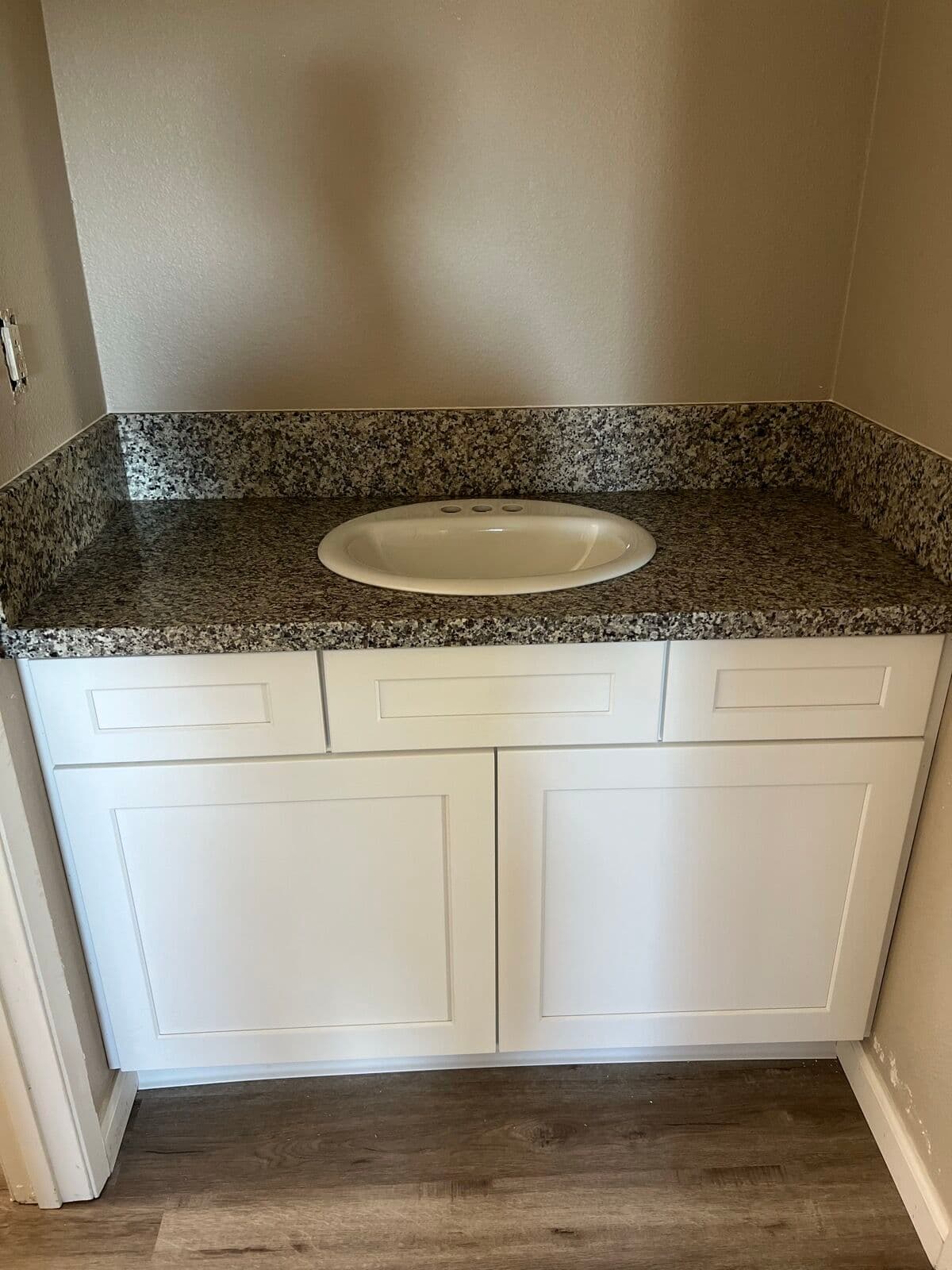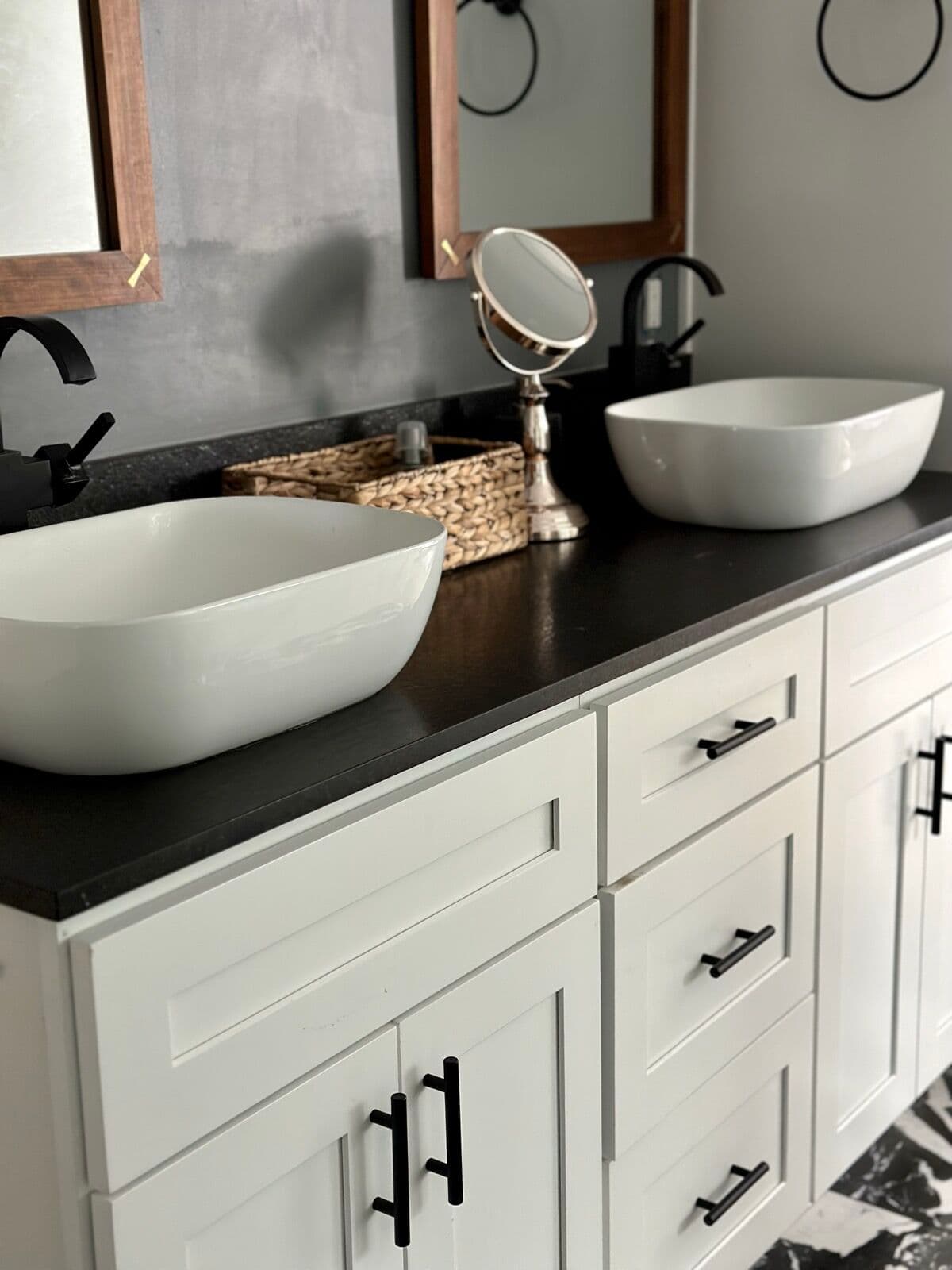
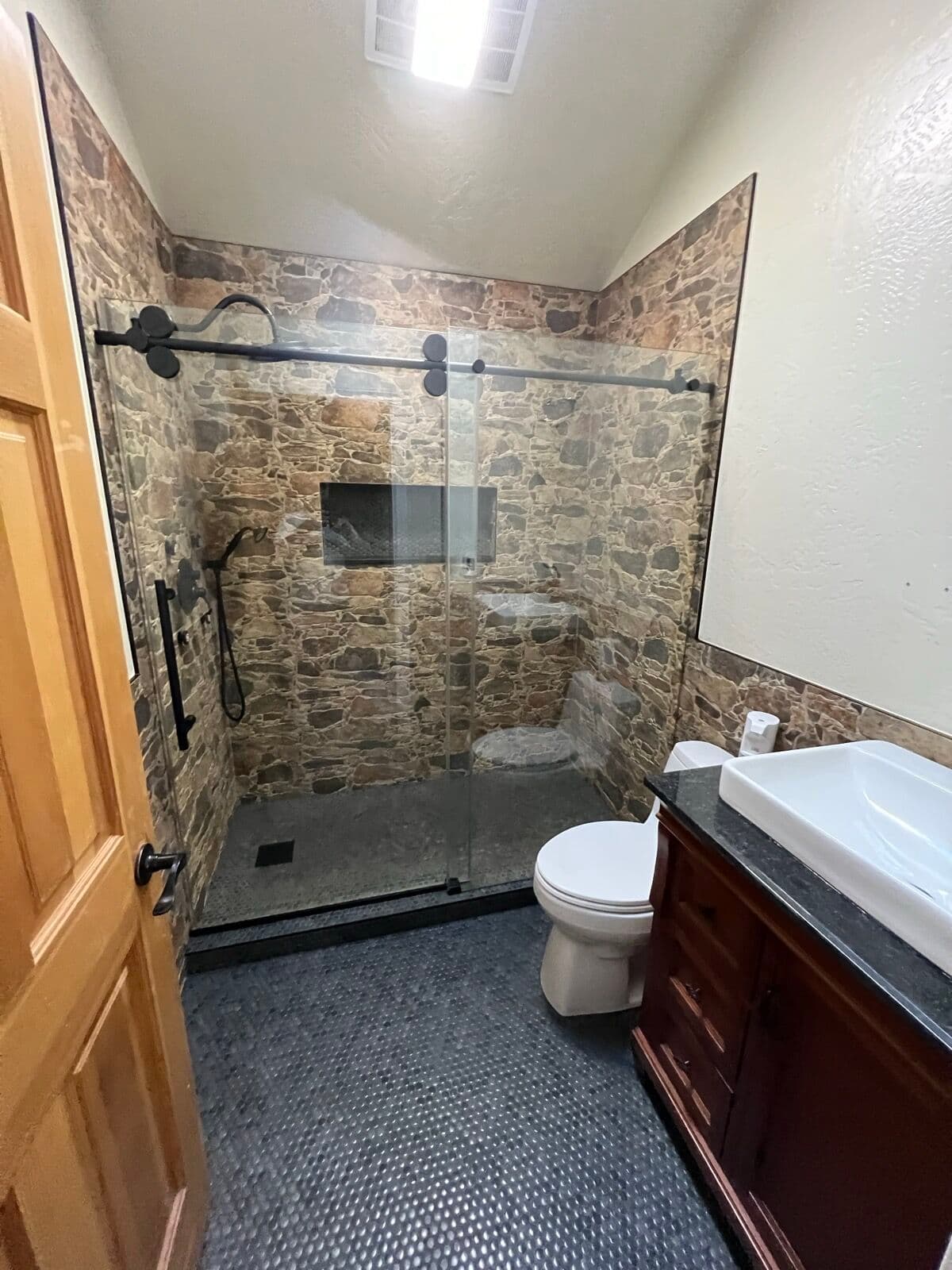
Glass is the last thing to go into a bathroom and the first thing anybody notices. It is also the piece that cannot be ordered from a drawing: it is measured off the shower that was actually built, once the tile is set and the walls are where they finally are.
That is why a bathroom is finished about a week after it looks finished.
The four choices
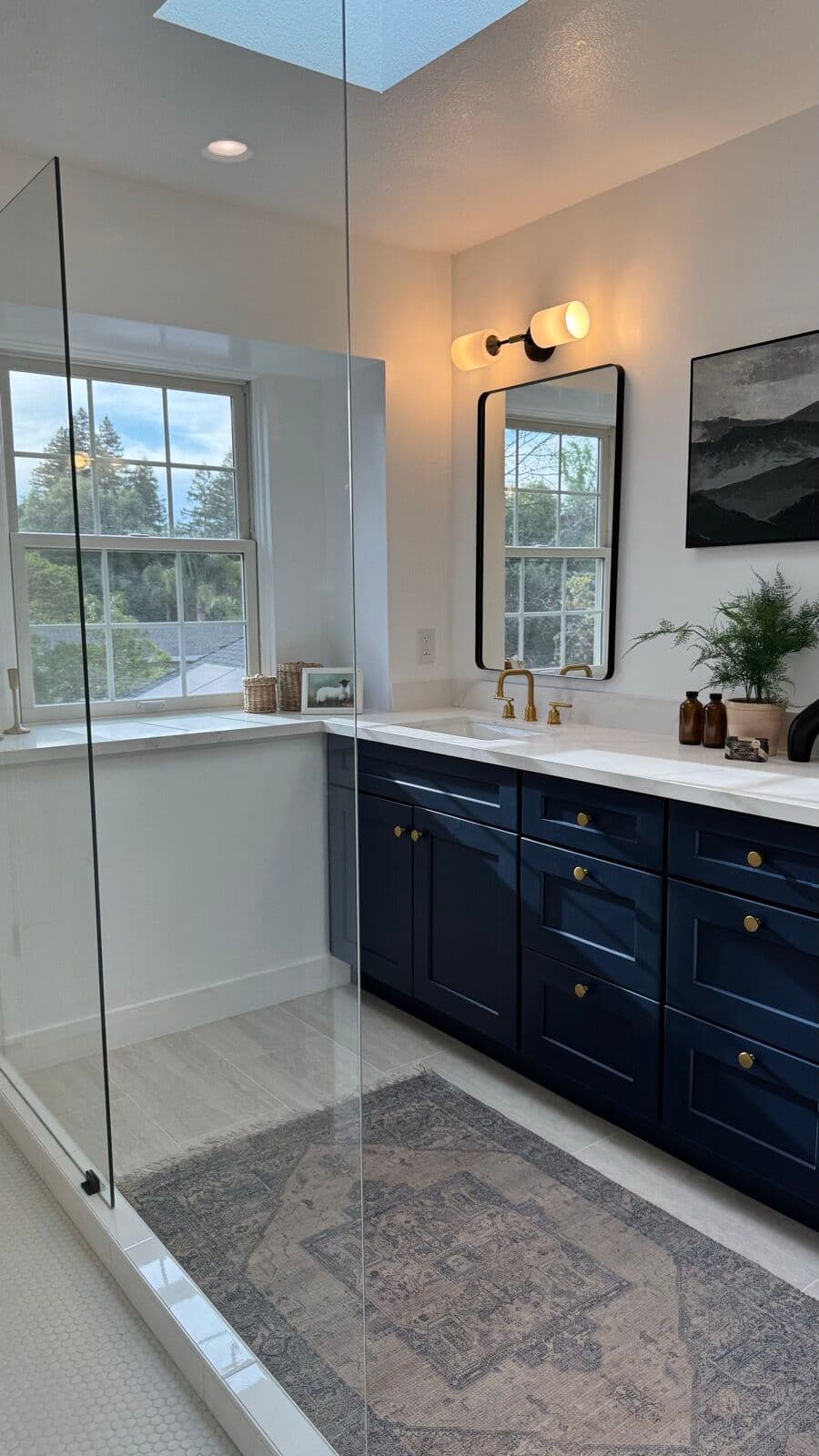
A fixed panel — one sheet of glass, no door, walking space open at the end. Least hardware, least to clean, and the look most people mean by "walk-in". Needs enough shower length that water does not travel past the panel.
A hinged door — the traditional enclosure. Wants swing clearance the room does not always have, and a curb or threshold to close against.
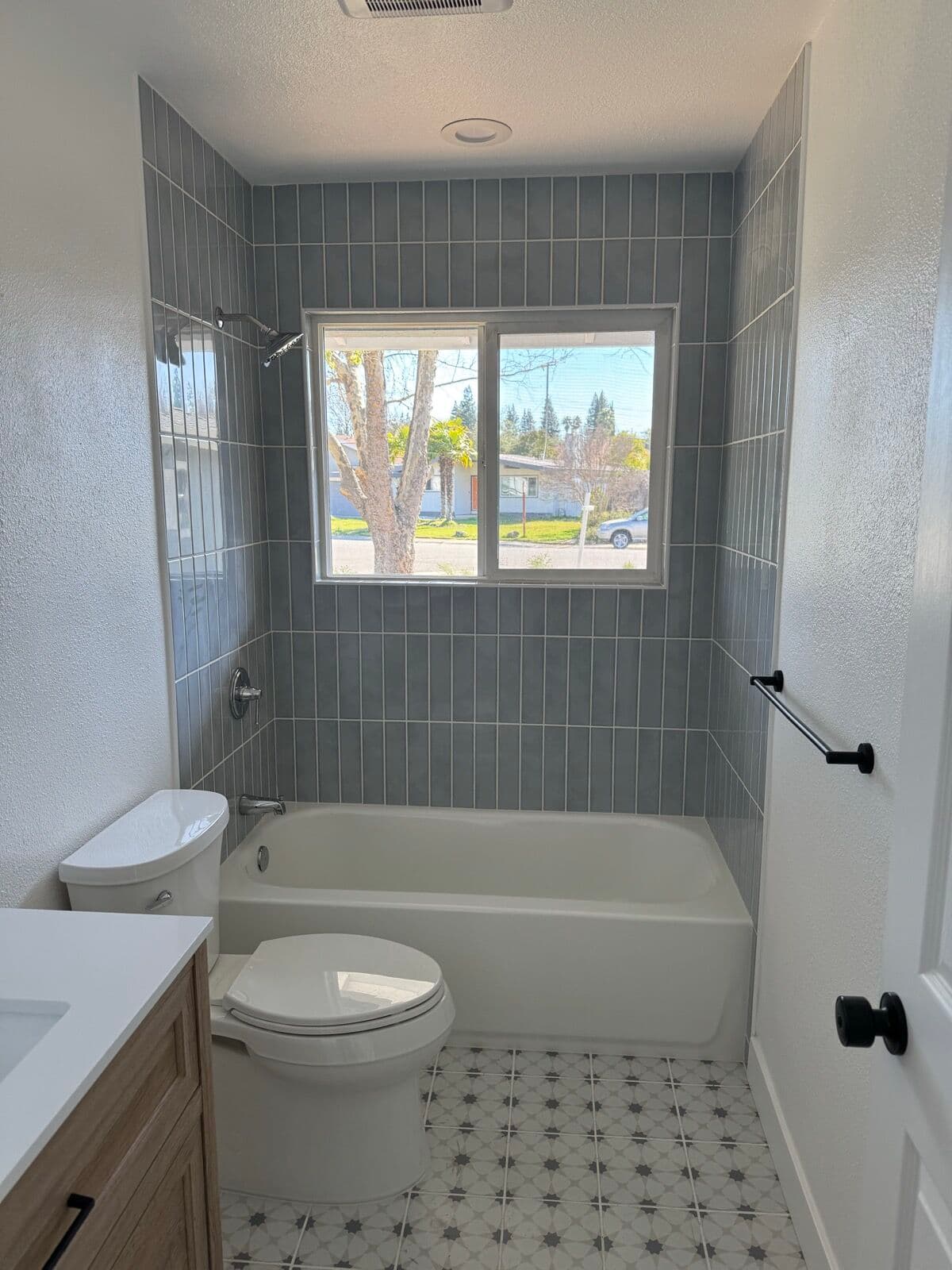
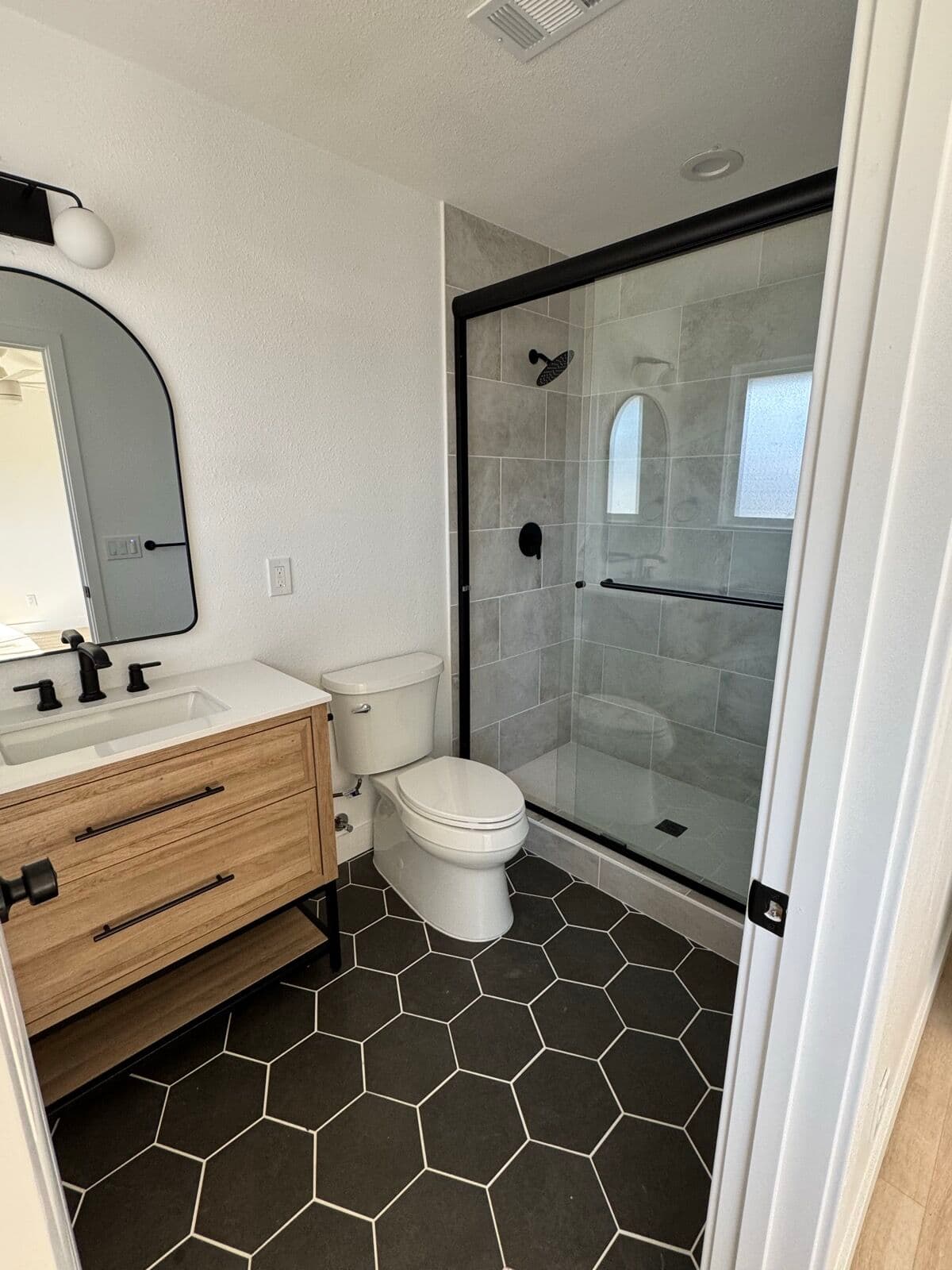
A slider — right for a tub-shower or a shower in a narrow alcove where a hinged door would hit the vanity. Modern top-rolling hardware runs far better than the old bottom-track kind.
Framed or semi-framed — cheaper, and legitimately the right call in a rental or a tight budget. It has more places to collect soap, which is the honest trade-off against frameless.
What decides the price
Glass thickness (3/8" is the frameless standard), the hardware finish, whether the panel needs a notch cut around a bench or a curb, and how far out of plumb the walls are. Coated glass — the factory treatment that keeps water from etching it — is worth the small premium in our hard water.
How it fits the job
We build the shower — pan, waterproofing, tile, niche, bench — then the glass is measured and fitted onto it. Blocking for the hinge goes into the wall during framing, which is why the enclosure has to be chosen before the walls close, even though it is installed last.
Part of a walk-in shower, a tub-to-shower conversion, or a full bathroom remodel — priced in the same written scope, so the number you agree includes the last piece rather than discovering it at the end.