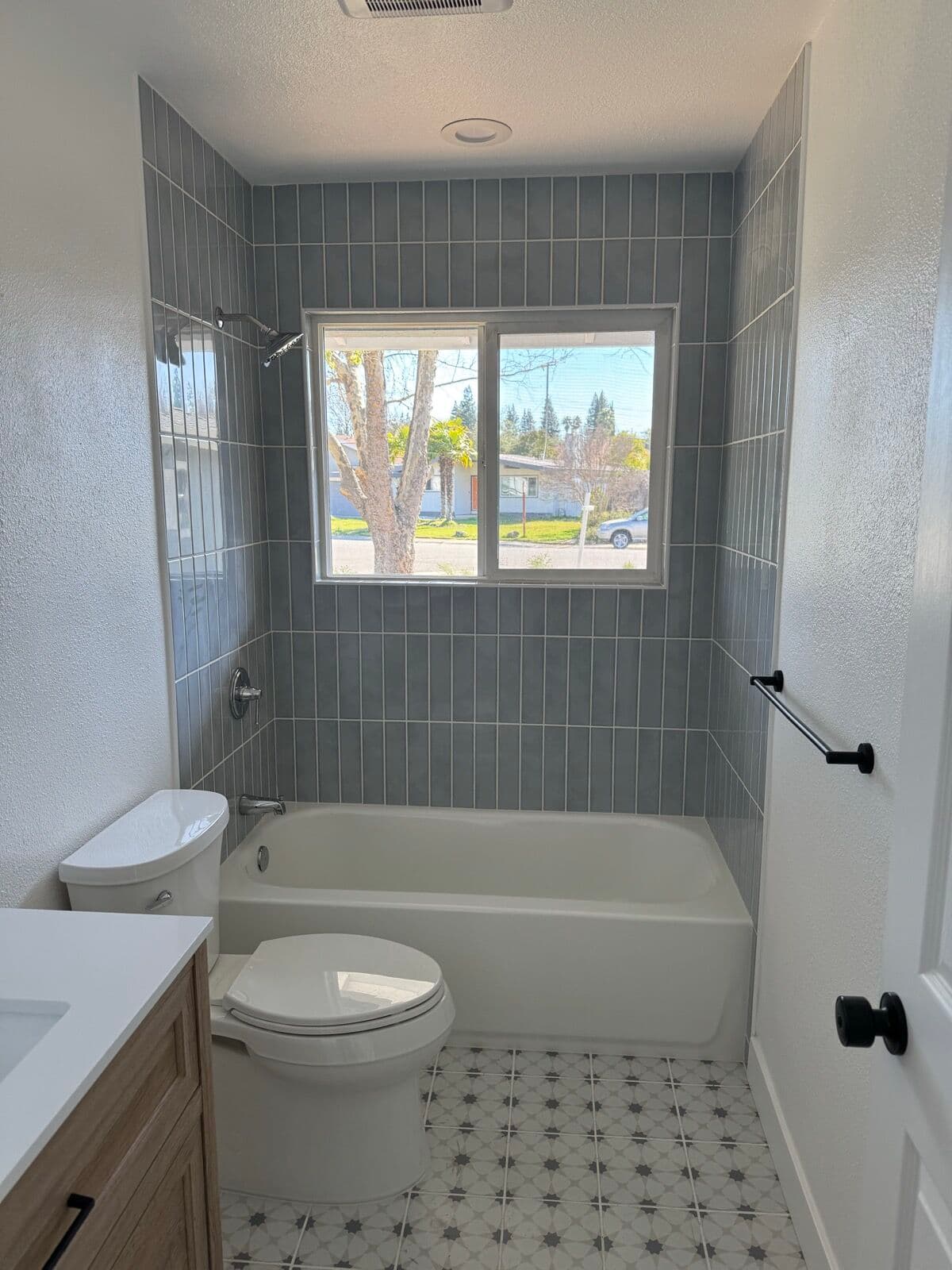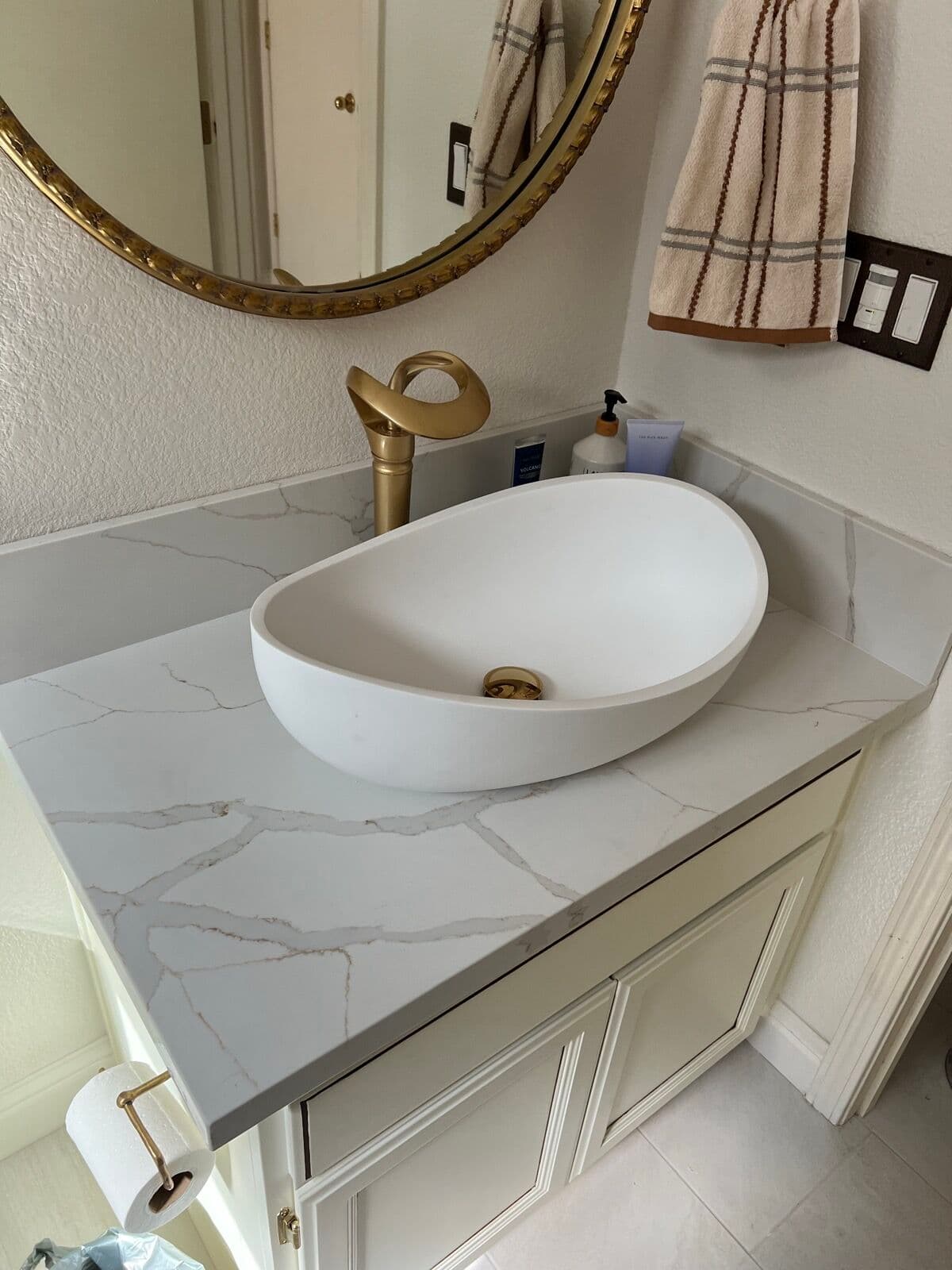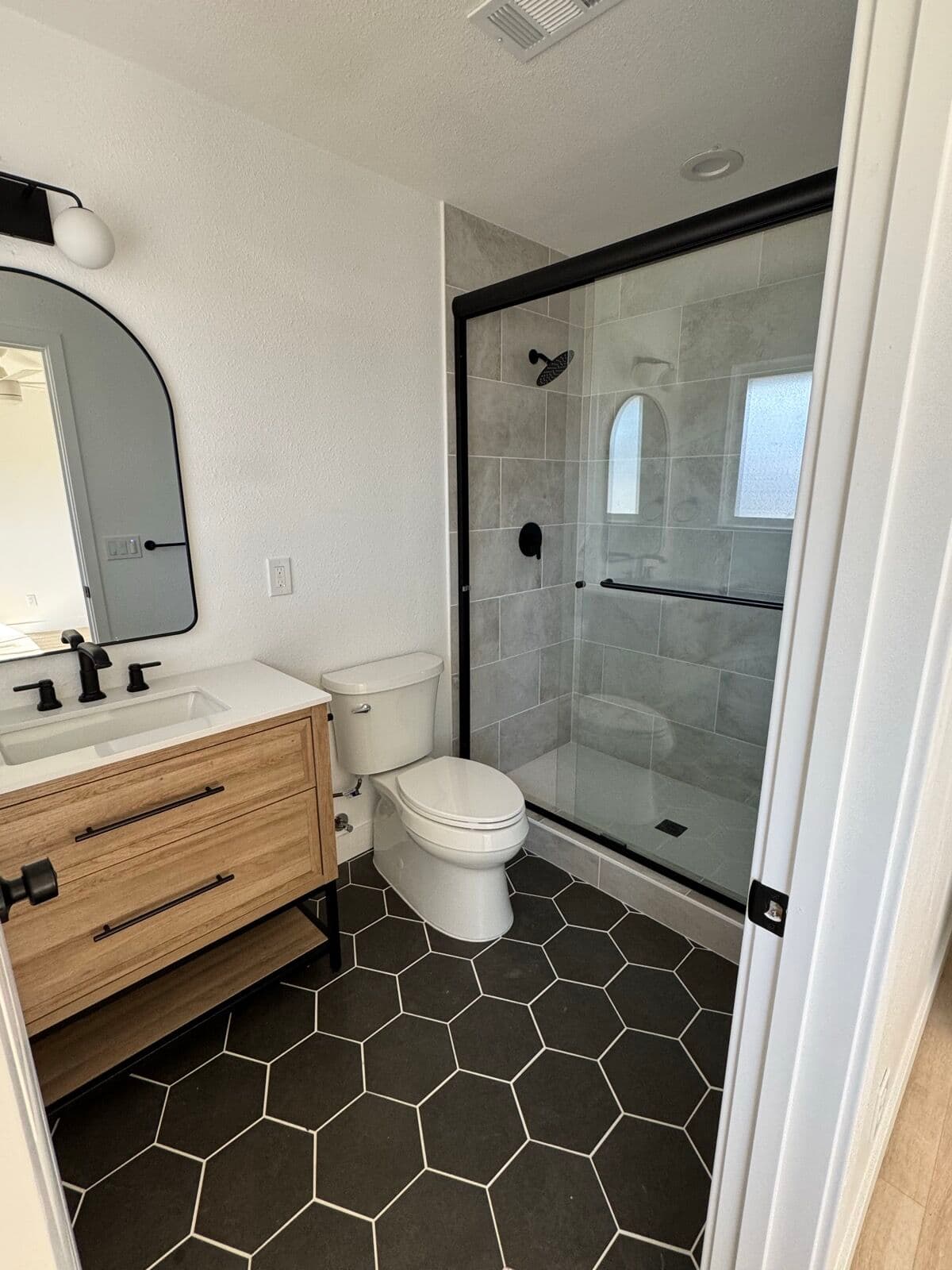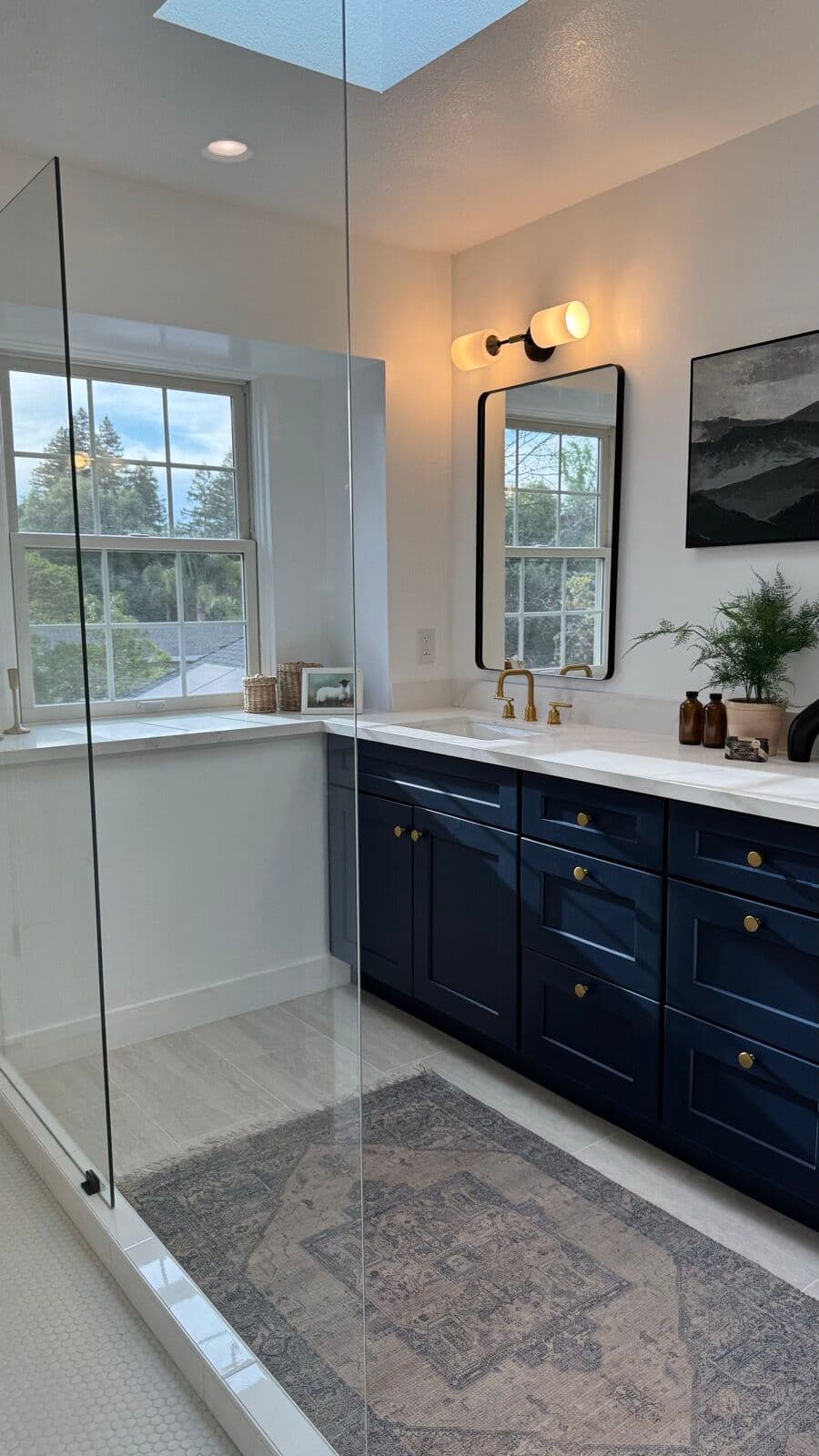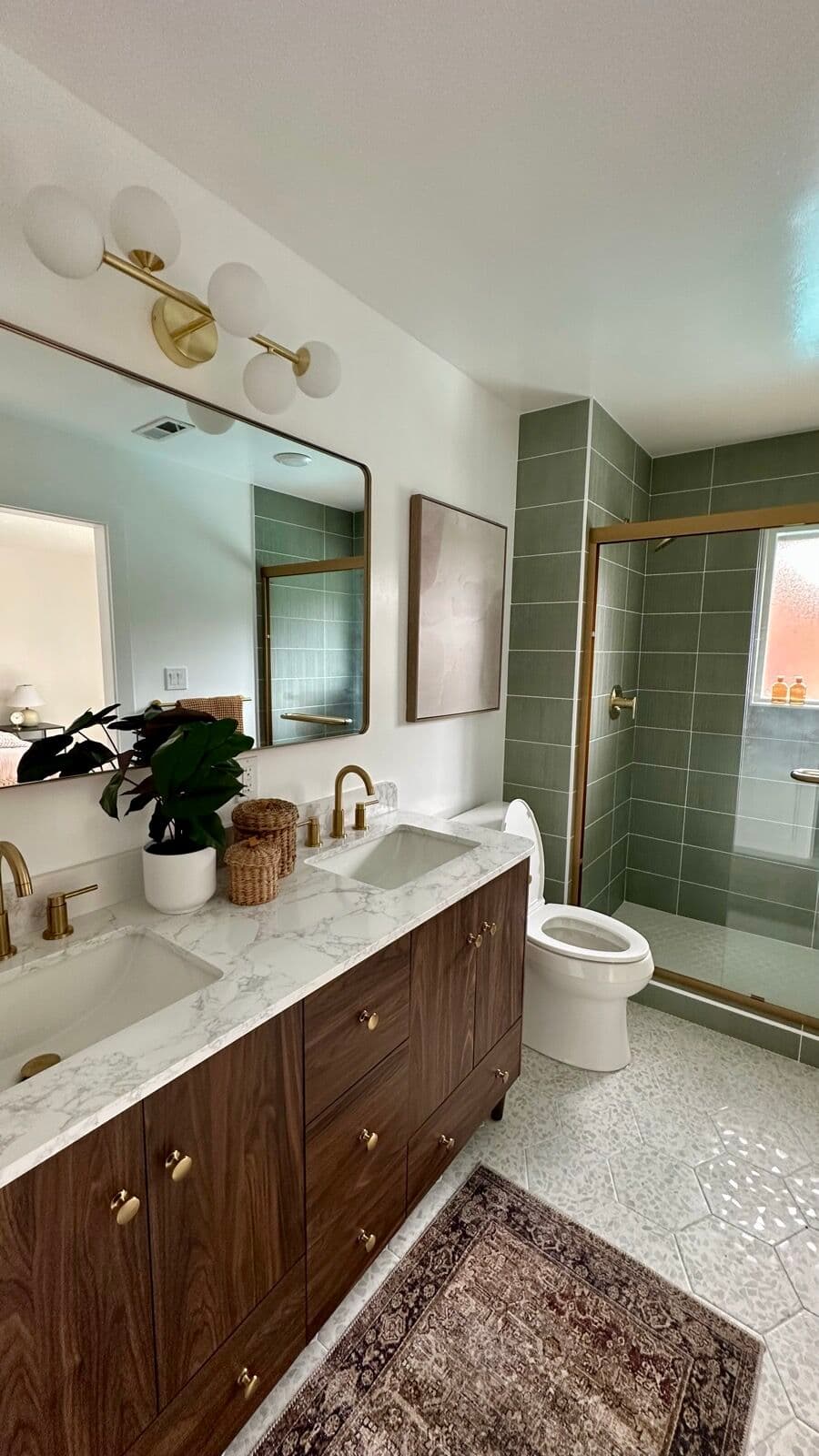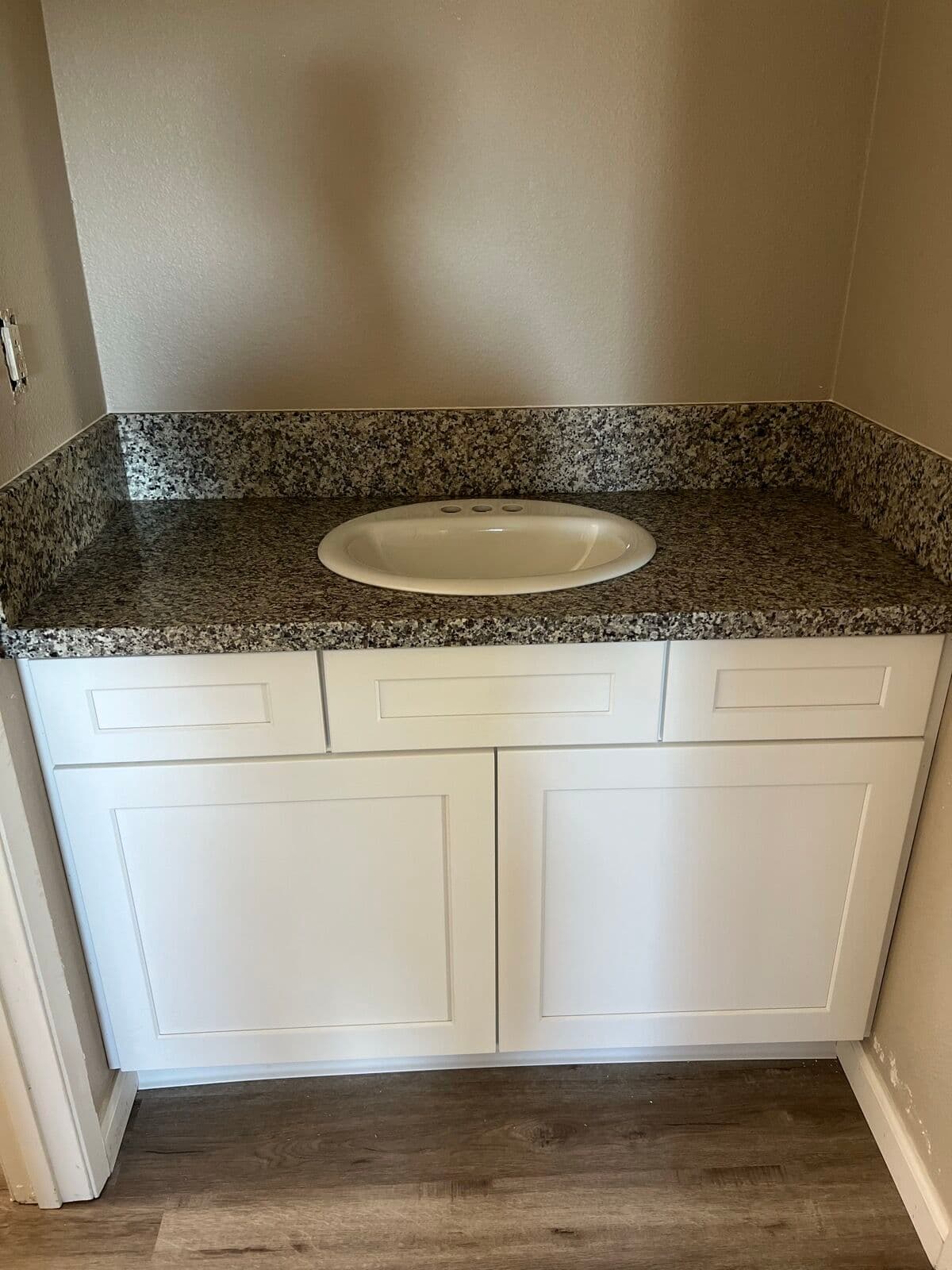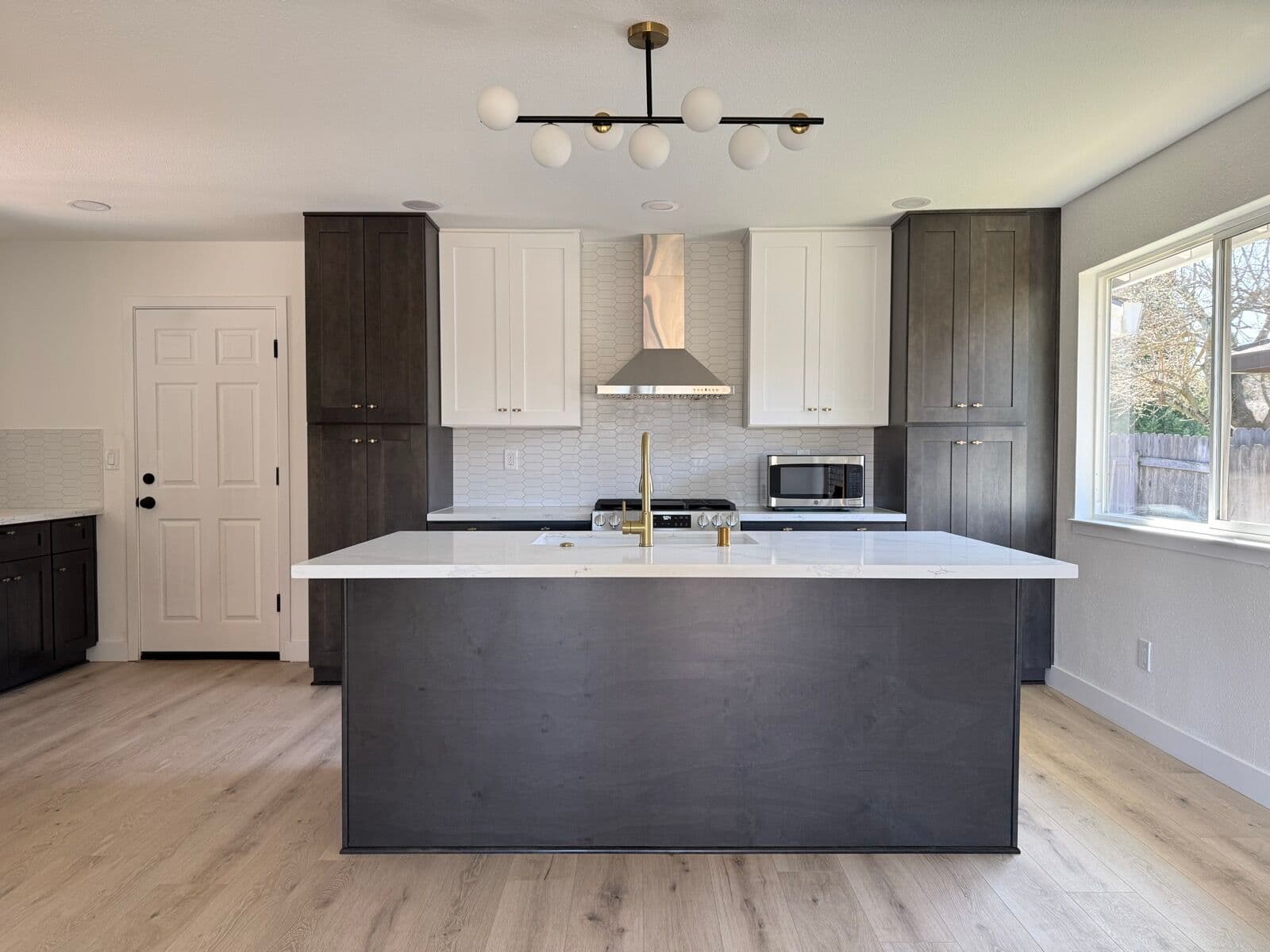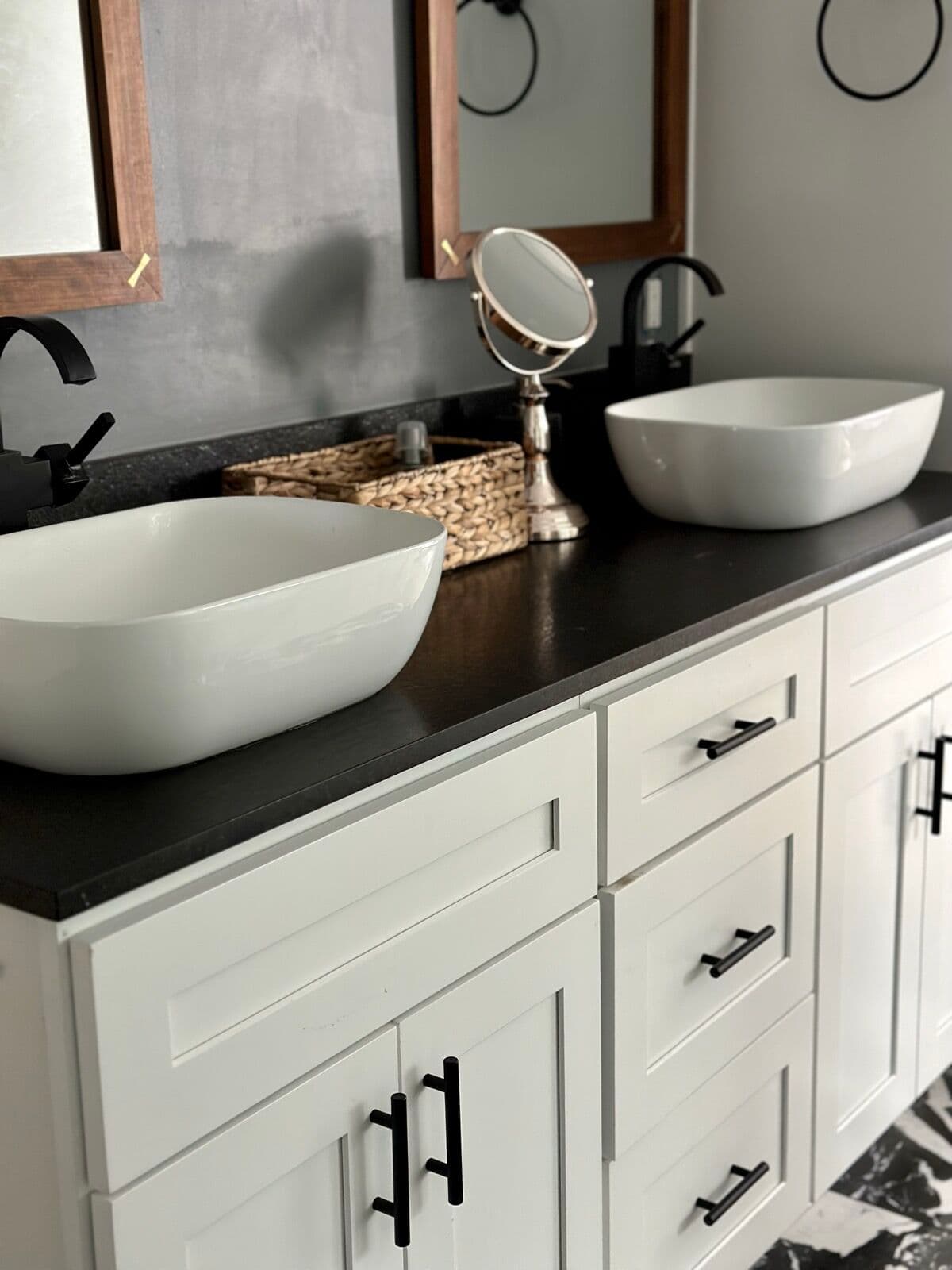
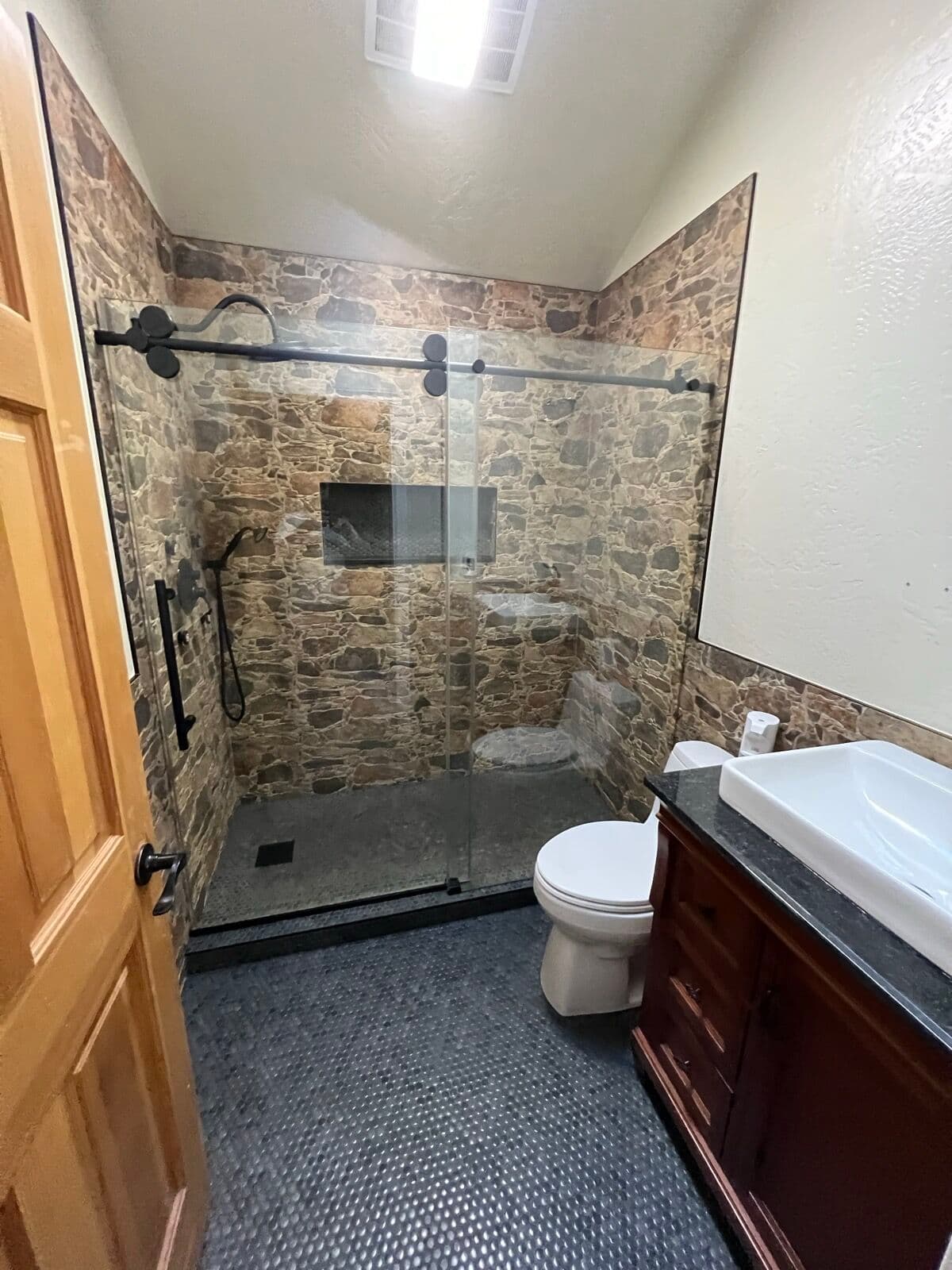
A walk-in shower is mostly invisible work. The tile you chose is the last two days of it; everything before that is slope, waterproofing and blocking, and that is what decides whether the shower is still sound in fifteen years.
Curbed or curbless
A curb is simple, cheap and keeps water in reliably. Curbless — where the floor runs straight into the shower — looks better, makes a small bathroom read larger, and is the right answer for anyone thinking about aging in place. It needs the floor structure lowered or built up to get slope without a threshold, so it is a framing conversation before it is a tile one. We will tell you at the estimate which your floor can take.
What goes in before the tile
- A pan sloped correctly to the drain — a mortar bed or a purpose-built tray, not tile laid flat and hoped over
- Waterproofing membrane over the pan, up the walls, and lapped properly at corners, curb and drain flange
- Blocking in the wall for a bench, grab bars now or later, and the glass hinge
- Niches framed between studs, sized to real bottles, with a sloped shelf
- Valve and mixing set at the height you actually use it
Tile, layout and the details people notice
Large-format tile means fewer grout lines and a flatter wall, and needs a substrate that is genuinely flat. Small mosaics on the floor give grip and follow the slope to the drain. Where the wall tile stops — ceiling, a set line, or wrapping the whole room — is a decision worth making on the drawing rather than on site.
We caulk the changes of plane rather than grouting them, because those joints move. It is a small detail that separates a shower that stays crack-free from one that does not.
Glass
Frameless panels, hinged doors and sliders, measured after the tile is set so the glass fits what was actually built. A single fixed panel is the least hardware and the least to clean; a slider suits a tub-shaped opening; a hinged door needs swing clearance the room does not always have.
How it runs
One to two weeks for a shower on its own, longer as part of a full bathroom remodel. If you are removing a tub to gain the space, that is a tub-to-shower conversion; if the rest of the bathroom is fine, the scope is a wet-area-only remodel.