Three housing eras, three different kitchen jobs
Roseville does not have one kind of kitchen; it has three, and they fail in different ways. The bungalows and cottages near Pacific Street are over a century old, small-roomed, and often carrying several generations of partial updates. The mid-century neighborhoods — Sierra Gardens, and Diamond Oaks around the golf course — are ranch houses whose galley kitchens hide behind soffits and walls. And everything built under the West Roseville plan since 2004 is big, two-story, and finished to whatever grade the builder's spreadsheet allowed. The right job differs accordingly. Old Town kitchens usually need a genuine rebuild, because the bones are old enough that surfaces alone do not fix them. The mid-century ranches need layout surgery: soffits out, walls opened where the structure allows, cabinet runs rebuilt to full height. The newer tracts mostly need honesty — the boxes are fine, the finishes are cheap, and the fix is smaller than owners expect. When we walk a Roseville kitchen, era is the first thing we read, because it predicts most of the scope before a tape measure comes out.
Soffits, galleys and the mid-century ranch
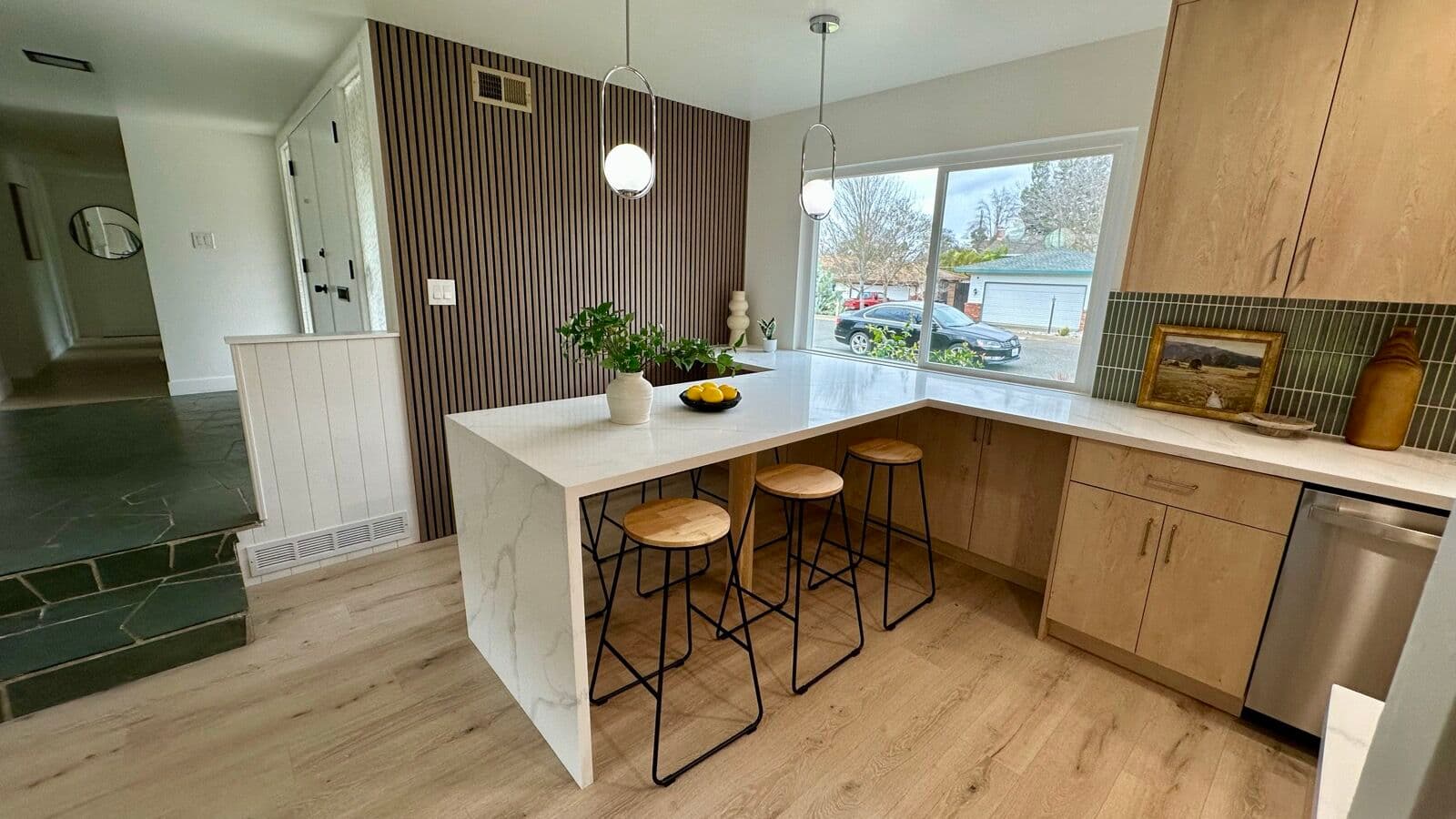
The kitchens in Sierra Gardens and Diamond Oaks were built to a pattern: a galley run boxed in by a soffit, uppers that stop short of the ceiling, and a wall separating the cook from everyone else. The fix is a pattern too. Take the soffit out, run cabinetry to the ceiling, and open the wall where the framing allows — suddenly a ranch kitchen has the storage and sight lines it never had. This is full kitchen remodeling, not a facelift: layout changes, new cabinets built to our spec by manufacturing partners, and quartz or granite templated and cut by partner fabricators. Plan on four to six weeks of work with the same crew on site daily. Two things make these jobs go well. The lots are generous, so staging materials and keeping the driveway usable is rarely a fight. And mid-century framing is straightforward to work in — it hides fewer surprises than a 1910s cottage. If the boxes are decent and the layout already works, we will quote refacing instead; that call belongs to the walkthrough, not to a sales pitch.
Bathrooms: retiring the tub-shower combo
The bath most of Roseville's mid-century houses still carry is the original arrangement: tub-shower combo, single vanity, tile that has outlived several rounds of regrouting. The most-requested change is the wet-area rebuild — combo out, modern waterproofing in, and a tiled walk-in shower built to the actual space. It typically runs one to two weeks, and it is quoted on its own; you do not have to buy a whole-bathroom remodel to get a shower you can walk into. In the post-2004 tracts the baths are younger and the common job is smaller: a vanity and top swap runs two to three days. Wherever the house sits, the wet area is where bathrooms actually fail, because water finds every shortcut in the original construction. So we rebuild from the framing out — backer, membrane, then tile, in that order, every time. A bathroom is a small room where sequence matters more than product. The walkthrough tells us which of these jobs your bathroom actually is, and the free written estimate prices that job alone, not a package built around it.
WestPark and Fiddyment Farm: upgrade, not demolition
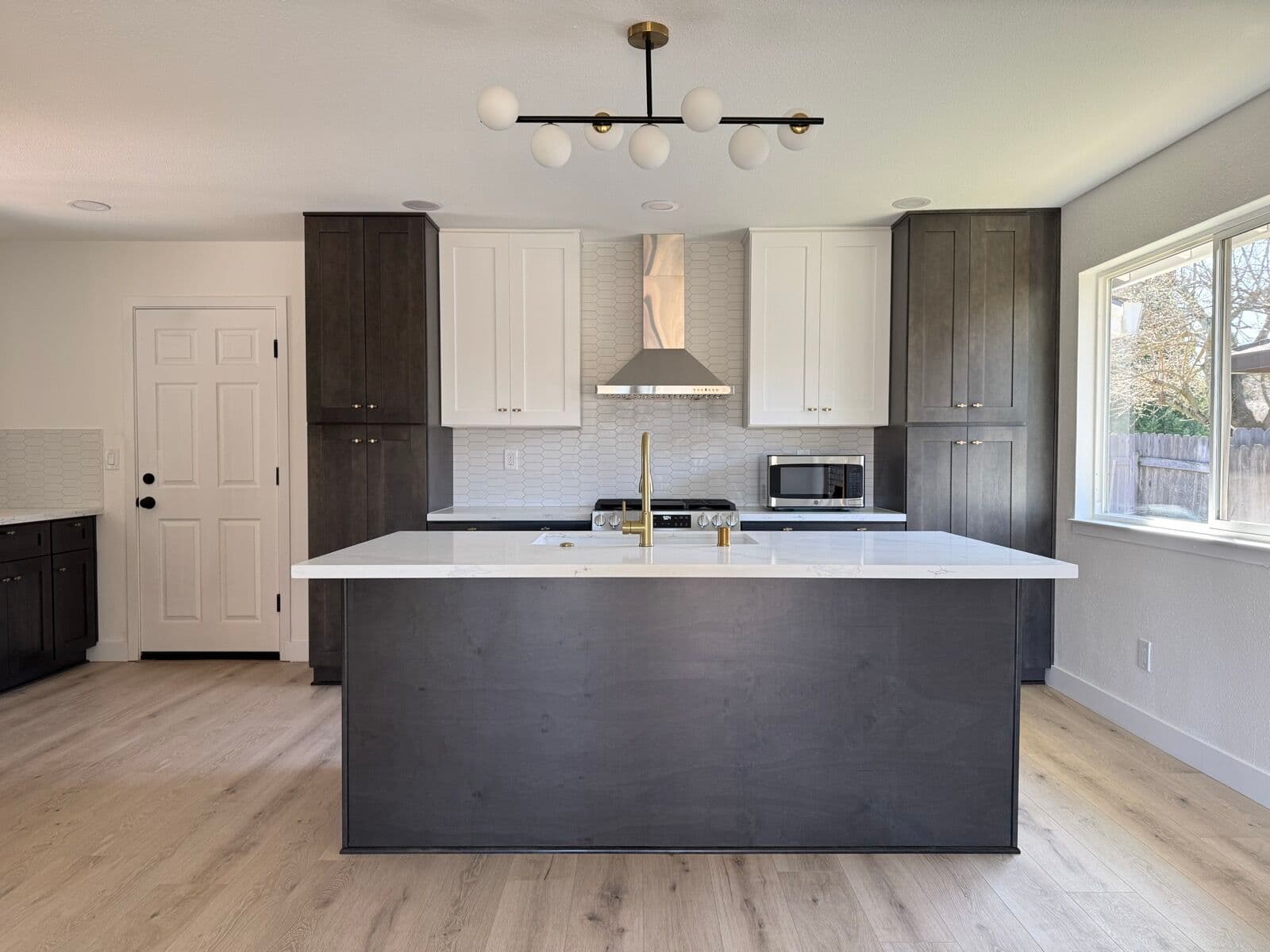
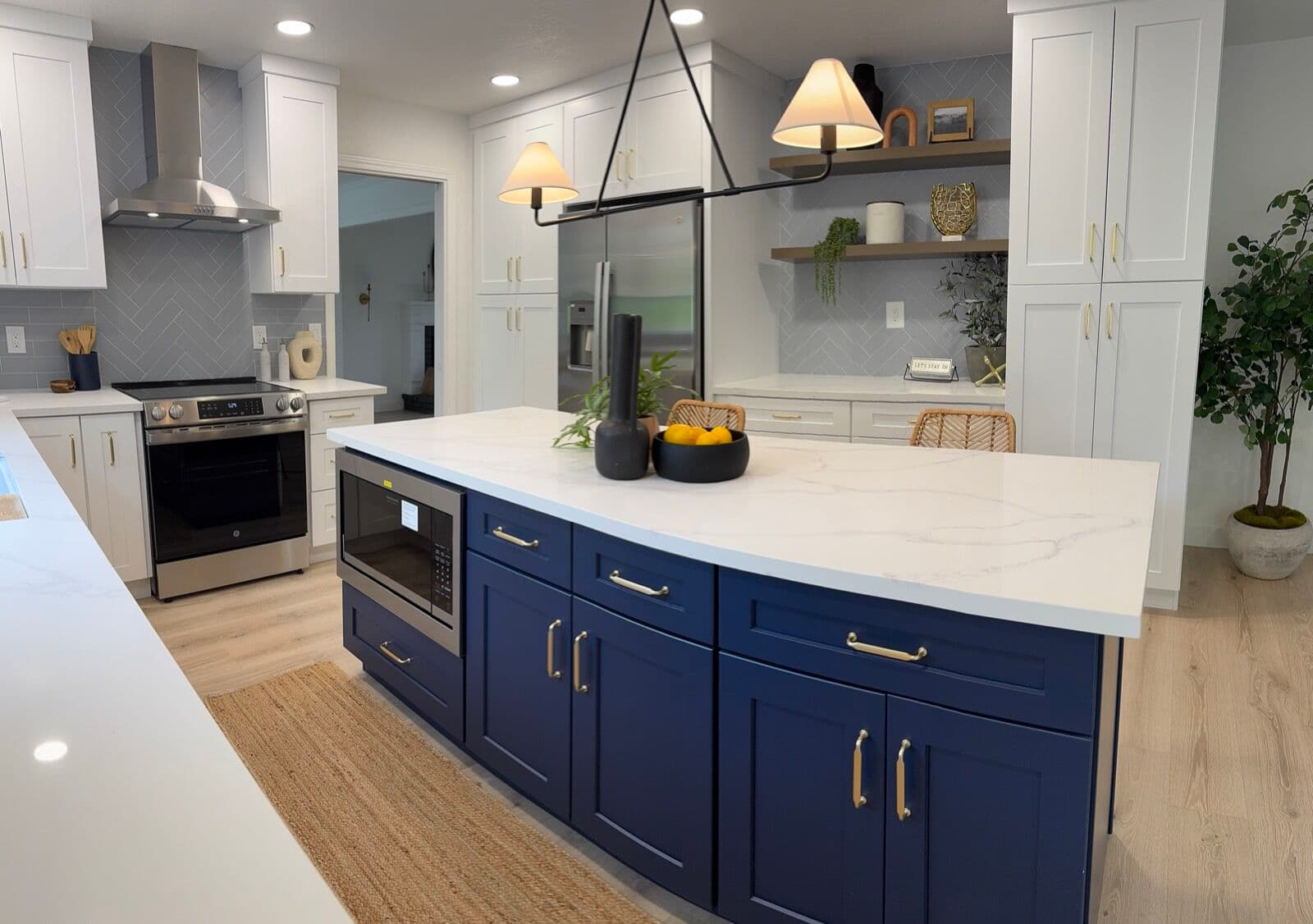
The subdivisions west of Fiddyment Road are the newest housing in the city, and their kitchens have a specific problem: everything is structurally fine and visually forgettable. Builders in these tracts framed generous kitchens with big island footprints, then finished them to a price. The boxes are sound, and replacing them wastes money. The right scope is cabinet refacing or refinishing — new doors and drawer fronts on the existing cabinets, or a sprayed finish on what is there — which takes about a week and reads as a new kitchen. Pair it with stone. The original counters are usually the cheapest line in the builder's budget, and swapping them for quartz or granite through our partner-fabricated countertops changes the room more than any other single move; installation takes two to three days after templating. The island deserves attention too: the footprint is often already there, and making it a proper working island — storage, seating, a surface worth gathering at — uses space the builder gave you. A cosmetic refresh of this kind runs two to three weeks end to end. It is the best value in the newer half of Roseville.
Working with OTG from Roseville
Our shop sits at 4212 Roseville Road in North Highlands, 12.3 miles and about nineteen minutes from Roseville. Placer County address, short commute — the county line makes no practical difference to how a job runs. On multi-week projects the same crew is on site every working day, which is how schedules hold. Countertop work is sequenced as separate visits: template after the cabinets are set or confirmed, fabrication at the partner shop, then installation on site — you know when the kitchen goes down and when it comes back. Every job starts with a walkthrough and a free written estimate that names the materials and states the working schedule; vague words are where remodels go wrong, so we do not write any. We are licensed by the CSLB, license 1076872, and the estimate is the same document whether the job is a countertop swap in Sierra Gardens or a full rebuild of an Old Town kitchen. Start with the job you actually want. If a smaller scope serves the house better, the estimate will say so, and if a bigger one is genuinely needed, it will say that too — with the reasons on paper.