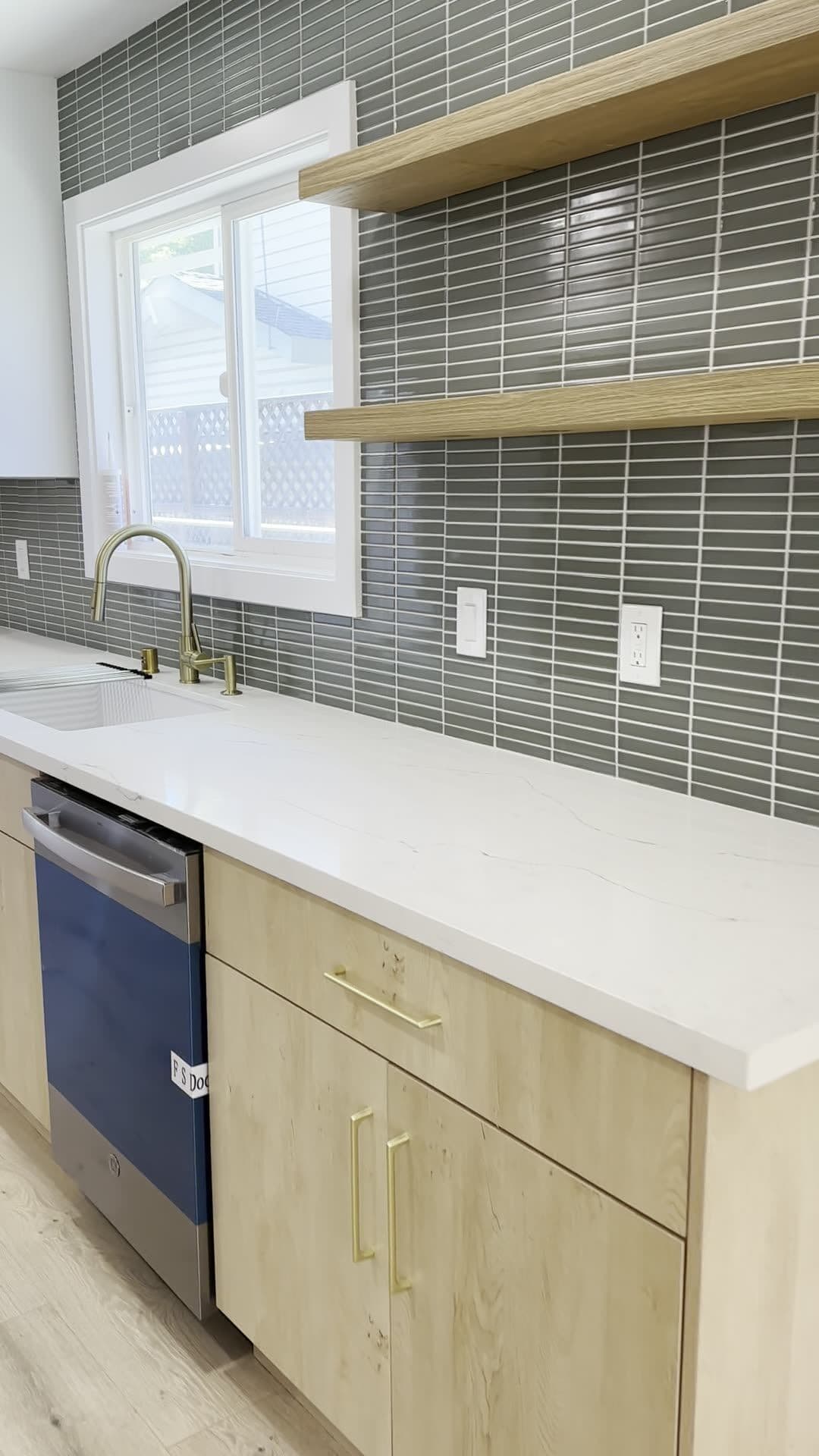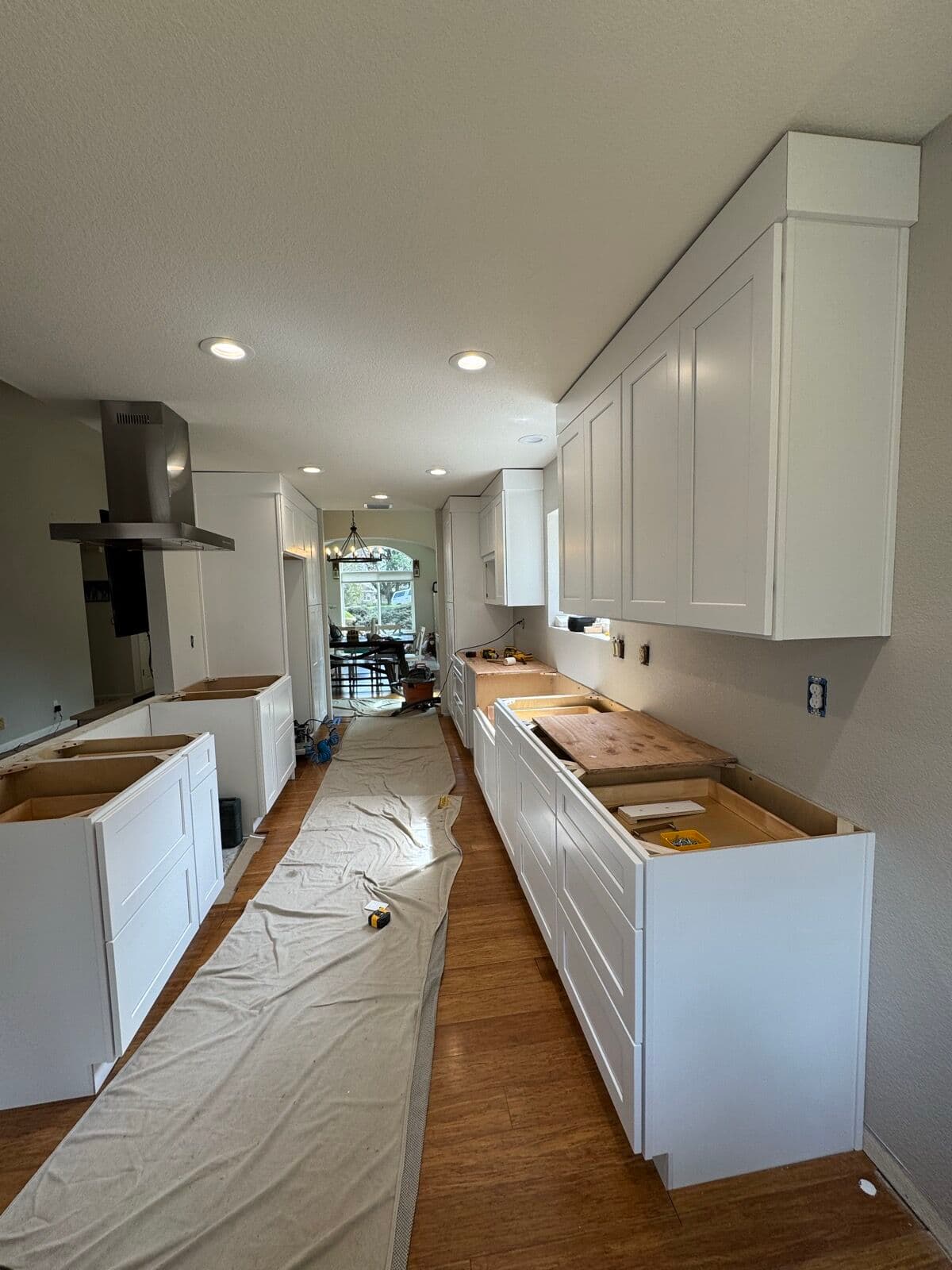
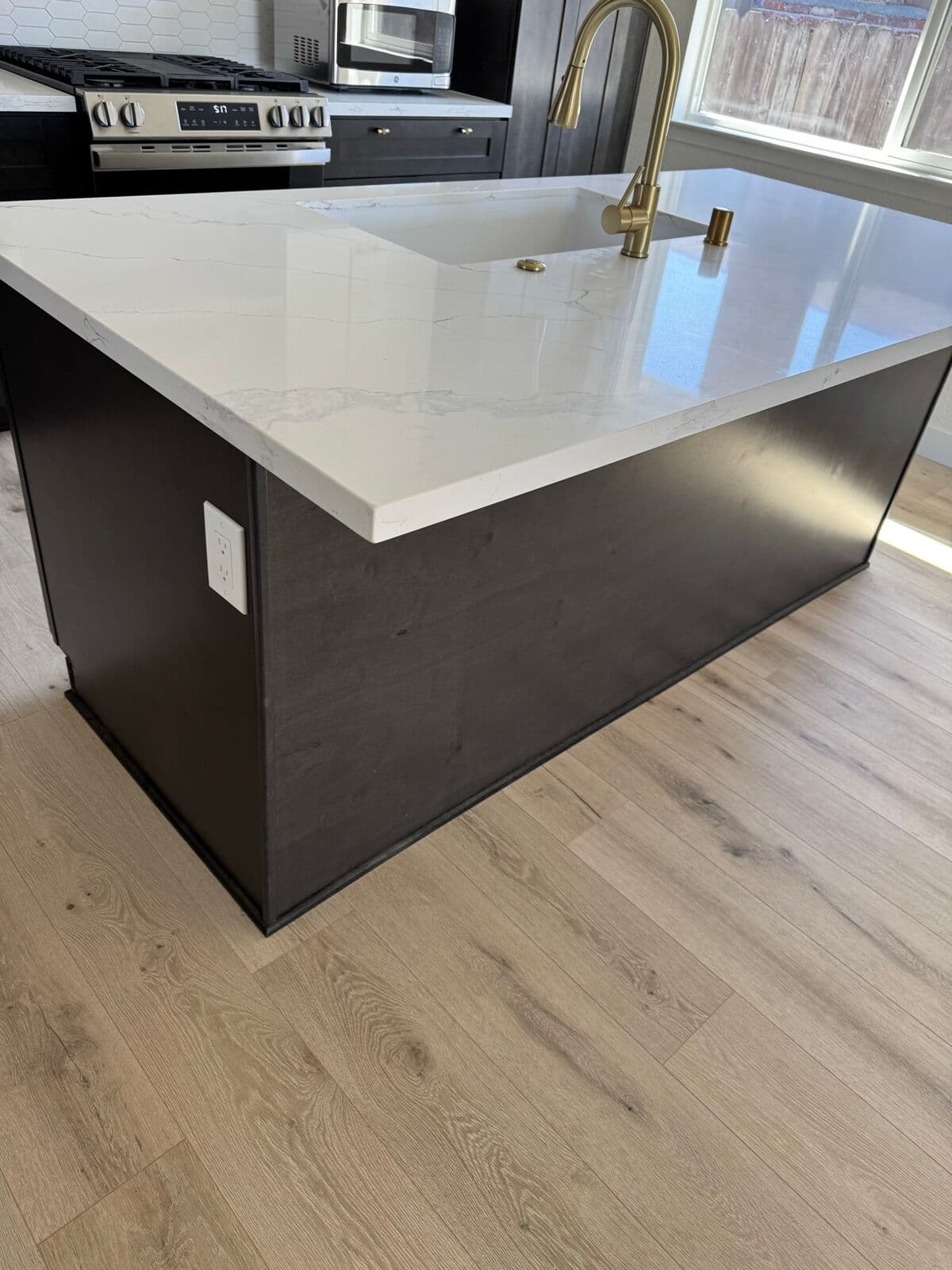
Most kitchens end up choosing between these two, and the right answer is usually decided by three questions: who maintains it, what lands on it, and whether you want the slab to be unrepeatable.
What quartz is
Engineered stone — ground mineral bound in resin, made in controlled runs. That manufacturing is the point: it is non-porous, so it never needs sealing, and slab two looks like slab one. If the kitchen is a rental, a busy family kitchen, or simply something you want to stop thinking about after install day, this is why quartz wins.
Its weakness is heat. The resin can scorch where a bare granite top would shrug, so trivets stay in the drawer, not the donation box.
What granite is
Quarried stone, cut from the earth in slabs. No two are the same, which is either the whole point or a sourcing problem depending on your temperament — if you love a pattern, you are buying that slab, and we would rather walk you through the actual inventory than a sample chip. Granite takes heat well and wears hard. In exchange it is porous: it wants sealing on a cycle of a year or two, and an unsealed top will hold a wine ring.
The short version
- Never think about it again: quartz.
- Hot pans straight off the burner: granite.
- The pattern matters more than anything: granite, chosen at the slab yard.
- Consistency across a big island and two runs: quartz.
When the answer is neither
Outdoor kitchens push toward porcelain and sintered stone — quartz resin can yellow under UV. And if what you actually want is marble, read this first; it etches, and the people who love it love the patina too.
Both materials install the same way and on the same timeline. If the room is ready, a replacement is a measure visit, a fabrication window and two to three days of install.