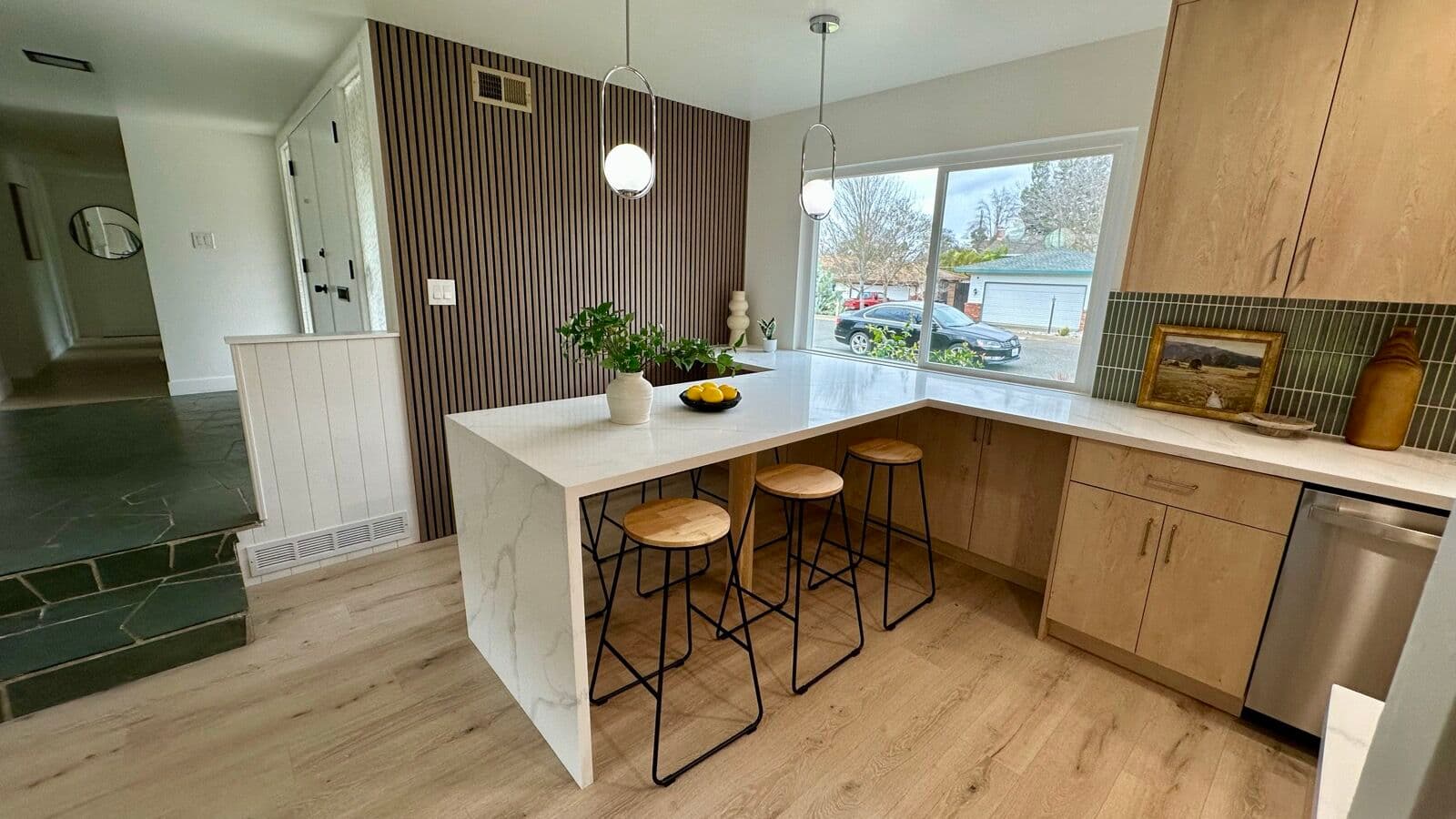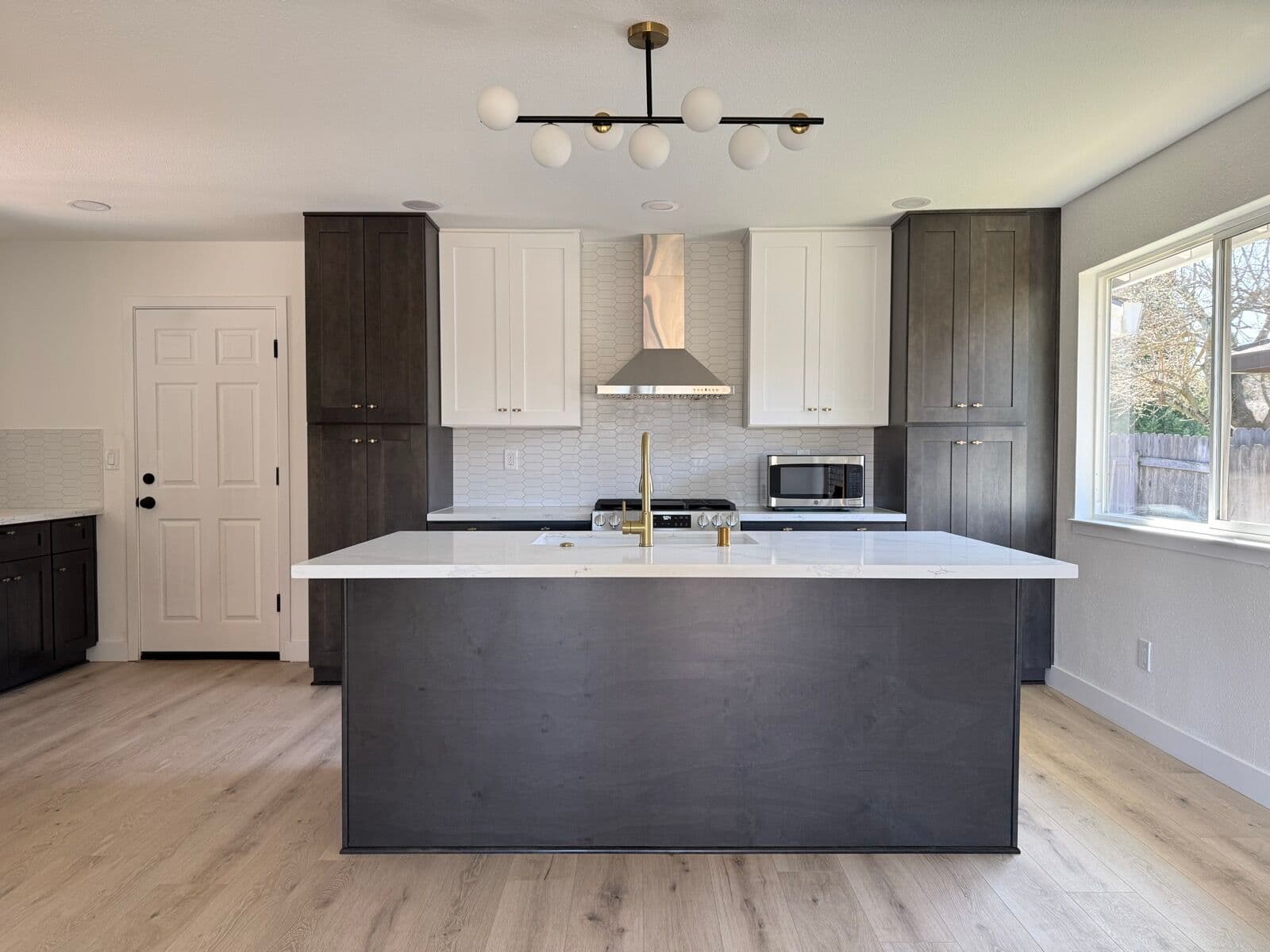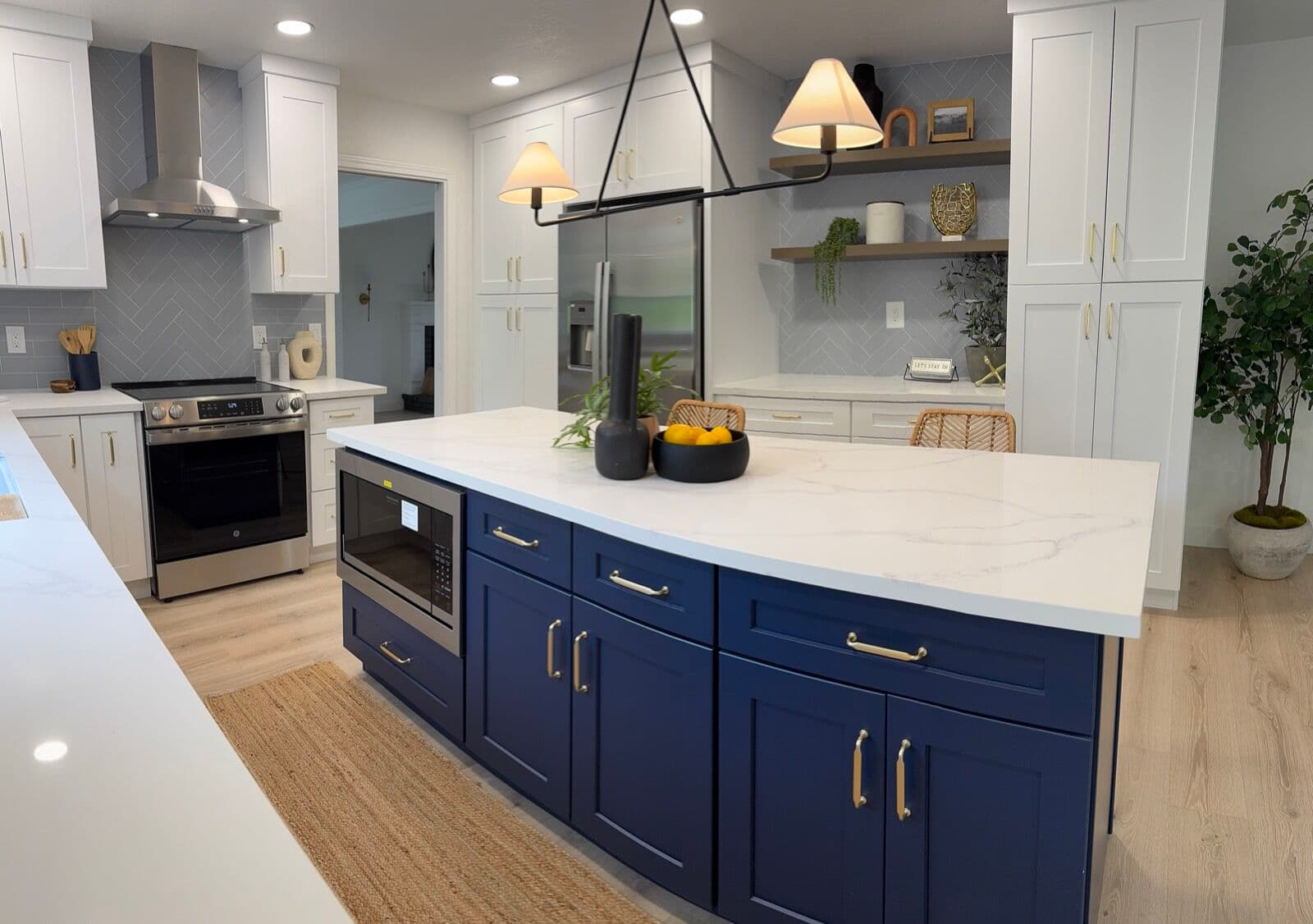
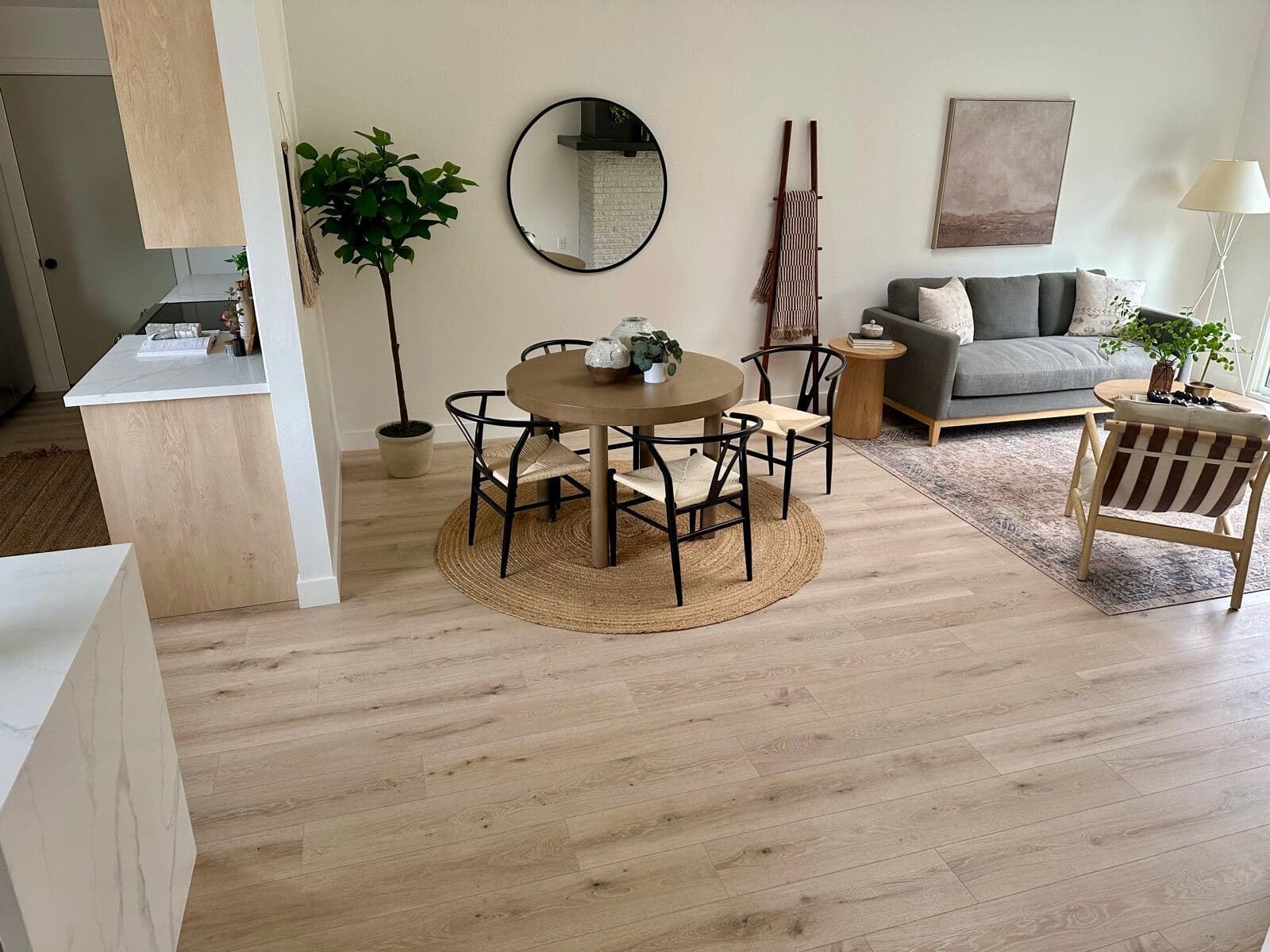
We install flooring as part of the remodel we are already doing. That is the whole reason it is on this list: floor height, transitions and the order of operations are where a kitchen or bath goes wrong when two different companies are involved and neither owns the seam between them.
Why sequence matters more than the material
Cabinets first or floor first is not a matter of preference. Run the floor under the cabinets and you lose material under boxes nobody will ever see, but a dishwasher can be pulled out years later without being trapped. Stop the floor at the cabinet run and you save material, but the appliance opening has to be planned to the millimetre. We decide it with you, on the drawing, and note it in the written scope.
Then there is height. A new floor over an old one raises the room, and the appliance opening, the dishwasher, the door swings and the threshold at the hallway all have to still work afterwards. That is the calculation people miss when the floor is bought separately.
What we install
- Luxury vinyl plank — waterproof, forgiving over an imperfect subfloor, and the usual answer for a kitchen with a household in it
- Tile — porcelain and ceramic over a properly prepared substrate, with crack isolation where the slab needs it
- Hardwood — engineered or solid, where the room and the humidity suit it
Preparation is the part that lasts
Levelling the subfloor, sorting out a soft spot, checking moisture on a slab and setting the right underlayment take longer than laying the floor and decide whether it stays flat. A plank floor telegraphs every hollow underneath it, and tile over a moving substrate cracks at the grout line first.
Where it fits in a project
Kitchen and bath floors are usually part of a full remodel or a bathroom remodel, and they often continue into the adjoining rooms so the house does not change floor at a doorway for no reason. Shower and wet-area tile is its own discipline — see tile installation and walk-in showers.
We take this on alongside our own remodel work rather than as a standalone flooring contract; it keeps one company answerable for how the floor meets the cabinets.