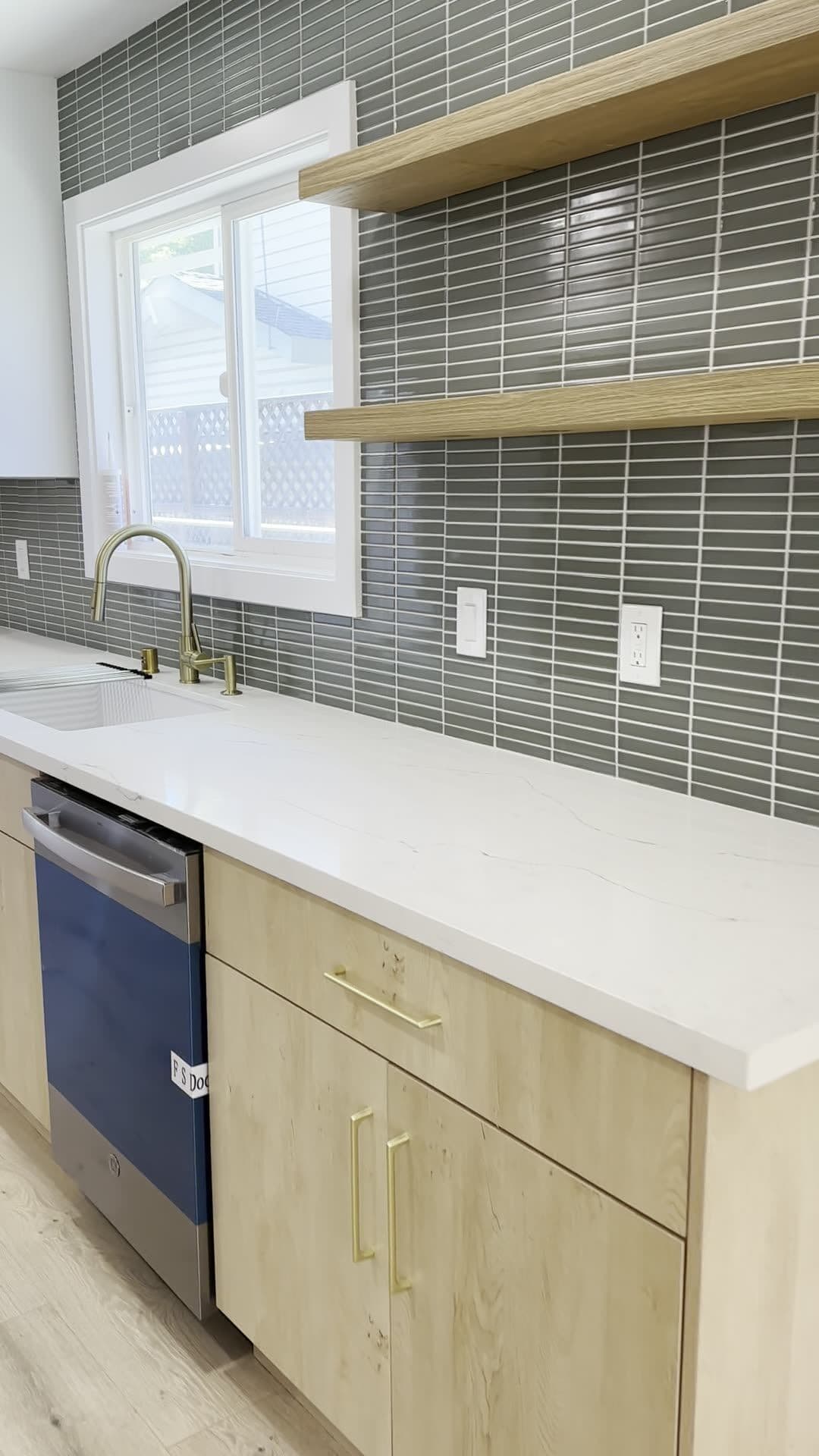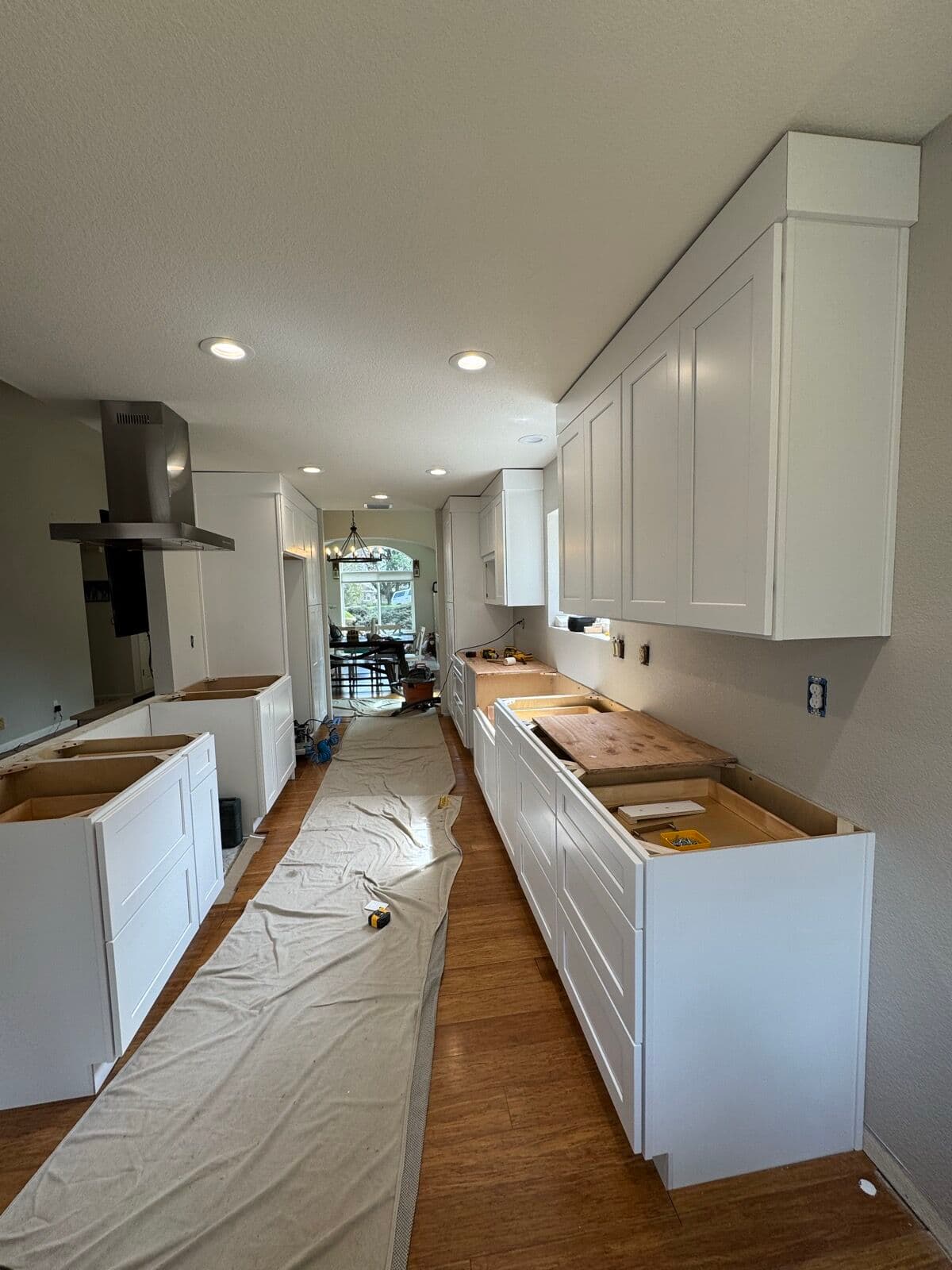
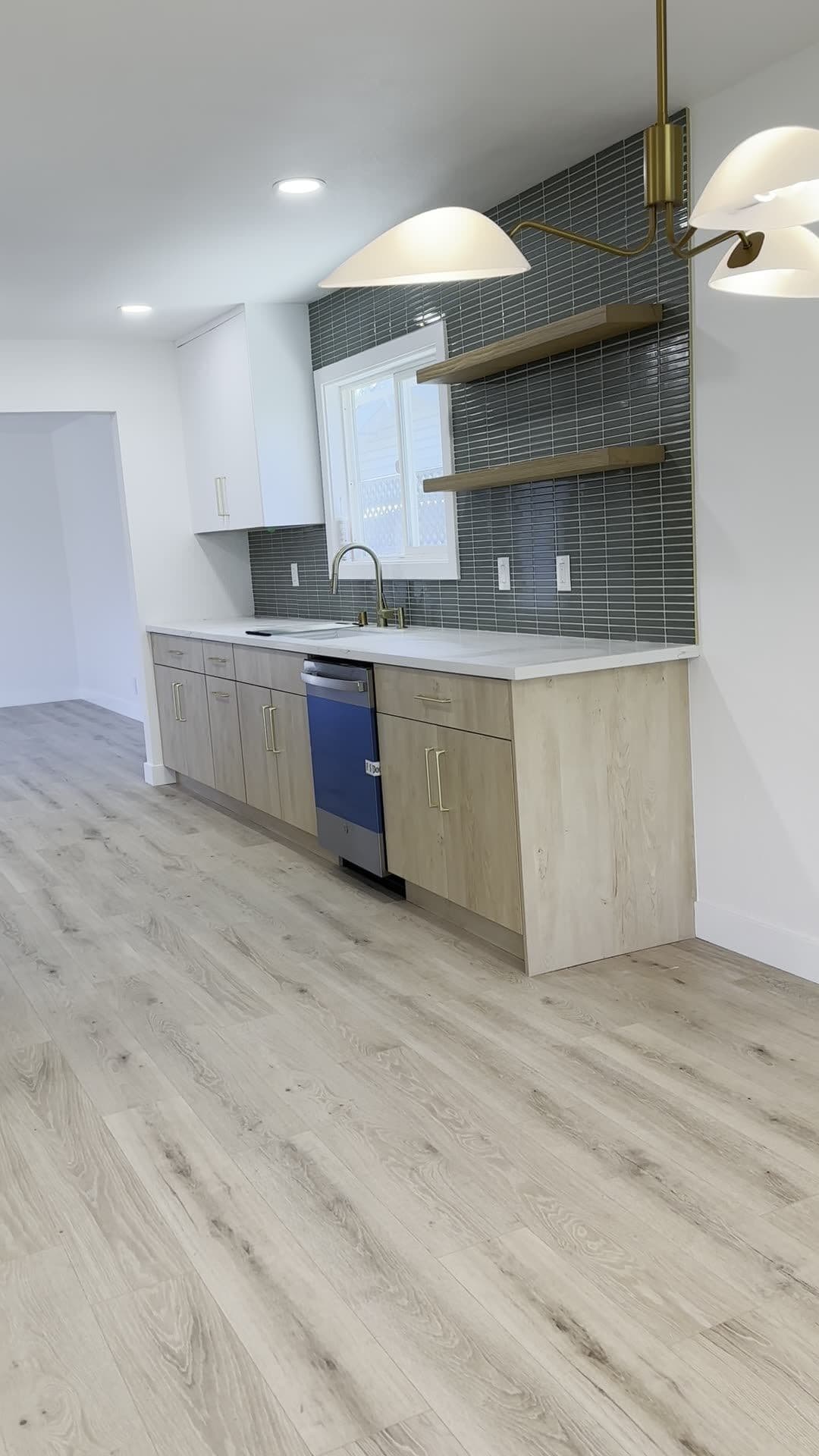
Half the kitchens we walk into do not need new cabinets. They need new faces on cabinets that were built better than anything in their price range today. The other half genuinely need replacement, and refacing them would waste money. The trick is telling them apart, and it takes about five minutes with the doors open.
What refacing is
The boxes stay on the wall. New doors and drawer fronts, new hardware, and matching material on every exposed surface, so the finished kitchen reads as one piece. Layout stays; plumbing and electrical stay untouched. It is most of the visual change of a new kitchen for a fraction of the disruption — the reface page covers what is included.
If the doors are fine too and the problem is color, that is a smaller job still: painting and refinishing.
When the boxes are worth keeping
Plywood or solid-wood boxes, square and dry, holding screws firmly. A lot of older Sacramento housing has exactly this — cabinets from an era when boxes were overbuilt, wearing doors from an era nobody misses.
When they are not
Swollen particleboard, shelves that bow under dishes, boxes pulling away from the wall, hinges that will not hold a screw anywhere. Refacing that is upholstering a broken chair. That kitchen wants new cabinets built to spec — drawn for the actual room, including the diagonal wall and the eleven-foot ceiling the stock lines have no answer for.
The question underneath
Usually it is not really a cabinet question. It is "how much of this kitchen is worth keeping?" — and that is what the measure visit settles. We look at the boxes, tell you which side of the line they are on, and the estimate comes back in writing either way. If the answer is a reface, we will not sell you a replacement.